Negative Pressure Air Duct Cleaning in Cleveland: A Practical Guide for Buildings and Homes
-
- April 06th, 2026
- 230 views

Get a free topical map and start building content authority today.
Detected intent: Informational
Negative pressure air duct cleaning Cleveland is a targeted HVAC service that uses containment and vacuum systems to remove dust, allergens, and biological contaminants from ductwork without pushing debris into occupied spaces. This guide explains how the method works, when it is the best choice for homes and commercial buildings in Cleveland, and what to expect from a properly executed job.
- Negative pressure cleaning keeps contaminants contained by creating suction toward a HEPA-filtered vacuum point.
- Best for buildings with sensitive occupants, recent renovations, or visible duct contamination.
- Key evaluation uses the C.L.E.A.N. inspection checklist included below.
- Practical trade-offs include cost, access needs, and coordination with HVAC balancing.
negative pressure air duct cleaning Cleveland: What it is and how it works
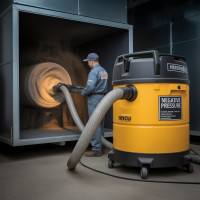
Negative pressure air duct cleaning creates a controlled suction point that draws dust and debris out of the duct system while maintaining containment so contaminants are not released into occupied areas. The method typically pairs mechanical agitation (brushes, air whips) with a dedicated HEPA-filtered vacuum and temporary sealing of registers and plenum openings to ensure airflow moves toward the vacuum point. This process is distinct from simple register vacuuming or “blow-and-go” methods because it uses airflow management to control contamination.
Key components and related terms
- Containment: temporary sealing of work area to protect occupants
- HEPA-rated vacuum: captures particles down to 0.3 microns
- Air flow management: inspectors measure static pressure and balance to pull debris out
- Mechanical agitation: rotary brushes, air bursts, or compressed-air whips
- Relevant standards: NADCA industry guidance and EPA indoor air quality resources
For official background on indoor air quality and the role of ventilation, see the EPA's guidance on indoor air quality: EPA Indoor Air Quality (IAQ).
When to choose negative pressure air duct cleaning
Negative pressure cleaning excels when contamination control matters. Typical scenarios include recently renovated homes or offices in Cleveland where construction dust entered ductwork, buildings with occupants who have respiratory sensitivity, or systems with visible mold or significant particulate load. It is also appropriate for larger commercial systems where single-point capture reduces risk to building operations during cleaning.
Secondary keywords
Look for services that mention HVAC negative pressure cleaning or Cleveland duct cleaning best practices when evaluating bids; these terms reflect contractors who understand containment and airflow control.
Practical framework: the C.L.E.A.N. inspection checklist
Use the C.L.E.A.N. checklist to evaluate whether a negative pressure duct cleaning job is being planned thoroughly:
- Confirm containment plan — sealing, access points, and barriers
- Locate vacuum point(s) — HEPA-rated equipment and filter integrity
- Evaluate agitation method — brushes, air whips, or compressed air
- Assess airflow and static pressure — ensure suction moves contaminants toward the vacuum
- Notify occupants and schedule — minimize disruption and protect sensitive people
Short real-world example
An eight-unit Cleveland apartment building underwent kitchen hood replacement; construction dust entered the central HVAC. A contracted crew set up a HEPA vacuum in the mechanical room as a single suction point, sealed open registers with temporary gaskets, and used rotary brushes while monitoring static pressure to confirm debris flowed toward the vacuum. Post-cleaning air sampling showed particulate levels returned to baseline and occupant complaints of dust decreased significantly.
Practical tips for property managers and homeowners
- Get a written scope that specifies containment, HEPA filtration, and post-cleaning verification (photos or particle readings).
- Request that filters and access panels be inspected and replaced as needed when the duct cleaning is performed.
- Schedule cleaning when HVAC use is minimal and occupants can be notified — negative pressure setups take time to seal and verify.
- Ask for documentation of equipment (HEPA rating) and methods; avoid contractors who only vacuum registers without containment.
- Consider system balancing after cleaning if static pressure or airflow changes are measured during the process.
Trade-offs and common mistakes
Trade-offs include higher cost and longer setup time compared with register-only vacuuming. However, negative pressure cleaning reduces the risk of spreading dust through occupied spaces. Common mistakes to avoid:
- Skipping containment — leads to recontamination and unhappy occupants.
- Using non-HEPA vacuums — small particles are not captured and can be re-released.
- Failing to check airflow — without proper suction direction, debris can be pushed deeper into the system.
- Not documenting before-and-after conditions — makes it harder to verify value and outcomes.
Costs, scheduling, and coordination considerations
Negative pressure projects typically require coordination with building maintenance, potential temporary system shutdowns, and skilled technicians familiar with HVAC airflow principles and containment. Budget planning should include labor for setup, HEPA equipment rental or use, and any filter replacements or minor repairs discovered during access. For larger commercial systems, plan to coordinate with HVAC balancing or commissioning professionals if airflow changes are expected.
Core cluster questions (for related articles or internal linking)
- How does negative pressure duct cleaning compare to source capture methods?
- What are the signs that a Cleveland home needs professional duct cleaning?
- How to verify HEPA-rated vacuums and containment in a duct cleaning quote?
- What preparatory steps should building managers take before duct cleaning?
- How often should commercial HVAC systems in humid climates be cleaned to prevent microbial growth?
Choosing a provider and verifying results
When evaluating bids, request a detailed scope tied to the C.L.E.A.N. checklist, ask for proof of equipment, and obtain references or photos from prior jobs. Post-cleaning verification can be visual (register and plenum photos) or instrumental (particle-count measurements). Industry organizations such as NADCA provide standards and credentialing for HVAC cleaners; referencing such standards in a contract reduces risk.
FAQ: What is negative pressure air duct cleaning Cleveland and how does it differ from conventional cleaning?
Negative pressure air duct cleaning Cleveland uses sealed containment and a HEPA-filtered vacuum to draw debris out of the duct system, whereas conventional cleaning may only vacuum access points or use local suction without controlling airflow. The negative pressure approach minimizes cross-contamination and is preferable where occupants are sensitive or where contamination control is critical.
How long does a typical negative pressure duct cleaning job take?
Smaller residential jobs may take 3–6 hours including setup and teardown; larger commercial systems can take a day or more, depending on access, system complexity, and verification steps.
Will negative pressure cleaning damage ductwork or HVAC components?
Properly performed negative pressure cleaning should not damage ducts. Technicians use appropriate-sized agitation tools and inspect access panels; any fragile or older components should be identified in the pre-inspection and handled carefully or repaired prior to heavy agitation.
Are there health certifications or standards to require?
Look for contractors who follow NADCA guidelines and use HEPA-rated vacuums; include these requirements in the scope. For general indoor air quality principles consult the EPA for background and best practices.
How soon will occupants notice improved air quality after cleaning?
Many occupants notice reduced dust and improved odor within a day, but measurable improvements in particle counts or allergen levels depend on filter condition, ongoing maintenance, and any remaining indoor sources. Combine cleaning with filter upgrades (higher MERV or HEPA filtration at point-of-use) for best results.