Why Split AC Units Have Become So Popular: Benefits, Costs, and How They Work
-

- February 23rd, 2026
- 1,552 views

FREE SEO Topical Map Generator: Find Your Next Content Ideas
The split AC has become very popular in recent years due to improved energy efficiency, quieter operation, and flexible installation options. Homeowners and businesses often choose split ductless systems for retrofits, zonal temperature control, and better indoor air quality compared with some traditional systems.
- Split AC systems separate an indoor evaporator and an outdoor condenser, enabling quieter, more efficient cooling.
- Inverter compressors, higher seasonal efficiency ratings, and zonal control are major reasons for growing popularity.
- Consider capacity, refrigerant type, maintenance needs, and installation quality when selecting a unit.
Why split AC units have become very popular
Energy efficiency and inverter technology
One central reason the split AC is widely adopted is improved energy efficiency. Modern split systems frequently use inverter-driven compressors that modulate speed instead of cycling on and off. This delivers steadier temperature control and lower electricity use over time. Efficiency metrics such as SEER (Seasonal Energy Efficiency Ratio) or ISEER are commonly used to compare models. Government and industry guidelines from organizations like ASHRAE (American Society of Heating, Refrigerating and Air-Conditioning Engineers) and national energy agencies inform minimum performance standards and labeling.
Installation flexibility and retrofit advantages
Split systems are ductless or use minimal ductwork, which makes them attractive for retrofits in older buildings, apartments, and single rooms where installing central ductwork is impractical or costly. The smaller footprint of the indoor unit and the ability to place the outdoor compressor on a balcony or wall bracket are convenience factors in urban installations. For multi-room projects, multi-split systems can connect several indoor units to a single outdoor condenser, providing flexible layouts.
Improved comfort, noise, and zonal control
Indoor units of split systems are typically quieter than window units or older packaged systems because the noisier compressor and fan sit outside. Zonal control permits different rooms to be conditioned to different setpoints, reducing energy waste from cooling unused spaces. Some systems include air filtration features and humidity control, which can improve perceived comfort and indoor air quality when properly maintained.
How a split AC system works
Indoor and outdoor components
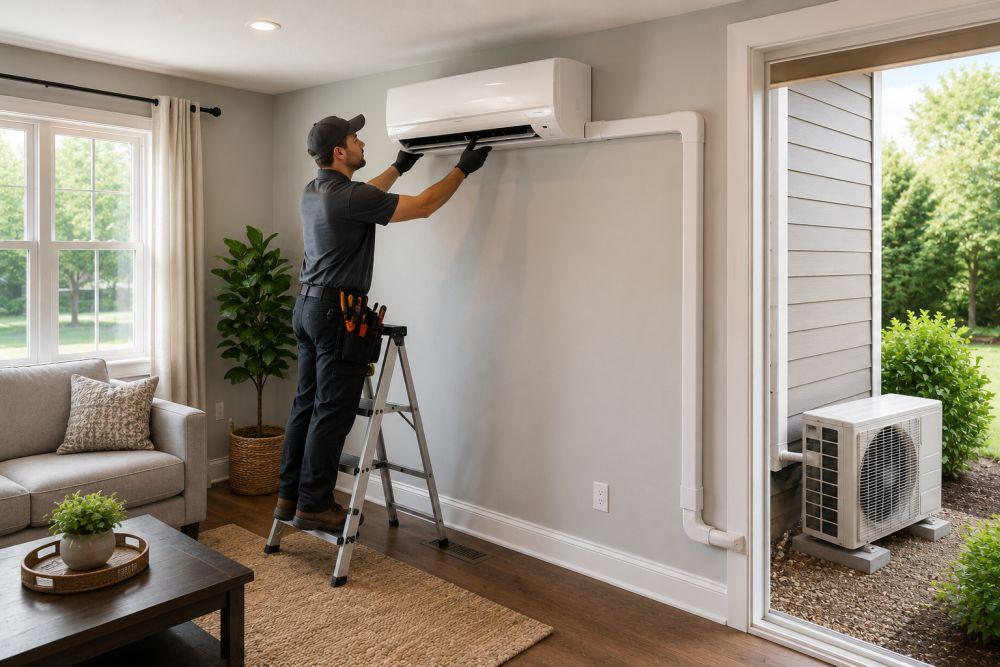
A split AC divides the refrigeration cycle between an indoor evaporator coil and an outdoor condenser/compressor. A refrigerant circulates through copper lines between the two units. The indoor unit blows room air across the cold evaporator coil to remove heat, while the outdoor unit releases heat to the exterior environment.
Refrigerants and heat exchange
Modern split systems use refrigerants designed to balance performance and environmental impact. Regulatory bodies in many regions phase down higher global warming potential (GWP) refrigerants, so selecting equipment that uses lower-GWP refrigerants or is compatible with future regulations is an important consideration. Proper refrigerant charge and leak-free piping are essential for efficiency and longevity.
Cost, maintenance and environmental considerations
Running costs and efficiency ratings
Operating costs depend on unit efficiency (SEER/ISEER), local electricity rates, climate, and usage patterns. Higher-efficiency models usually cost more upfront but can reduce lifetime energy costs in climates with substantial cooling demand. For guidance on energy-efficient equipment and rebates, consult national energy programs; for example, ENERGY STAR provides efficiency criteria and consumer information for HVAC products (Energy Star).
Maintenance needs and service life
Routine maintenance extends service life and maintains efficiency. Tasks include cleaning or replacing filters, periodic coil cleaning, checking refrigerant charge, and inspecting outdoor unit clearance and mounting. A properly installed and maintained split system can last 10–15 years or more, depending on usage and climate.
Choosing the right split AC for a space
Capacity, sizing, and load calculation
Appropriate capacity is critical: undersized units struggle to maintain comfort; oversized units cycle more frequently, causing humidity control issues and inefficiency. A heat load calculation that accounts for insulation, window area, occupancy, and orientation helps select the correct capacity. Professional sizing or using industry-standard calculation methods recommended by building codes and ASHRAE improves outcomes.
Noise, controls, and indoor air quality features
Compare indoor unit sound ratings (dB), fan modes, programmable timers, and compatibility with smart thermostats or building management systems. Consider filtration level (e.g., MERV ratings) and whether the system supports dehumidification modes or integrated ventilation for better indoor air quality.
Environmental and regulatory factors
Local building codes and refrigerant regulations influence product choices. Look for compliance with regional HVAC installation standards and check whether installers are certified to handle refrigerants and perform safe, code-compliant work.
When a split AC might not be the best choice
Large central systems and whole-building approaches
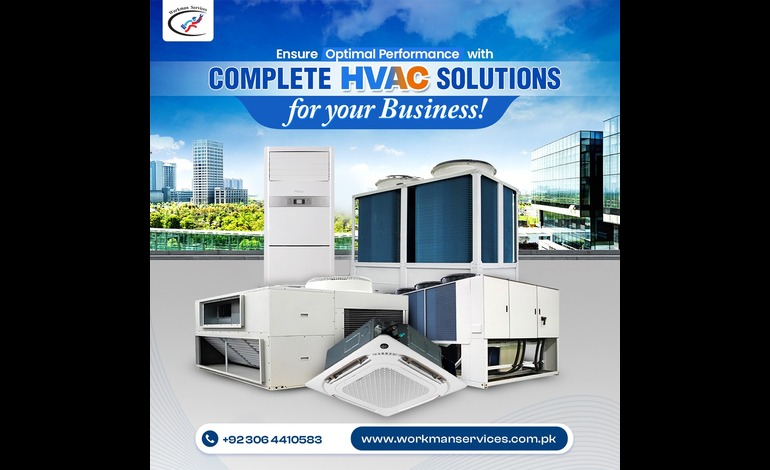
For large buildings or new construction where ducted central HVAC can serve many zones efficiently, a central packaged or variable refrigerant flow (VRF) system may be more appropriate. The decision depends on building design, long-term operational goals, and integration with heating systems (for example, heat pump options for both heating and cooling).
Installation quality matters
Performance depends heavily on correct installation: proper refrigerant line length and insulation, correct refrigerant charge, and stable outdoor mounting all affect efficiency and longevity. Use qualified HVAC contractors and verify warranties and references before purchase.
FAQ
What is a split AC?
A split AC is an air conditioning system with two primary components: an indoor evaporator unit that cools and distributes air, and an outdoor condenser/compressor that expels heat. The two units are connected by refrigerant lines. Split systems can be ductless and are available in single-zone and multi-zone configurations.
Are split AC units more energy efficient than window units?
Split systems with inverter compressors and high SEER ratings are generally more energy efficient than traditional window units, particularly in larger spaces or when zonal control reduces unnecessary cooling. Efficiency varies by model and installation quality.
How often should a split AC be serviced?
Basic filter cleaning or replacement is usually monthly to seasonal depending on usage. Professional servicing, including refrigerant checks and coil cleaning, is recommended annually or according to manufacturer guidance to maintain performance and warranty coverage.
Do split AC systems provide heating as well as cooling?
Many split systems use heat pump technology to provide both heating and cooling. Heat pump performance depends on outdoor temperatures and system design; in colder climates, supplemental heating or cold-climate heat pump models may be required.
Can a split AC improve indoor air quality?
Split units with adequate filtration and regular maintenance can help reduce dust and some airborne particles. For comprehensive indoor air quality improvements, consider higher-efficiency filters, ventilation strategies, and dedicated air-cleaning devices as part of an overall plan.