1099 Season for Property Managers: What Often Gets Missed
-

- Published Updated
- 3,545 views
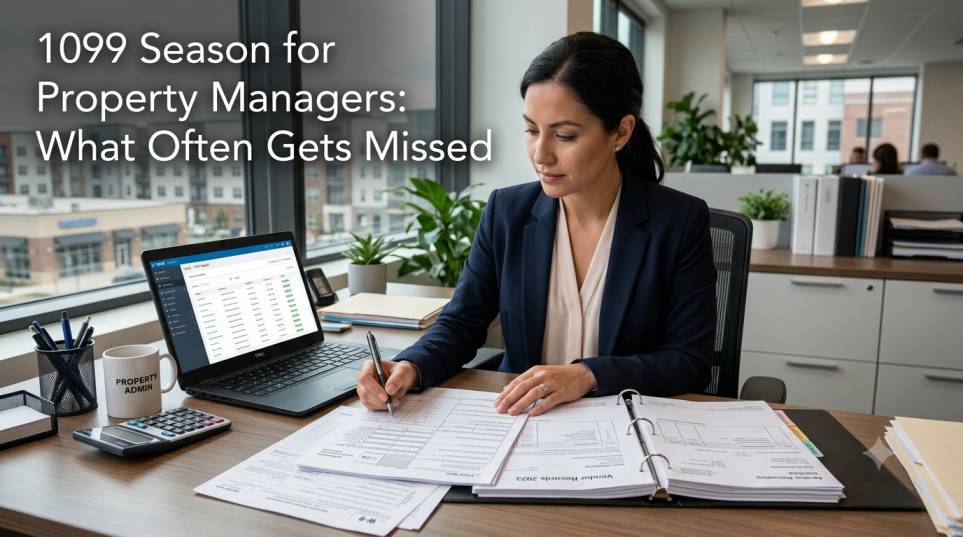
For property managers, 1099 season can become complicated quickly. Managing multiple properties means dealing with a long list of vendors, contractors, maintenance providers, landscapers, repair companies, and other service providers.
Each year, property managers need to review their payment records and determine which vendors may require information returns. The challenge isn't simply preparing the forms. It's making sure the underlying records are complete and that important vendors or payments haven't been overlooked.
A missed form or incorrect vendor information can create unnecessary follow-up work and potentially lead to penalties.
Here's what property managers should pay attention to before 1099 filing deadlines arrive.
Why 1099 Reporting Can Be Challenging for Property Managers
A property management company may make hundreds or even thousands of payments during a year.
Some payments may go to:
- Independent contractors
- Maintenance companies
- Plumbers and electricians
- Landscapers
- Cleaning companies
- Legal professionals
- Accountants
- Property repair vendors
- Consultants
- Other service providers
Not every payment automatically requires a 1099. The reporting requirements can depend on the type of payment, the recipient, the amount, and how the vendor is structured.
That's why simply exporting a list of vendors from accounting software isn't always enough.
Missing Vendor W-9 Information
One of the most common problems is incomplete vendor information.
A property manager may have a vendor's business name and email address but not the information needed to properly prepare a 1099.
A W-9 provides important information such as the vendor's legal name, business structure, address, and taxpayer identification number.
Ideally, property managers should collect W-9 information when onboarding vendors rather than trying to chase missing information at the end of the year.
Maintaining updated vendor records throughout the year makes 1099 preparation much easier.
Assuming Every Vendor Gets a 1099
Another common mistake is assuming that every contractor or vendor needs a 1099.
The reporting rules have specific requirements and exceptions. For example, payments made to certain types of entities may be treated differently from payments to individuals or other businesses.
Payment method can also matter.
This means property managers should review their vendor and payment data instead of applying a blanket rule to every vendor.
Forgetting Professional Service Providers
Property managers often remember maintenance contractors but overlook professional service providers.
Payments to certain attorneys, accountants, consultants, and other professionals may have separate reporting considerations.
This is one reason a complete review of the general ledger is useful. Looking only at maintenance and repair accounts may cause other reportable payments to be missed.
Mixing Personal and Property Expenses
Property management accounting becomes more complicated when transactions aren't properly assigned to the correct property or entity.
If payments are recorded inconsistently, it can become difficult to determine which vendors were paid by which property or business entity.
This can create problems during year-end reporting.
Maintaining clean property-level books throughout the year helps create a more reliable starting point for 1099 preparation.
Not Reviewing Payment Methods
Property managers should also pay attention to how vendors were paid.
Payments made by certain third-party settlement organizations or payment networks may be subject to different reporting requirements.
This means the total amount shown in a vendor's account may not always correspond directly to the amount that should be reported by the property management company.
Reviewing payment methods as part of the year-end process can help prevent duplicate reporting or incorrect reporting.
Duplicate Vendor Records Can Create Problems
Growing property management companies often accumulate duplicate vendor records.
For example, the same contractor might appear under:
- ABC Landscaping
- ABC Landscaping LLC
- ABC Landscape Services
- A personal name
If these records aren't reviewed, payments may be split across multiple vendor profiles.
That can make it harder to determine the total amount paid to a vendor and may lead to incomplete reporting.
A vendor master cleanup before 1099 preparation can help identify and consolidate duplicate records.
Property Managers Should Review Their General Ledger
A vendor list is useful, but it shouldn't be the only source used for year-end review.
Reviewing the general ledger can help identify payments that may have been coded incorrectly or posted to unexpected accounts.
Look for categories that commonly contain vendor payments, including:
- Repairs and maintenance
- Landscaping
- Cleaning
- Legal services
- Professional fees
- Consulting
- Property improvements
- Management expenses
The exact accounts will vary by business, but a broader review can help uncover payments that may otherwise be overlooked.
Keep Property and Vendor Records Organized
Good recordkeeping makes 1099 season significantly easier.
For each vendor, property managers should aim to maintain accurate information, including:
- Legal business name
- Taxpayer identification information
- Current address
- W-9 documentation
- Vendor classification
- Payment history
- Payment method
This information can also help accounting teams respond quickly if a vendor questions the amount reported on their form.
Don't Wait Until January to Start
One of the easiest ways to make 1099 season stressful is to start reviewing vendor records after the year has already ended.
A better approach is to make vendor compliance part of the regular accounting process.
When a new vendor is added, request the necessary documentation. When vendor information changes, update the records. When payments are made, make sure they're recorded under the correct vendor and property.
These small steps throughout the year can significantly reduce the year-end workload.
How Professional Accounting Support Can Help
For property managers handling a growing portfolio, 1099 preparation can become another major year-end task alongside reconciliations, financial statements, tax preparation, and owner reporting.
Professional W-2 and 1099 preparation service can help businesses organize vendor information, review payment records, identify potential reporting issues, and prepare required forms.
Outsourced accounting support can also help keep vendor records and bookkeeping organized throughout the year, rather than treating 1099 preparation as a once-a-year cleanup project.
The goal isn't simply to file forms on time. It's to create an accounting process where the information needed for filing is already accurate and organized.
A Simple 1099 Review Checklist
Before submitting 1099 forms, property managers can review:
- Vendor records for missing W-9 information
- Duplicate vendor profiles
- Total payments by vendor
- Payment methods
- Professional service payments
- Repair and maintenance payments
- Vendor payments assigned to the wrong property
- Changes to vendor names or addresses
- Prior-year vendor records
- Supporting documentation
A checklist won't replace professional tax advice, but it can help the accounting team identify common issues before filing.
Make 1099 Season Part of Year-Round Accounting
The best way to reduce 1099 problems is to avoid treating January as the starting point.
Vendor onboarding, W-9 collection, accurate bookkeeping, payment tracking, and regular record reviews should happen throughout the year.
For property managers, this becomes especially important as the number of properties and vendors increases.
A well-organized accounting system can make year-end reporting faster, reduce unnecessary corrections, and give property managers greater confidence that important information hasn't been missed.
1099 season may be unavoidable, but the last-minute scramble doesn't have to be.