3 Best Digital Home Safes in India: Compare Electronic, Biometric & Smart Lockers
-
- March 07th, 2026
- 282 views

Get a free topical map and start building content authority today.
Choosing a digital safe for home in India requires balancing security, convenience, and budget. This guide compares three practical digital locker types — electronic keypad safes, biometric home safes, and smart Wi‑Fi lockers — and explains how to select, install, and maintain the right model for everyday use.
- Dominant intent: Commercial Investigation
- Three practical options covered: electronic keypad safe, biometric home safe India, smart Wi‑Fi locker
- Includes a named selection framework (S.A.F.E. checklist), real scenario, tips, and trade-offs
How to choose a digital safe for home in India
Start by matching storage needs, access method, and environmental resistance to household risks. The best digital safe for home in India is not always the most expensive — it is the one that fits the value of items, expected threats (theft, fire, water), and practical constraints like power availability or wall/floor anchoring points.
The three practical digital locker options compared
1. Electronic keypad safe (basic electronic home locker)
Electronic keypad safes use a PIN keypad with internal motorized bolts. Strengths: predictable operation, lower cost, easy to change codes, common sizes for documents and jewelry. Weaknesses: susceptible to battery failures, some models have weak hinge/bolt hardware; ensure solid anchor points and a quality locking mechanism.
2. Biometric home safe (fingerprint access)
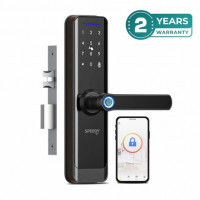
Biometric home safes improve convenience by allowing fingerprint unlocking and often keep a PIN backup. Strengths: fast access, no key to lose, good for frequent access. Weaknesses: fingerprint sensors can fail with wet/dirty fingers, enrollment limits, and higher cost. For areas with frequent power interruptions, check battery life and mechanical override options.
3. Smart Wi‑Fi locker (connected safe with remote features)
Smart Wi‑Fi safes add app notifications, access logs, and remote locking. Strengths: remote monitoring, tamper alerts, and integration with home automation. Weaknesses: more complex setup, cybersecurity considerations, and reliance on network/battery power. For sensitive high-value contents, prioritize safes with strong local authentication and encrypted communication.
S.A.F.E. checklist: a named framework to pick the right model
Use the S.A.F.E. checklist before purchase:
- Size & Storage — Internal dimensions for documents, jewelry, hard drives, or cash; removable shelves?
- Access & Authentication — PIN, biometric, key override, app control, multi-user options.
- Fire & Water Resistance — Look for specified minutes/hours rating; consider water exposure risk for basement storage.
- Electronics & Power — Battery life, low-battery alerts, mechanical override, and UPS compatibility for smart models.
Practical selection steps (quick checklist)
- Decide what will go inside and measure required internal volume.
- Choose access type: keypad for simplicity, biometric for speed, smart for monitoring.
- Verify build quality: bolt thickness, hinge design, and anchor bolt provisions.
- Confirm power/redundancy: replaceable batteries, manual key override, external power option.
- Check warranty, service network, and compliance with local standards; see the Bureau of Indian Standards for guidance on product quality and consumer protection: Bureau of Indian Standards.
Real-world scenario
Scenario: A family in Pune stores passports, property documents, and daily-use jewelry. Frequent daytime access is needed, and intermittent power outages occur during monsoon season. A biometric home safe India model with long battery life and a mechanical key override meets convenience needs, while a small external fireproof document pouch provides an extra layer of protection for original papers.
Practical tips for setup and daily use
- Anchor the safe: use floor or wall anchor bolts and install on concrete or reinforced wood to resist removal attempts.
- Use dual authentication where available: enable PIN + biometric or multi-user approval for critical items.
- Keep an access plan: register an emergency contact and store backup keys in a secondary secure location.
- Test battery and override: simulate battery failure and practice using mechanical override to avoid lockout.
- Document serial numbers and take photos of contents for insurance claims; store copies offsite or in cloud storage for critical documents.
Trade-offs and common mistakes
- Buying by feature, not need: many smart features add cost but not meaningful security for low-value contents.
- Ignoring installation: an anchored low-cost safe can outperform an unbolted high-end model if thieves can remove it quickly.
- Relying solely on connectivity: Wi‑Fi safes can report tampering but are vulnerable to network outages and misconfiguration.
- Overlooking environmental ratings: a safe without any fire or water resistance may still fail during a household emergency.
Core cluster questions
- What size digital safe should a typical household buy?
- How to anchor a home safe securely to concrete or wood floors?
- Are biometric safes reliable in humid climates?
- What maintenance does an electronic home locker need?
- How to verify a smart safe’s cybersecurity and firmware update policy?
Installation and maintenance checklist
Follow this short checklist after purchase:
- Verify internal measurements and test the locking mechanism before filling the safe.
- Install anchoring bolts using recommended hardware and follow manufacturer torque settings.
- Register the product for warranty and store backup keys separately from the safe.
- Schedule a battery replacement every 12 months or when low-battery alerts appear.
When to choose each type (summary)
- Electronic keypad — Best for low-to-moderate value items and simple use.
- Biometric home safe India — Best for frequent, quick access and multi-user convenience.
- Smart Wi‑Fi locker — Best when remote monitoring, alerts, and access logs are desired.
Final recommendations
Match safe type to items and behavior: choose strength and redundancy over flashy features. Prioritize anchoring, battery redundancy, and a clear access plan. For more detail on product standards and consumer guidance, refer to national standards bodies and manufacturer manuals.
How to choose a digital safe for home in India?
Use the S.A.F.E. checklist: size needs, access method, resistance ratings, and power redundancy. Compare models on build quality and service support rather than focusing only on the feature list.
What is the difference between an electronic home locker and a biometric safe?
Electronic home lockers use PIN codes and mechanical locking; biometric safes use fingerprint sensors as primary authentication, often with a PIN backup. Biometric models are faster to open but need reliable sensors and power backup.
Can smart safes be hacked and how to reduce that risk?
Smart safes can be targeted like any IoT device. Reduce risk by using strong unique passwords, enabling two-factor authentication where available, keeping firmware updated, and isolating the safe on a separate guest network.
How should a safe be anchored to resist theft?
Anchor to concrete with heavy-duty expansion bolts or to solid wooden floors with long coach bolts and washers. Use manufacturer-recommended anchors and verify the load-bearing capacity of the installation surface.
How often should batteries be replaced in a digital safe?
Replace batteries at least every 12 months or on the first low-battery alert. Always verify the presence and operation of a mechanical override before relying solely on batteries for access.