What Is 3D Real Estate Software?
-

- May 07th, 2026
- 8,033 views
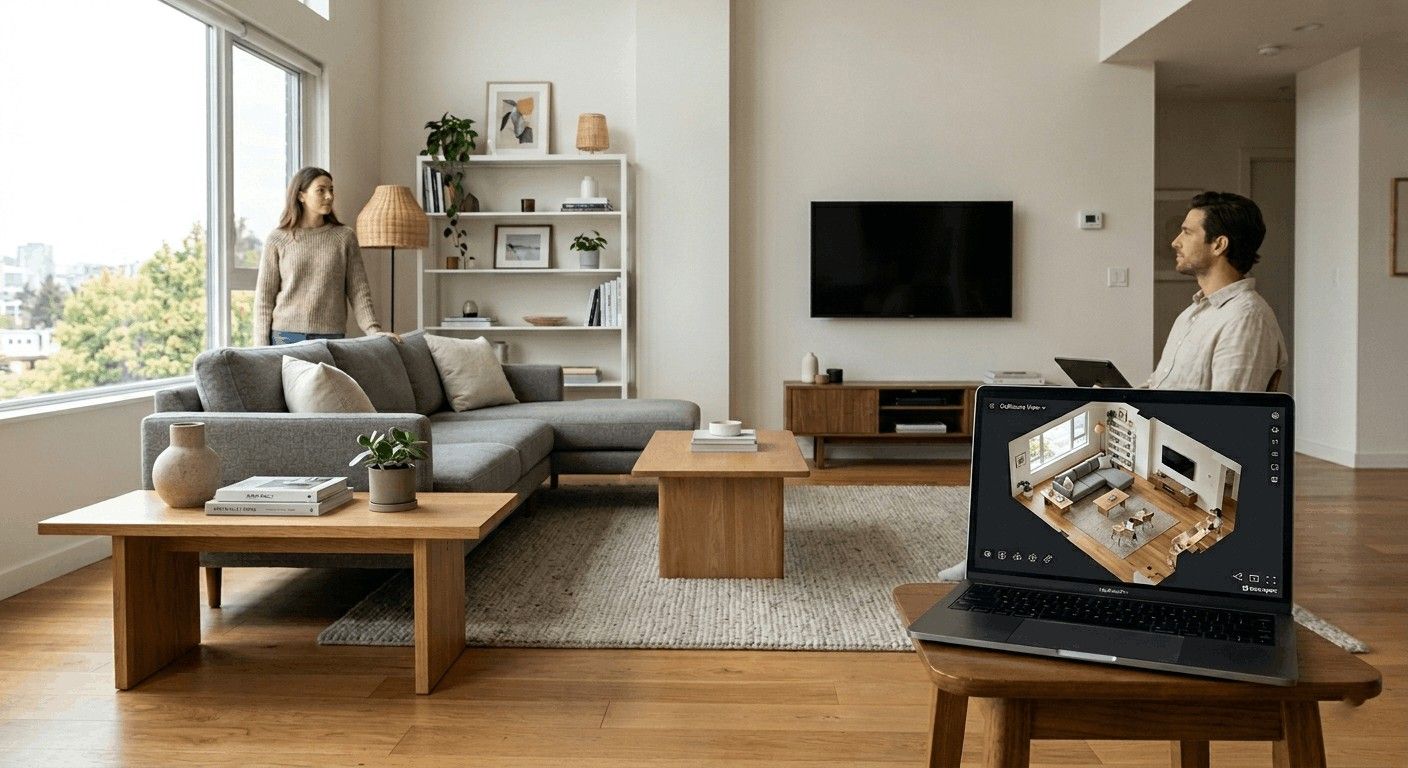
The property industry has always depended on the ability to communicate space to help buyers, renters, investors, and developers understand what a place looks, feels, and functions like. For most of history, that communication relied on physical visits, printed floor plans, and, more recently, professional photography. 3D real estate software represents the next significant evolution in that process: tools that allow properties to be captured, created, and experienced in three dimensions, across any device, from anywhere in the world.
This article explains what 3D real estate software is, how it works, what categories it covers, and why it has become an increasingly central part of how the property industry operates.
Defining 3D Real Estate Software
3D real estate software is a broad term that refers to any digital application or platform used to create, process, present, or interact with three-dimensional representations of properties. This includes existing physical spaces that are scanned and converted into 3D models, as well as properties that do not yet exist physically but are rendered in three dimensions from architectural plans.
The software sits at the intersection of several established fields: architecture, computer-aided design, visual effects, and proptech and draws on advances in hardware (such as 3D cameras and LiDAR sensors), cloud computing, and real-time rendering to deliver experiences that were, until recently, technically complex and expensive to produce.
At its core, 3D real estate software answers a fundamental problem in property marketing and management: how do you convey a physical space to someone who is not in it?
The Main Categories of 3D Real Estate Software
3D real estate software is not a single type of tool. It spans several distinct categories, each serving different use cases and audiences.
1. Virtual Tour Software
Virtual tour software allows users to capture a property using a 360-degree camera and then process that footage into an interactive, navigable experience. A viewer can move from room to room, look in any direction, and explore the property at their own pace from a desktop browser, a mobile device, or a VR headset.
This is currently the most widely used category of 3D real estate software, particularly in residential sales and leasing. The workflow typically involves:
- Capturing the space with a compatible 360-degree or 3D camera
- Uploading the footage to the software platform
- Automated or semi-automated stitching and processing of the scan data
- Publishing a shareable, embeddable tour link
Some virtual tour platforms also generate automatic 3D floor plans and dollhouse-view models from the same scan data, giving users multiple ways to explore a property from a single capture session.
2. 3D Rendering and Visualisation Software
3D rendering software is used to create photorealistic images or animations of spaces most commonly properties that are still in the design or pre-construction phase. Architects, developers, and interior designers use these tools to produce visuals that show what a finished space will look like, based on technical drawings and material specifications.
This category of 3D real estate software ranges from professional-grade design applications used by architectural studios to more accessible tools aimed at real estate marketers and developers who need visualisations without deep technical expertise.
The output can include still renders (single photorealistic images), 360-degree rendered panoramas, and fully animated walkthroughs.
3. Floor Plan Software with 3D Output
Traditional floor plan tools produce 2D representations of a property's layout. A growing number of software platforms now generate three-dimensional floor plans alongside or instead of 2D drawings providing a more intuitive spatial view that helps buyers understand how rooms connect and how the space flows.
Some tools in this category can generate a 3D floor plan automatically from a scan; others require manual input of room dimensions. The resulting plans are often interactive, allowing users to rotate, zoom, and view the layout from different angles.
4. Digital Twin Platforms
A digital twin is a precise, data-rich virtual replica of a physical property or building. Unlike a virtual tour which is primarily a visual experience a digital twin is a functional model that can carry information about the building's structure, systems, materials, and condition.
Digital twin platforms in real estate are used primarily in commercial property, large residential developments, and asset management. They support a range of activities, including:
- Facilities management and maintenance planning
- Space utilisation analysis
- Renovation and fit-out planning
- Documentation for compliance and insurance purposes
Digital twins are more complex to create and maintain than standard 3D tours, but they offer significantly more utility over the lifecycle of a building.
5. Augmented and Virtual Reality Platforms
Some 3D real estate software is built specifically for delivery through AR or VR devices. Virtual reality platforms allow a user wearing a headset to be fully immersed in a digital environment whether a scanned existing property or a rendered off-plan development. Augmented reality tools overlay digital content onto the physical world, allowing a user to, for example, point a phone at an empty room and see how a particular furniture layout would look in that space.
While AR and VR remain a smaller part of the overall market compared to browser-based virtual tours, they are increasingly used in high-end residential sales, commercial leasing, and large-scale development presentations.
6. Off-Plan and Pre-Sales Visualisation Software
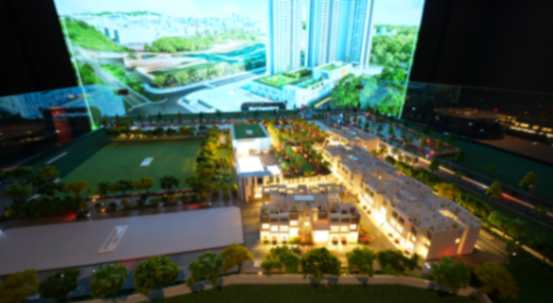
This category is closely related to 3D rendering but focuses specifically on the needs of property developers selling units before construction is complete. Off-plan visualisation software allows developers to create interactive environments where prospective buyers can explore a development, customise finishes, view different unit types, and understand the surrounding context all before the physical building exists.
Advanced platforms in this space include real-time configurators that let buyers change wall colours, flooring materials, or kitchen finishes and see the result immediately in a photorealistic environment.
How 3D Real Estate Software Works
While the specific workflow varies by category and platform, most 3D real estate software follows a broadly similar process:
Capture or input: For existing properties, this means scanning the space with a compatible camera or LiDAR device. For new developments, it means importing architectural drawings, CAD files, or BIM (Building Information Modelling) data.
Processing: The raw data whether scan files, images, or design files is processed by the software. This may involve stitching together multiple scan positions, aligning geometry, generating textures, or computing lighting.
Model creation: The processed data is used to build the 3D model, which may take the form of a point cloud, a mesh, a dollhouse-style spatial model, or a fully rendered photorealistic environment.
Publishing and delivery: The finished model is made available through a shareable link, an embeddable viewer, a mobile application, or a VR device. Most modern platforms are cloud-based, meaning the heavy processing happens on remote servers rather than the user's own hardware.
Interaction: The end user a buyer, tenant, investor, or facilities manager navigates the model using a web browser, mobile app, or VR headset, depending on the platform and the intended experience.
Who Uses 3D Real Estate Software?
3D real estate software is used across a wide range of roles and organisations within and adjacent to the property industry.
Estate agents and brokers use virtual tour software to present listings more effectively, attract more qualified enquiries, and reduce the number of unproductive physical viewings.
Property developers use rendering, visualisation, and off-plan sales platforms to market developments before completion and to support planning and approvals processes.
Architects and interior designers use 3D design software to communicate concepts to clients, refine spatial decisions, and produce marketing-ready visuals.
Property managers and asset managers use digital twin platforms to maintain accurate records of their portfolio, plan maintenance activity, and manage space more efficiently.
Investors particularly those operating across international markets use virtual tours and digital twins to conduct due diligence on properties they may not be able to visit physically.
Homeowners preparing to sell or rent a property may use consumer-facing 3D tour platforms, often with the support of their agent or a specialist photographer.
Key Features to Understand Across Platforms
Not all 3D real estate software offers the same capabilities. When evaluating platforms, the features that most commonly differentiate them include:
Scan-to-tour speed. How quickly the software processes raw scan data into a publishable tour affects how efficiently it can be used at scale.
Measurement accuracy. Some platforms generate measurably accurate spatial data from scans, which is useful for space planning, furniture placement, and professional documentation.
Floor plan generation. Whether a platform can automatically generate 2D and 3D floor plans from a scan, rather than requiring manual drafting, is a significant workflow consideration.
Embedding and integration. The ability to embed a 3D tour directly into a property listing portal, a developer's website, or a CRM platform determines how broadly the content can be distributed.
VR compatibility. For use cases that require full immersion, compatibility with leading VR headsets is relevant.
Customisation. White-labelling, branded environments, and interactive configurators vary considerably between platforms and are more relevant in some market segments than others.
Data and analytics. Some platforms provide data on how users interact with a tour which rooms they visit, how long they spend, where they exit which can inform marketing decisions.
The Relationship Between 3D Real Estate Software and Property Value
There is a growing body of evidence that properties presented with 3D technology attract more attention, generate stronger engagement, and in some cases command higher prices or shorter time-on-market than comparable properties presented with photographs alone.
The reasons for this are both practical and psychological. Practically, 3D software reduces information asymmetry: a buyer who has thoroughly explored a property in 3D is better informed and therefore more confident in their decision. Psychologically, the immersive quality of a well-executed 3D tour creates a sense of presence and ownership that is difficult to achieve through static imagery.
For premium properties in particular, the quality of the digital presentation has become a signal of the quality of the property itself. Buyers operating at the higher end of the market expect a level of detail and transparency that 3D real estate software is uniquely positioned to provide.
Limitations and Practical Considerations
3D real estate software has advanced considerably, but it is not without constraints.
Hardware dependency. Producing high-quality 3D tours typically requires a compatible 3D camera, which represents a capital cost. Some platforms support capture using consumer smartphones, though with reduced accuracy and resolution.
Learning curve. While many platforms are designed to be accessible to non-technical users, there is still a process to learn from camera operation and scan positioning to tour editing and publishing.
Representation accuracy over time. A 3D tour is an accurate representation of a property at the moment it was scanned. If a property undergoes changes redecoration, renovation, or wear the tour may no longer reflect current conditions.
Connectivity requirements. Streaming a high-quality 3D tour requires a reasonable internet connection. Users in areas with limited bandwidth may have a diminished experience.
It is a complement, not a replacement. For the majority of property transactions, the 3D tour is one stage in a journey that still typically ends with a physical visit. The software enhances and accelerates that journey; it does not remove the need for it entirely.
Where 3D Real Estate Software Is Headed
The development trajectory of 3D real estate software points in several clear directions.
Automation. The cost and time required to produce 3D content are falling as processing becomes more automated. AI-assisted scan processing, automatic tagging of rooms and features, and instant tour generation are reducing the friction involved in creating 3D content at scale.
Integration with mainstream platforms. 3D tours and floor plans are becoming standard features on major property portals in many markets, which increases both consumer familiarity and agent adoption.
Real-time rendering. Advances in graphics processing are enabling photorealistic, interactive environments to be rendered in real time meaning users can explore and modify spaces dynamically rather than viewing pre-rendered outputs.
Convergence with spatial computing. As AR and mixed reality devices become more capable and more widely adopted, the distinction between a virtual tour viewed on a screen and an immersive spatial experience will narrow. 3D real estate software is well-positioned to take advantage of this shift.
Conclusion
3D real estate software encompasses a diverse and rapidly evolving set of tools from virtual tour platforms and 3D floor plan generators to digital twins and off-plan visualisation environments. What they share is a common purpose: to make physical spaces understandable, experiential, and accessible in the digital world.
For buyers, the technology offers clarity and confidence. For sellers and developers, it offers reach and differentiation. For property managers and asset owners, it offers accuracy and efficiency. As the tools become more capable and more accessible, 3D real estate software is transitioning from a competitive advantage into a standard part of how the property industry operates one that reflects a broader expectation that the way we experience the built environment, digitally and physically, should be as seamless as possible.