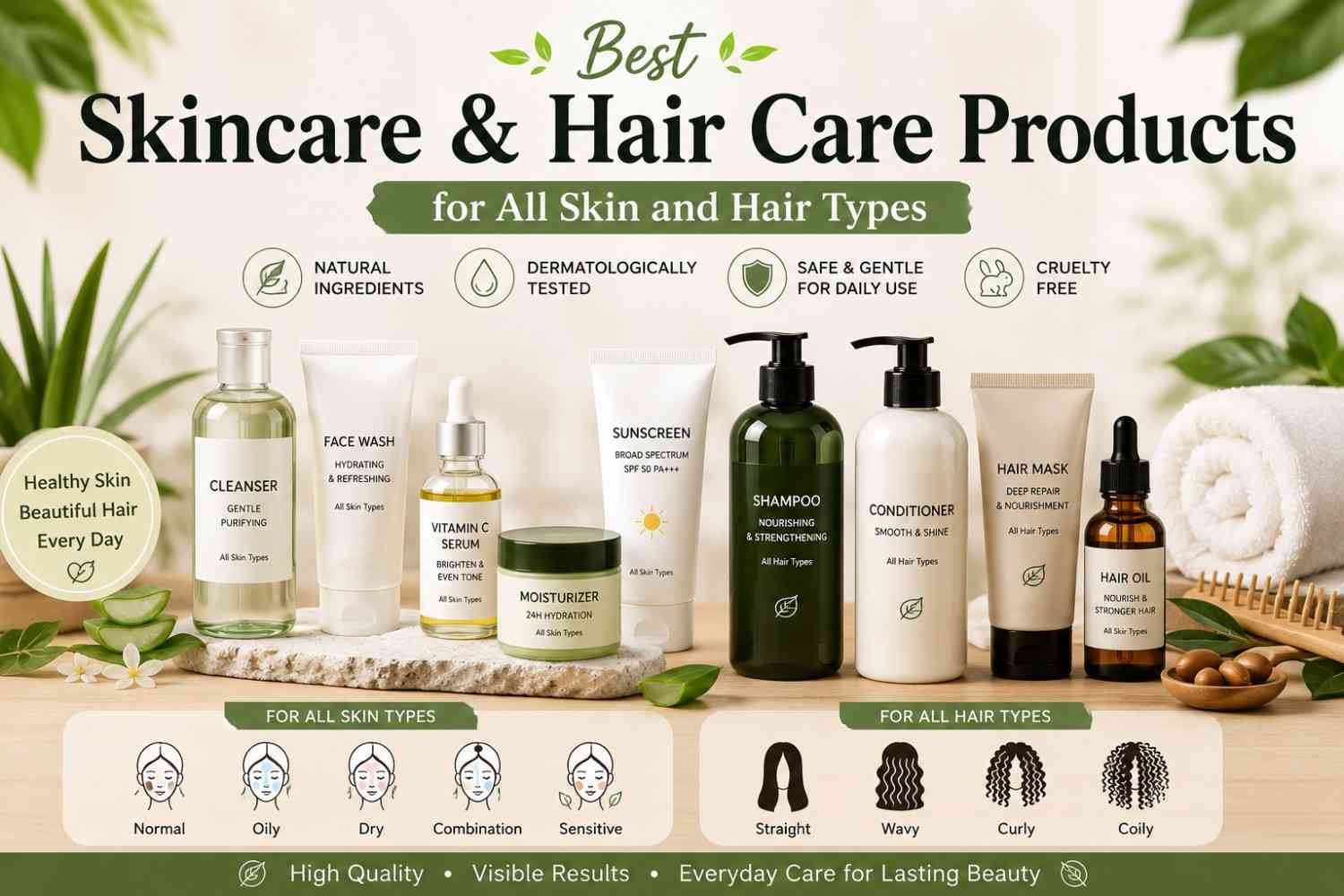
Hydration for Every Skin: How to Choose the Best Moisturizers for All Skin Types
-

- March 11th, 2026
- 662 views

FREE SEO Topical Map Generator: Find Your Next Content Ideas
The best moisturizers for all skin types balance hydration, barrier support, and texture so that dry, oily, sensitive, and combination skin all get what they need without irritation. This guide explains key ingredient roles, how to match formulas to skin concerns, and a repeatable checklist for confident choices.
- Identify skin type and primary concern (dehydration, sensitivity, oiliness, barrier damage).
- Look for humectants (hyaluronic acid, glycerin), ceramides, and appropriate occlusives for dry skin.
- Prefer non-comedogenic, fragrance-free options for acne-prone or sensitive skin.
- Use the HYDRATE Checklist to evaluate products and test for irritation on a small skin patch before full use.
Detected intent: Informational
What to know before shopping for the best moisturizers for all skin types
Choosing the right moisturizer starts with understanding three functional roles: humectants draw water into the skin, emollients smooth and fill gaps between cells, and occlusives lock moisture in. Key active ingredients to recognize include hyaluronic acid, glycerin, ceramides, niacinamide, fatty acids, and occlusives like petrolatum or dimethicone. For safety and best-practice skin guidance, consult resources from the American Academy of Dermatology: American Academy of Dermatology.
How to match moisturizers to skin types and concerns
Dry skin
Look for richer creams with ceramides, cholesterol, fatty acids, and occlusives (e.g., petrolatum, lanolin, or dimethicone). These ingredients support barrier repair and reduce trans-epidermal water loss.
Oily or acne-prone skin
Choose lightweight, non-comedogenic gels, lotions, or oil-free creams. Humectants such as glycerin and hyaluronic acid provide hydration without heaviness; niacinamide can help regulate sebum and support barrier health. Search terms like hydrating facial creams for oily skin and non-comedogenic moisturizer are useful.
Sensitive or reactive skin
Prefer fragrance-free, minimal-ingredient formulas with barrier-supporting ceramides and soothing agents like colloidal oatmeal or madecassoside. Patch-test before widespread use and avoid high concentrations of strong actives until tolerance is determined. The phrase moisturizers for sensitive skin should appear in product searches.
Combination skin
Use lighter formulations overall and layer if needed: a hydrating gel or lotion for oily zones and a slightly richer cream on dry patches. Ingredients that balance hydration without pore-clogging are ideal.
HYDRATE Checklist: A simple framework to evaluate any moisturizer
Apply this named checklist to narrow options quickly.
- Humectants present? (glycerin, hyaluronic acid)
- Yield to skin type: texture matches needs (gel vs cream)
- Dermatologist-friendly claims: non-comedogenic, fragrance-free, pH-balanced
- Restore barrier: ceramides, fatty acids, cholesterol
- Avoid irritants: high fragrance, alcohol denat., strong actives if sensitive
- Test patch first for 48 hours
- Evaluate results: less tightness, reduced flaking, no new breakouts
Practical example: One short scenario
Scenario: A person with combination skin notices dry cheeks and an oily T-zone, with occasional sensitivity after exfoliation. Using the HYDRATE Checklist, choose a lightweight, non-comedogenic gel-cream with hyaluronic acid and low levels of ceramides. Apply to the entire face; on very dry days, layer a thin occlusive (petrolatum or dimethicone-containing balm) only on the cheeks at night. Monitor for pore congestion in the T-zone and adjust to a lighter lotion if breakouts increase.
Practical tips for daily use and layering
- Apply moisturizer to damp skin after cleansing to improve humectant effectiveness.
- Use sunscreen during the day—moisturizer can be paired with a separate broad-spectrum SPF product.
- For actives (retinoids, AHAs/BHAs), introduce moisturizer first to reduce irritation, or use on alternate nights.
- Store products away from direct heat and sunlight to preserve ingredient stability.
Common trade-offs and mistakes when picking a moisturizer
Trade-offs
Heavy occlusives offer superior immediate relief for dry skin but can feel greasy and may clog pores in oilier skin. Fragrance-free formulas reduce sensory appeal but lower the risk of irritation. Thicker creams are more likely to restore a damaged barrier, while lightweight gels are more comfortable in humid climates.
Common mistakes
- Choosing based on price or packaging alone without checking active ingredients.
- Expecting moisturizers to replace targeted treatments (e.g., acne therapy, rosacea medications).
- Neglecting to patch-test new products, especially with sensitive skin or when using other actives.
Core cluster questions (for deep-dive articles or internal linking)
- How do humectants, emollients, and occlusives work together to hydrate skin?
- Which ingredients are best for repairing a damaged skin barrier?
- How to layer moisturizer with sunscreen and prescription topical treatments?
- What non-comedogenic ingredients are safe for acne-prone skin?
- How to test for moisturizer sensitivity and what reactions require a dermatologist?
Recommended routine by goal
Barrier repair: twice-daily cream with ceramides and cholesterol. Daily lightweight hydration: humectant-based gel or lotion with glycerin/hyaluronic acid. Overnight reparative treatment: add a richer occlusive layer on top of an active repair cream if tolerated.
FAQ
Which are the best moisturizers for all skin types?
There is no single product that suits every person, but the best moisturizers for all skin types share core qualities: a balance of humectants (glycerin, hyaluronic acid), barrier-supporting ceramides, a non-comedogenic label for oily-prone users, and minimal irritants (fragrance-free, low alcohol). Use the HYDRATE Checklist to compare options and select a formula that matches personal texture preference and skin concerns.
How often should moisturizer be applied?
Apply moisturizer at least twice daily—morning and night—and immediately after cleansing or showering to lock in moisture. Frequency can increase during dry seasons or with prescription treatments that cause dryness.
Can moisturizers cause acne?
Some heavy or occlusive formulas can contribute to pore congestion in acne-prone skin. Choose non-comedogenic, oil-free formulations and monitor for changes. Lightweight gels and lotions with humectants are usually safer choices for acne-prone users.
Are ceramide moisturizers good for dry skin?
Yes. Ceramide moisturizers help rebuild the lipid matrix of the stratum corneum and are effective in reducing dryness and improving barrier function.
When should a dermatologist be consulted about moisturizers?
Consult a dermatologist if irritation, persistent redness, worsening acne, or suspected allergic reactions occur after starting a new moisturizer. Additionally, seek professional advice for chronic conditions like eczema or rosacea to align moisturizer choice with medical treatment.