How AI Analytics Is Helping Businesses Turn Data Into Actionable Insights
-

- Published Updated
- 6,628 views

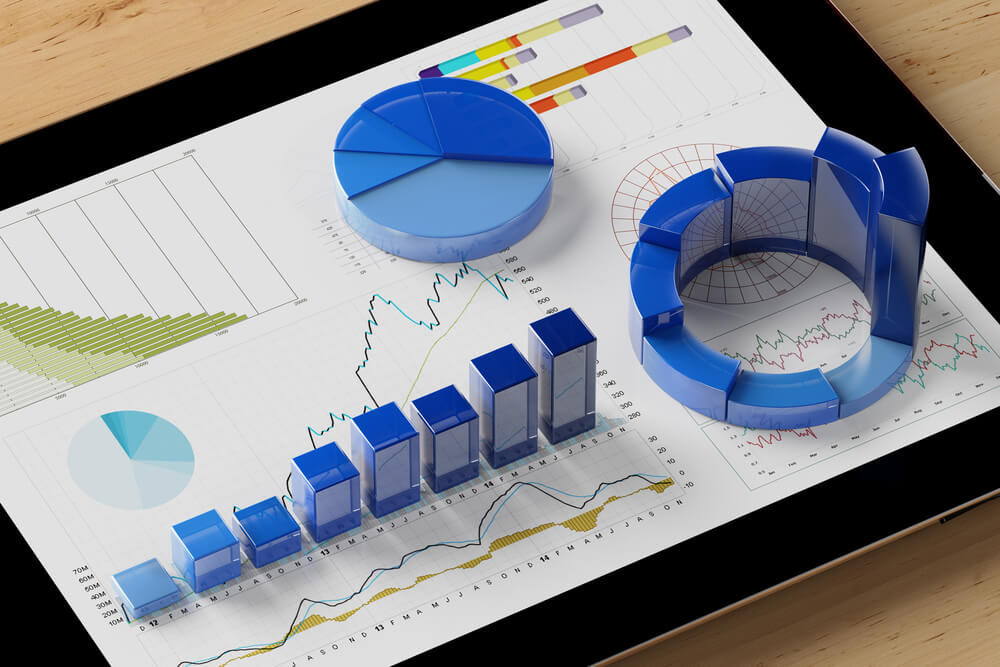
Every day, businesses generate enormous volumes of data — from customer purchases and website clicks to supply chain logs and social media interactions. The challenge has never been collecting that data. The challenge has always been making sense of it fast enough to do something useful with it.
This is exactly where AI analytics steps in.
Unlike traditional business intelligence tools that tell you what happened, AI analytics goes further — it tells you why it happened, what's likely to happen next, and what you should do about it. For businesses that are still relying on spreadsheets, static dashboards, or gut instinct, the gap between them and their AI-powered competitors is widening by the month.
Let's break down how AI analytics actually works in practice, and why it's quickly becoming one of the most valuable tools in a modern business's arsenal.
What Is AI Analytics, Really?
At its core, AI analytics combines artificial intelligence — particularly machine learning, natural language processing, and predictive modeling — with traditional data analysis. The result is a system that doesn't just organize data but actively interprets it, learns from it, and surfaces insights that a human analyst might take days or weeks to uncover manually.
Think of it this way: a conventional analytics tool will show you that your customer churn rate increased by 12% last quarter. An AI analytics platform will show you that, dig into the data automatically, and tell you that the spike was concentrated among users in a specific region who signed up during a promotional period and never completed onboarding — and that similar behavior patterns are currently showing up in a new cohort right now.
That's the difference between data reporting and genuine insight.
Turning Raw Data Into Decisions: Key Ways AI Analytics Is Making an Impact
1. Predictive Analytics That Actually Predict
One of the most valuable applications of AI analytics in business is forecasting. Retailers use it to predict inventory demand weeks in advance, reducing both overstock and stockouts. Financial institutions use it to anticipate credit risk before a loan goes bad. SaaS companies use it to flag customers who are likely to churn before they cancel.
The accuracy of these predictions keeps improving, too. Because AI models learn continuously from new data, they get better over time rather than relying on static rules that go stale.
2. Real-Time Decision Making
Traditional analytics workflows often involve data being collected, warehoused, cleaned, and analyzed — a process that can take days. By the time insights land on a decision-maker's desk, the moment to act on them has often passed.
AI analytics collapses that timeline dramatically. Modern platforms can process incoming data streams in real time and surface alerts, anomalies, or opportunities the moment they emerge. For industries like e-commerce, logistics, or financial trading, the ability to act on insights in real time isn't just a competitive edge — it's a survival requirement.
3. Removing Human Bias From Analysis
Human analysts, no matter how skilled, bring cognitive biases into their work. We look for patterns that confirm what we already believe, we weight recent data more heavily than historical trends, and we're drawn to narratives that make intuitive sense even when the numbers tell a different story.
AI analytics doesn't have those tendencies. It evaluates data without preconceptions, which means it often surfaces insights that a human analyst would have missed or dismissed. For businesses making high-stakes decisions around hiring, pricing, marketing spend, or product development, this objectivity can be genuinely transformative.
4. Personalisation at Scale
Personalisation has become a core expectation in consumer markets, but delivering it at scale has historically required enormous resources. AI analytics makes it feasible for even mid-sized businesses to tailor experiences to individual customers based on their actual behavior, preferences, and history — not just broad demographic segments.
E-commerce platforms use this to recommend products that individual users are genuinely likely to buy. Streaming services use it to surface content at exactly the right moment. B2B companies use it to identify which prospects are most likely to convert and personalise outreach accordingly. The result is better customer experiences and meaningfully higher conversion rates.
5. Operational Efficiency and Cost Reduction
Beyond customer-facing applications, AI analytics is helping businesses identify inefficiencies that would otherwise stay buried in operational data. Manufacturers use it to predict equipment failures before they happen, avoiding costly unplanned downtime. Logistics companies use it to optimise delivery routes dynamically, reducing fuel costs and improving on-time performance. HR teams use it to understand workforce patterns that lead to burnout and attrition.
In each of these cases, the insight generated by AI analytics pays for itself — often many times over.
Common Barriers (and Why They're Smaller Than You Think)
A lot of businesses hesitate to invest in AI analytics because they assume it requires a massive data science team, clean data, or an enterprise-level budget. The reality in 2024 has shifted significantly.
Modern AI analytics platforms are increasingly no-code or low-code, built to be used by business analysts and operations teams without deep technical expertise. Many integrate directly with the tools companies already use CRMs, ERPs, marketing platforms, and cloud storage systems reducing the friction of implementation considerably.
Data quality is a legitimate concern, but most serious AI analytics tools include data preparation and enrichment capabilities. You don't need perfect data to start generating value; you need data that's good enough and a willingness to improve it over time.
What to Look for When Evaluating AI Analytics Tools
If you're at the stage of evaluating platforms, a few factors matter more than others:
Explainability. AI models that produce insights without explaining their reasoning are difficult to trust and even harder to act on. Look for platforms that surface not just what the model found, but why — in plain language.
Integration depth. An AI analytics tool that sits in isolation from your existing data sources creates more work, not less. Prioritise platforms that connect seamlessly with where your data already lives.
Scalability. Your data volumes will grow. Ensure the platform you choose can handle that growth without requiring a costly migration down the road.
Human-in-the-loop design. The best AI analytics tools are built to augment human decision-making, not replace it. Look for interfaces that make it easy for your team to review, question, and act on AI-generated insights rather than accepting them blindly.
The Bottom Line
Data has always had the potential to drive better business decisions. The problem was always translating that raw potential into something a decision-maker could actually use in time to matter. AI analytics is solving that problem in ways that would have seemed ambitious just five years ago.
Businesses that embrace AI analytics aren't just getting faster access to the same information they already had. They're uncovering insights that wouldn't have surfaced through any other means — insights that are already shaping their strategies, improving their operations, and creating real distance between them and competitors who are still flying blind.
The question isn't whether AI analytics will become standard practice across industries. It already is. The question is whether your business is going to be ahead of that curve or catching up to it.