AI Call Automation: The Future Customer Will Never Wait on Hold Again
-

- Published Updated
- 4,377 views
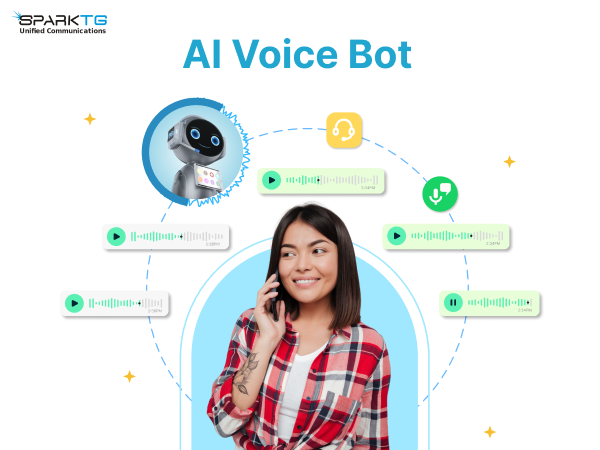
AI Call Automation uses artificial intelligence, intelligent IVR, voice recognition and automated call routing to answer, understand and resolve customer calls without forcing callers to wait for an available agent. It enables 24/7 self-service, faster routing and intelligent human handoffs, making traditional hold queues increasingly unnecessary.
Table of Contents
What Is AI Call Automation?
Why Do Businesses Need AI Call Automation?
Top Benefits of AI Call Automation
Key Features
How AI Call Automation Works
Industry Use Cases
Real Business Challenges Solved
Traditional vs Cloud vs SparkTG
Why Choose SparkTG
Implementation Process
Best Practices
Common Mistakes to Avoid
Future Trends
Expert Recommendations
Frequently Asked Questions
Conclusion
Introduction: The Hold Button Is Becoming Obsolete
For decades, waiting on hold was accepted as part of calling customer support.
A customer dialed a number, listened to an IVR menu, entered a few digits, waited in a queue and hoped an agent would answer soon.
That model is changing.
Customers now expect businesses to respond almost immediately. Zendesk's 2026 CX research reports that 74% of consumers expect customer service to be available 24/7, while 88% expect faster response times than they did a year earlier.
This shift is creating a new standard for business communication: customers should not have to wait simply because a human agent is unavailable.
That is where AI Call Automation becomes important.
Instead of using technology only to place callers into queues, businesses can use AI to understand what customers need, provide answers, complete routine tasks, authenticate callers, collect information and route complex conversations to the right human agent.
SparkTG's AI-powered communication platform brings together IVR, AI voice bots, cloud telephony, contact center capabilities, CRM integrations and omnichannel communication to automate customer interactions at scale.
The future isn't necessarily about removing human agents.
It is about removing unnecessary waiting.
What Is AI Call Automation?
AI Call Automation is the use of artificial intelligence to automatically handle, understand, route and respond to customer phone interactions. It combines conversational AI, speech recognition, intelligent IVR, automated workflows and cloud telephony to resolve routine requests without human intervention while transferring complex conversations to the right agent.
Traditional IVR largely depends on predefined menus such as "Press 1 for Sales" or "Press 2 for Support."
AI-enabled voice systems can go further.
A caller can simply say:
"I want to know where my order is."
The system can recognize the intent, access relevant information through an integrated application or CRM, provide an answer and escalate the call if necessary.
IBM describes contact center automation as the use of AI-powered technology to automate routine service processes and repetitive tasks so human agents can focus on more complex problems.
This distinction is important.
Traditional automation follows menus. AI automation understands conversations.
Why Businesses Need AI Call Automation
Customer support teams face a difficult equation:
More customers + more calls + higher expectations + limited agents = longer queues.
Hiring more agents can solve capacity problems, but it also increases recruitment, training, infrastructure and management costs.
AI Call Automation addresses the problem differently.
1. Customers Want Immediate Answers
Customers increasingly expect businesses to be available outside conventional working hours.
AI voice automation can provide 24/7 first-line assistance without requiring a full overnight support team.
2. Not Every Call Requires an Agent
Many inbound calls involve predictable requests:
Order status
Appointment confirmation
Account information
Business hours
Payment status
Delivery updates
FAQs
Booking requests
Cancellation requests
Basic troubleshooting
Automating these interactions allows agents to focus on cases where human judgment actually adds value.
3. Queues Create Customer Friction
A queue doesn't solve a customer's problem. It only manages the company's limited capacity.
AI changes the equation by increasing the number of interactions that can be handled simultaneously.
4. Customer Expectations Are Becoming AI-First
Zendesk's research shows that customers increasingly expect personalized, human-like and always-available AI experiences. Its 2025 report found that 75% of CX leaders expected 80% of customer interactions to be resolved without human intervention in the coming years.
The implication for businesses is straightforward:
Waiting is becoming a competitive disadvantage.
Top Benefits of AI Call Automation
1. Reduced Waiting Time
AI voice agents can answer calls immediately, eliminating the initial wait for an available representative.
2. 24/7 Customer Support
Customers can receive automated assistance outside business hours, weekends and holidays.
3. Intelligent Call Routing
AI can identify caller intent and route the interaction based on department, language, customer type, issue or priority.
SparkTG's IVR capabilities include intelligent routing, 24/7 call handling and call analytics.
4. Lower Agent Workload
Routine interactions can be automated so human agents spend more time on complex cases.
5. Better Agent Productivity
When calls reach agents with context already collected, the conversation starts further along.
6. Consistent Customer Experience
AI can follow approved workflows and provide consistent responses across thousands of calls.
7. Better Scalability
Businesses can manage sudden increases in call volume without immediately adding proportional headcount.
8. Actionable Call Data
AI-powered systems can capture intents, outcomes, transcripts, call metrics and other interaction data for optimization.
Key Features of AI Call Automation
A modern AI Call Automation system can include:
Conversational AI voice agents
Intelligent IVR
Speech recognition
Natural language understanding
Automated call routing
Intent detection
Customer authentication
CRM integration
API-based workflows
Call recording
Call transcription
Sentiment analysis
Call scoring
Automated callbacks
Multilingual voice support
Real-time analytics
Human-agent handoff
Omnichannel integration
WhatsApp Business API integration
Contact center dashboards
SparkTG's Voice Streaming technology, for example, supports real-time bidirectional call audio, enabling AI voice agents, live transcription, sentiment analysis and agent-assist applications.
How AI Call Automation Works
The process can be broken down into seven steps.
Step 1: Customer Calls
The customer dials a business number, toll-free number or virtual number.
Step 2: AI Answers
Instead of entering a traditional queue, the AI voice system answers immediately.
Step 3: Speech Is Converted Into Intent
The system processes what the customer says and determines the purpose of the call.
For example:
"I need to change my appointment to Friday."
The intent could be:
Appointment → Rescheduling
Step 4: Customer Context Is Retrieved
The system can connect with CRM, ticketing, order-management or business applications to retrieve relevant information.
Step 5: AI Resolves the Request
If the request falls within the automated workflow, the AI completes it.
Step 6: Human Handoff When Necessary
If the issue is complex, sensitive or outside the AI's authority, the call is transferred to the appropriate agent.
The important difference is that the customer doesn't necessarily start from zero.
Step 7: Interaction Is Logged
The conversation can be recorded, transcribed, analyzed and logged for reporting, quality assurance and future personalization.
This creates a human + AI contact center, rather than an AI-only contact center.
AI Call Automation vs Traditional IVR
Capability |
Traditional IVR |
AI Call Automation |
Interaction |
Menu-based |
Conversational |
Input |
Keypad/limited speech |
Natural language |
Routing |
Rule-based |
Intent-aware |
Self-service |
Limited |
Advanced |
Personalization |
Basic |
Context-driven |
Scalability |
High |
Very high |
24/7 availability |
Yes |
Yes |
Complex requests |
Usually needs agent |
AI can attempt resolution |
CRM integration |
Possible |
Core capability |
Analytics |
Call metrics |
Conversation + intent insights |
Human handoff |
Queue-based |
Context-aware |
Traditional IVR still has an important role. The objective is not to eliminate IVR but to make it more intelligent.
Industry Use Cases
E-Commerce
AI can handle:
Order tracking
Delivery questions
Returns
Refund status
Product information
Payment-related queries
A customer asking, "Where is my order?" should not need to wait five minutes for an agent to read the same information available in the company's system.
Healthcare
Healthcare organizations can use voice automation for:
Appointment scheduling
Appointment reminders
Department routing
Basic patient information
Follow-up calls
Prescription-related workflows where appropriate
Sensitive medical situations should still be routed to qualified professionals.
BFSI
Financial institutions can automate:
Balance-related requests
Service requests
Branch information
Application status
Payment reminders
Basic account workflows
Strong authentication, security and compliance controls are essential.
Education
Educational institutions can automate:
Admission enquiries
Course information
Application status
Counselling appointment scheduling
Fee-related information
Campus enquiries
Travel & Hospitality
AI voice automation can assist with:
Booking enquiries
Reservation changes
Cancellation requests
Travel information
Customer support
Hotel or itinerary questions
Real Estate
AI can qualify inbound leads, collect property preferences, schedule site visits and route high-intent prospects to sales representatives.
Real Business Challenges Solved
Challenge 1: High Call Volume
Problem: Agents cannot answer every call during peak periods.
AI solution: Automate predictable requests and route high-value conversations intelligently.
Challenge 2: After-Hours Calls
Problem: Customers call outside working hours and receive voicemail.
AI solution: Provide an AI-powered first-response layer around the clock.
Challenge 3: Repetitive Queries
Problem: Agents repeatedly answer the same basic questions.
AI solution: Let AI handle frequently asked questions and routine workflows.
Challenge 4: Wrong Department Routing
Problem: Customers are transferred multiple times.
AI solution: Use intent detection to identify the correct destination earlier.
Challenge 5: Agent Burnout
Problem: Repetitive calls consume agent time and energy.
AI solution: Automate low-complexity interactions and reserve human capacity for higher-value conversations.
Traditional vs Cloud-Based vs SparkTG Solution
Capability |
Traditional Solution |
Cloud-Based Solution |
SparkTG Solution |
Infrastructure |
On-premise hardware |
Cloud |
Cloud-native communication platform |
AI Voice |
Limited |
Available |
AI-powered voice and conversational capabilities |
IVR |
Basic/complex setup |
Configurable |
Intelligent IVR |
Call Routing |
Rule-based |
Advanced rules |
Intelligent routing + AI workflows |
Scalability |
Hardware-dependent |
Elastic |
Designed for business growth |
CRM Integration |
Often complex |
API-based |
Multiple integrations and APIs |
Analytics |
Basic |
Advanced |
Conversation and interaction insights |
Omnichannel |
Limited |
Available |
Voice + WhatsApp + chat capabilities |
Deployment |
Slower |
Faster |
Rapid cloud deployment |
Remote Teams |
Difficult |
Supported |
Virtual contact center |
AI Insights |
Limited |
Available |
AI-powered interaction analysis |
Support |
Hardware/vendor dependent |
Provider dependent |
Dedicated support options |
SparkTG's Virtual Contact Center is designed to support inbound and outbound interactions across office, remote and hybrid environments, with features including smart IVR, real-time voice routing, CRM integration and agent monitoring.
Why Choose SparkTG?
SparkTG combines cloud telephony, IVR, AI voice technology, contact center capabilities, WhatsApp Business API and interaction intelligence into a unified communication ecosystem.
Reliability
SparkTG states that its platform uses redundant systems and automatic failover protection, with a 99.99% uptime target on its platform.
For customer communications, reliability matters because an unavailable phone system can directly affect sales and support.
Scalability
Cloud infrastructure enables organizations to expand communication capacity without building additional physical telecom infrastructure.
Security
AI Call Automation can involve sensitive customer conversations. Businesses should evaluate encryption, authentication, access controls, data handling and regulatory requirements before deployment.
SparkTG's Voice Streaming platform describes encrypted media transport, token authentication and India-based infrastructure aligned with applicable TRAI and DLT requirements.
Support
Technology adoption is not only about software. Contact center teams need onboarding, integration assistance, troubleshooting and ongoing optimization.
Customization
Every business has different workflows.
A healthcare provider may need appointment automation.
An e-commerce company may need order-status automation.
A sales organization may need lead qualification.
AI Call Automation should therefore be configured around business processes rather than treated as a generic chatbot.
Pricing Benefits
Cloud-based communication can reduce the need for physical PBX infrastructure and enable usage-based scaling.
SparkTG also provides cloud contact center capabilities designed to reduce upfront infrastructure requirements and support flexible scaling.
For pricing, businesses should compare total cost of ownership, including telecom charges, implementation, integrations, agent productivity, infrastructure and ongoing support—not simply the per-minute AI cost.
Implementation Process
A practical AI Call Automation rollout can follow these steps:
Audit current call volumes
Identify repetitive call types
Calculate peak-hour demand
Map existing IVR and routing flows
Select automation opportunities
Connect CRM and business APIs
Build AI voice workflows
Define human escalation rules
Test accuracy and edge cases
Launch with a controlled customer segment
Monitor KPIs
Continuously optimize conversations
Start with high-volume, low-risk interactions rather than attempting to automate everything on day one.
Best Practices for AI Call Automation
1. Automate the Right Calls
Prioritize repetitive, predictable interactions.
2. Keep Human Handoff Easy
AI should never become a barrier between a frustrated customer and a human agent.
3. Preserve Context
When transferring a call, pass the customer intent, information already collected and relevant history to the agent.
4. Measure More Than Automation Rate
Track:
First-contact resolution
Average handling time
Customer satisfaction
Abandonment rate
Transfer rate
AI containment rate
Escalation rate
Resolution time
Call conversion
Cost per interaction
5. Test Real Conversations
Customers rarely speak like scripted test cases.
Test accents, background noise, incomplete sentences, interruptions, multilingual speech and unexpected questions.
6. Build Responsible AI Controls
Define what the AI can and cannot say, what actions it can execute and when it must escalate.
7. Connect Voice With Other Channels
A customer might call after receiving a WhatsApp notification or visiting a website.
A unified communication strategy allows those interactions to work together rather than operating in separate silos.
Common Mistakes to Avoid
Mistake 1: Automating Everything
Not every customer conversation should be automated.
Mistake 2: Building Another Rigid IVR
Replacing "Press 1, Press 2" with a poorly designed voice bot doesn't solve the fundamental problem.
Mistake 3: Ignoring Context
An AI system without access to relevant customer information may provide generic responses.
Mistake 4: No Escalation Strategy
Every AI workflow should have clearly defined human handoff conditions.
Mistake 5: Measuring Cost Only
A cheaper interaction is not automatically a better interaction.
Measure customer outcomes as well.
Mistake 6: Neglecting Security
Voice data can contain sensitive information. Security and governance should be designed into the architecture from the beginning.
The Future of AI Call Automation
The next phase of AI Call Automation will move beyond answering questions.
Agentic Voice AI
AI agents will increasingly be able to take actions rather than simply provide information.
For example:
Customer: "Please reschedule my delivery for Saturday."
AI: Checks availability → updates the delivery → confirms the new slot → sends confirmation.
This is significantly more valuable than simply telling the customer how to reschedule.
Gartner predicts that agentic AI could autonomously resolve 80% of common customer service issues by 2029, while also emphasizing that organizations need to strategically integrate AI rather than assume human agents will disappear.
Predictive Customer Service
Future systems will increasingly identify likely customer needs before the customer has to explain them.
Real-Time Agent Assist
When human intervention is required, AI will support agents with live transcription, customer context, knowledge retrieval, recommendations and next-best actions.
Multilingual Voice Automation
Indian businesses in particular can benefit from systems capable of handling multiple regional languages and natural conversational patterns.
Voice + WhatsApp + AI
The future contact center won't be voice-only.
A customer could begin on WhatsApp, move to a voice call and receive a confirmation message without having to repeat the entire conversation.
Emotion and Sentiment Awareness
Voice systems are increasingly capable of recognizing conversational signals that indicate frustration, urgency or satisfaction.
The goal should not be to manipulate emotions, but to identify when a human agent is needed.
AI-Human Collaboration
The strongest model is likely to be AI-first for routine work and human-first for complexity, empathy and judgment.
Gartner has explicitly cautioned against assuming that the future contact center should become completely agentless, noting that AI's strongest value comes from amplifying human talent.
Expert Recommendations
For businesses considering AI Call Automation, the recommended approach is:
1. Start with the customer journey, not the technology.
Identify where customers experience the most friction.
2. Target high-volume, repetitive calls first.
This provides measurable operational value quickly.
3. Combine intelligent IVR with conversational AI.
Rule-based routing remains useful, while AI handles natural language and more complex intent.
4. Integrate the CRM early.
The quality of automation depends heavily on the context available to the system.
5. Make escalation intelligent.
The AI should recognize when it has reached the boundary of its capability.
6. Treat AI as part of the contact center, not a separate tool.
The real value appears when telephony, CRM, WhatsApp, analytics and AI work together.
7. Continuously evaluate performance.
AI Call Automation should be improved using real interaction data, not left untouched after deployment.
Frequently Asked Questions
1. What is AI Call Automation?
AI Call Automation uses artificial intelligence to answer, understand, route and resolve customer calls automatically. It combines voice AI, speech recognition, intelligent IVR, automated workflows and CRM integrations to handle routine interactions while transferring complex issues to human agents.
2. Can AI Call Automation eliminate customer waiting?
It can significantly reduce unnecessary waiting by answering calls immediately and resolving routine requests through self-service. When a human is required, intelligent routing can send the customer to the appropriate agent instead of making them navigate multiple departments.
3. Is AI Call Automation better than traditional IVR?
AI Call Automation is more conversational and can understand natural language, while traditional IVR primarily relies on predefined menus. However, the two technologies can work together. Intelligent IVR can provide structure while conversational AI handles natural-language requests.
4. Can AI voice bots replace human customer support agents?
Not completely. AI is particularly effective for repetitive and predictable interactions, while human agents remain valuable for complex, sensitive and emotionally demanding conversations. Gartner's research similarly emphasizes human-agent augmentation rather than a completely agentless model.
5. How does AI automatically route calls?
AI analyzes what the caller says to identify intent, urgency, customer type or issue category. It then applies routing rules to connect the caller with the appropriate department, agent, workflow or automated service.
6. Can AI Call Automation integrate with CRM software?
Yes. AI call systems can integrate with CRM platforms and other business applications through APIs, webhooks and native integrations. This enables customer information, call outcomes and interaction history to move between systems.
7. Can AI handle calls 24/7?
Yes. AI voice systems can operate continuously, including nights, weekends and holidays. This enables businesses to provide first-line customer support outside traditional business hours.
8. What industries can use AI Call Automation?
Almost any industry with recurring phone interactions can benefit. Common use cases include e-commerce, healthcare, BFSI, education, travel, hospitality, logistics, real estate, telecommunications and customer support.
9. How does AI Call Automation reduce contact center costs?
It reduces the volume of repetitive interactions handled exclusively by human agents, improves agent productivity and allows organizations to scale call handling without proportionally increasing staffing.
10. How should a business start with AI Call Automation?
Start by analyzing call volumes and identifying repetitive, low-risk interactions. Automate one or two high-value workflows, integrate the required business systems, define escalation rules and measure customer and operational outcomes before expanding.
Conclusion: The Future Customer Will Not Wait on Hold
The future of customer communication isn't simply about faster agents.
It is about fewer reasons to wait for an agent in the first place.
AI Call Automation allows businesses to answer calls immediately, understand customer intent, automate routine requests, route complex issues intelligently and provide support around the clock.
The most successful organizations will not necessarily replace their contact center teams with AI. They will redesign the customer journey so AI handles repetitive work while human agents focus on conversations where expertise, empathy and judgment matter most.
That is the real promise of AI Call Automation:
Less waiting. Faster resolution. Smarter routing. Better customer experiences.
For businesses looking to move beyond traditional IVR and build a more intelligent customer communication ecosystem, SparkTG combines cloud telephony, intelligent IVR, AI voice capabilities, virtual contact center technology, WhatsApp Business API and interaction intelligence into a unified platform.