AI Copilots vs AI Agents: Understanding the Future of Intelligent Automation
-

- April 24th, 2026
- 7,725 views
Introduction
Artificial Intelligence is rapidly transforming how businesses operate, innovate, and scale. Among the most impactful advancements are AI copilots and AI agents—two powerful concepts often used interchangeably but fundamentally different in purpose and capability. Understanding the distinction between AI copilots vs AI agents is essential for organizations aiming to leverage automation effectively. While both enhance productivity, they operate at different levels of autonomy and intelligence.
What Are AI Copilots?
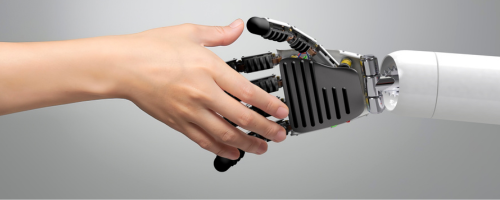
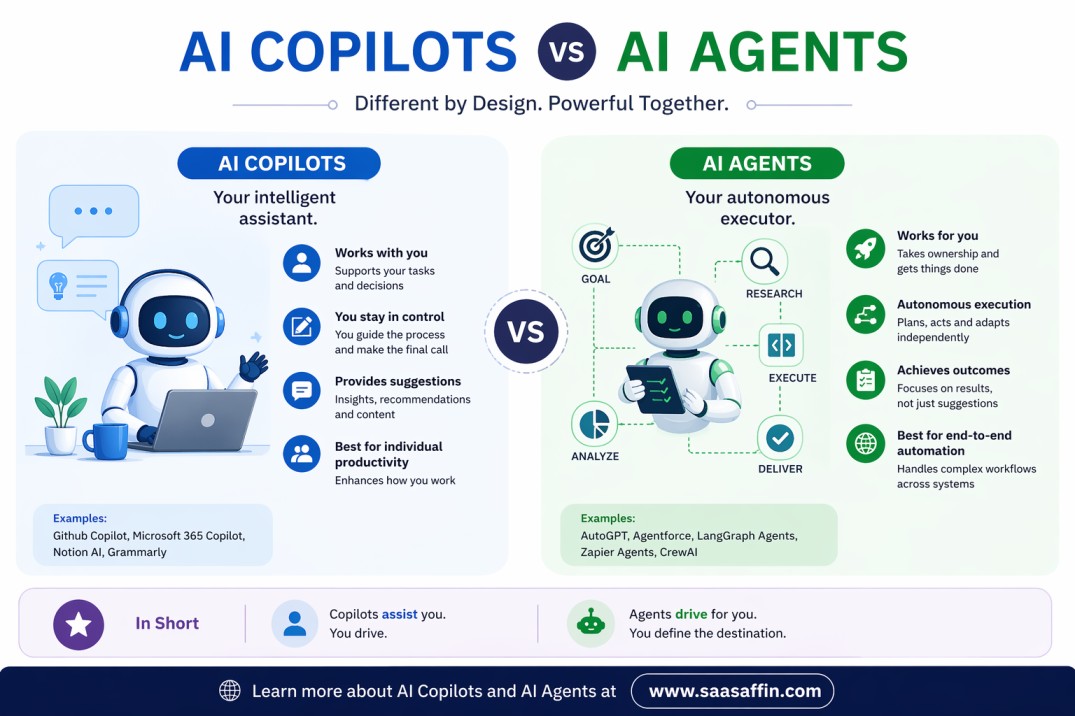
AI copilots are assistive systems designed to work alongside humans. They enhance decision-making, streamline workflows, and provide contextual recommendations in real time. Think of them as smart assistants that augment human capabilities rather than replace them.
These systems rely heavily on user input and interaction. For example, in content creation, an AI copilot might suggest improvements, generate drafts, or offer insights based on prompts. However, the human user remains in control, making final decisions and guiding the process.
AI copilots are widely used in areas such as:
- Content writing and editing
- Customer support assistance
- Coding and software development
- Data analysis and reporting
The key strength of AI copilots lies in collaboration. They reduce manual effort, improve efficiency, and help users achieve better outcomes without taking full control.
What Are AI Agents?
AI agents, on the other hand, are autonomous systems capable of performing tasks independently. They can make decisions, execute actions, and adapt to changing conditions without constant human intervention.
Unlike copilots, AI agents are goal-oriented. Once given an objective, they can plan, execute, and optimize workflows on their own. This makes them highly valuable for complex and repetitive tasks that require minimal supervision.
Common use cases of AI agents include:
- Automated customer service bots
- Workflow automation in businesses
- Financial trading systems
- Supply chain optimization
AI agents leverage advanced technologies such as machine learning, reinforcement learning, and natural language processing to operate autonomously. Their ability to learn and improve over time makes them a powerful tool for scalability.
Key Differences Between AI Copilots vs AI Agents
1. Level of Autonomy
The most significant difference lies in autonomy. AI copilots assist users and require continuous input, while AI agents function independently once assigned a task.
2. Human Involvement
AI copilots depend on human guidance and collaboration. In contrast, AI agents minimize human involvement by handling tasks end-to-end.
3. Decision-Making Capability
AI copilots provide suggestions and insights, leaving decisions to humans. AI agents, however, can make decisions and take actions based on predefined goals and real-time data.
4. Complexity of Tasks
Copilots are ideal for tasks that require creativity, judgment, and human oversight. AI agents excel in handling repetitive, data-driven, and complex workflows.
5. Adaptability
AI agents are generally more adaptive, as they can learn from their environment and improve performance over time. Copilots are more static and rely on user interaction for direction.
Benefits of AI Copilots
AI copilots offer several advantages, especially for professionals and teams:
- Enhanced productivity through real-time assistance
- Improved accuracy and reduced errors
- Better decision-making with data-driven insights
- Seamless integration into existing workflows
They are particularly useful in environments where human expertise is essential, and AI serves as a supportive tool.
Benefits of AI Agents
AI agents bring a different set of benefits focused on automation and scalability:
- Reduced operational costs through automation
- Increased efficiency with minimal human intervention
- Ability to handle large-scale operations
- Continuous learning and improvement
These systems are ideal for businesses looking to automate processes and reduce dependency on manual labor.
Use Cases in Modern Businesses
In today’s digital landscape, organizations often use both AI copilots and AI agents together. For instance, a marketing team might use an AI copilot to generate campaign ideas while deploying AI agents to automate email marketing and customer segmentation.
Similarly, in customer support, copilots assist human agents with responses and suggestions, while AI agents handle routine queries independently. This hybrid approach maximizes efficiency and ensures a balance between automation and human touch.
Challenges and Considerations
Despite their advantages, both AI copilots and AI agents come with challenges. Copilots may require constant user engagement, which can limit scalability. AI agents, while powerful, may raise concerns about control, transparency, and decision accuracy.
Businesses must carefully evaluate their needs before choosing between the two. Factors such as task complexity, required autonomy, and risk tolerance play a crucial role in determining the right approach.
Conclusion
The debate around AI copilots vs AI agents is not about which is better, but about which is more suitable for a given use case. AI copilots empower humans by enhancing their capabilities, while AI agents drive automation by operating independently.
As technology continues to evolve, the integration of both systems will define the future of intelligent automation. Businesses that understand and leverage the strengths of each will be better positioned to innovate, scale, and stay competitive in an increasingly AI-driven world.