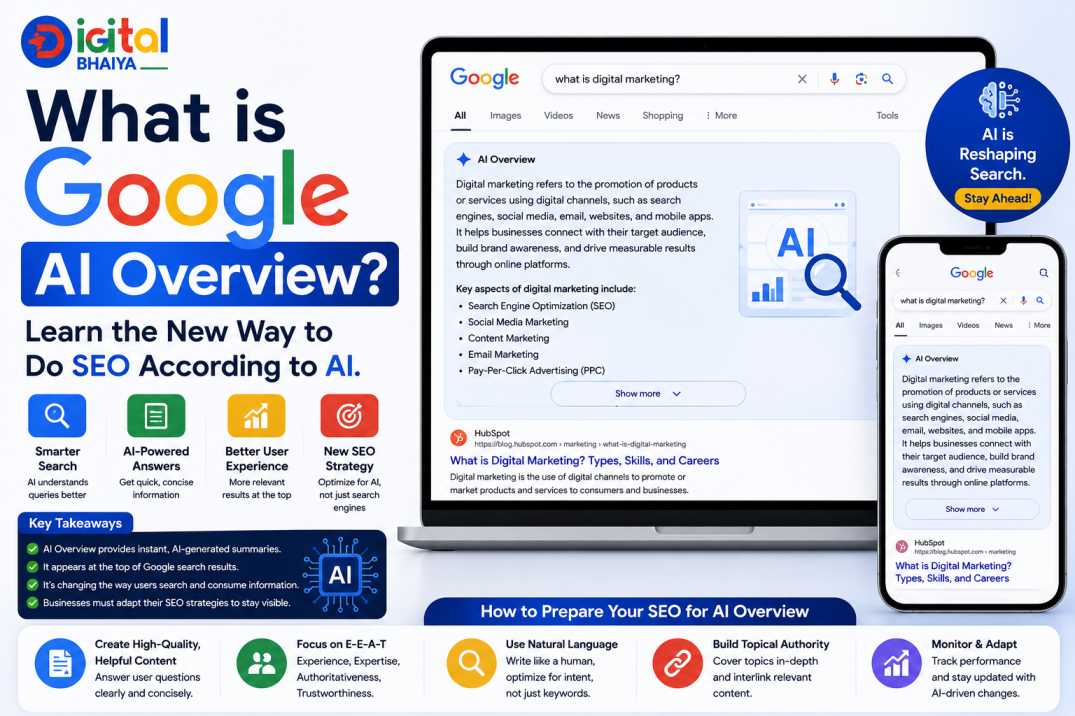
How AI Is Changing SEO Strategies for the Modern Search Landscape
-

- Published Updated
- 91 views

Artificial intelligence is transforming the way search engines understand information and how people interact with search results. Search has moved beyond simple keyword matching, with modern systems increasingly interpreting context, intent, relationships, and the overall usefulness of online content.
For SEO professionals and content creators, this development creates a need to understand how artificial intelligence works alongside traditional search optimization. Rather than focusing only on individual keywords, modern SEO increasingly involves creating content that clearly answers questions and provides useful information.
How AI Is Influencing SEO
Understanding search intent: AI can analyze the purpose behind a search query and identify whether someone is seeking information, comparing options, finding a specific resource, or completing a task.
Processing natural language: People often search using conversational questions rather than short keyword phrases. AI helps search systems understand the meaning of these longer queries.
Connecting related topics: AI can identify relationships between concepts, allowing search systems to develop a broader understanding of webpage content.
Improving information discovery: Search technologies can organize information from different sources and present it in ways that help users find relevant answers more efficiently.
Recognizing context: The words surrounding a topic can provide important clues about what a webpage actually discusses.
Why Context Matters in Modern SEO
A webpage can contain a particular keyword without providing a complete answer to the user's question. AI-driven search systems are increasingly capable of examining the wider context of a page.
For example, an article about SEO may naturally discuss:
Search intent
Content structure
Technical accessibility
Internal links
Page experience
Topic relevance
Content freshness
User questions
These related concepts can help explain the subject more completely than repeatedly using one phrase.
AI and Content Research
AI can be useful during the research stage of content development. It can help identify questions, related subjects, terminology, and areas where existing explanations may be incomplete.
Content researchers can use AI to:
Generate potential questions around a topic.
Group related concepts.
Identify different search intents.
Organize research notes.
Find potential content gaps.
Develop outlines for educational resources.
However, AI-generated research should be reviewed carefully. Information can become outdated, lack context, or contain factual errors. Human judgment remains important when evaluating sources and deciding which information is appropriate to publish.
The Importance of Human Expertise
The growth of AI does not mean that human involvement is becoming unnecessary. In many cases, human expertise becomes even more valuable because someone needs to evaluate information, add context, identify inaccuracies, and determine whether content genuinely helps the intended audience.
Effective content can combine:
AI-assisted research
Human experience
Reliable information
Original analysis
Clear explanations
Practical examples
This combination can help create resources that are useful beyond simply attracting search traffic.
Technical SEO Still Has a Role
AI does not replace the technical foundations of SEO. Search systems still need to access, process, and understand webpages.
Important technical considerations include:
Website accessibility
Mobile usability
Page performance
Logical site architecture
Internal linking
Proper indexing
Clear page structure
Secure connections
A technically sound website gives search systems a better opportunity to discover and process its content.
Creating Content for AI-Era Search
Content creators can adapt to AI-driven search by concentrating on the quality and usefulness of information rather than trying to predict every change in search technology.
A practical approach includes:
Begin with a genuine user question.
Provide a direct and understandable answer.
Organize information with descriptive headings.
Explain important concepts clearly.
Use related terminology naturally.
Avoid unnecessary repetition.
Check important facts before publishing.
Review and update older information when necessary.
These practices can support both human readers and systems designed to interpret online information.
Looking Ahead
AI will likely continue influencing how search engines organize information and how users interact with search results. As this happens, SEO can increasingly become a process of creating useful, well-structured, and contextually relevant information.
AI will likely continue influencing how search engines organize information and how users interact with search results. As this happens, SEO can increasingly become a process of creating useful, well-structured, and contextually relevant information.
The growth of AI does not mean that human involvement is becoming unnecessary. In many cases, human expertise becomes even more valuable because someone needs to evaluate information, add context, identify inaccuracies, and determine whether content genuinely helps the intended audience.
Understanding these changes can be especially useful for businesses and publishers working in specialized areas. For example, a real estate lead generation agency can study how AI-driven search affects the way audiences discover property-related information and questions online.
The broader lesson is that modern SEO is not simply about placing keywords on a page. It involves understanding what people are looking for, providing accurate information, organizing topics clearly, and creating content that remains useful across changing search experiences. As AI continues to develop, these principles can provide a stable foundation for effective digital content.