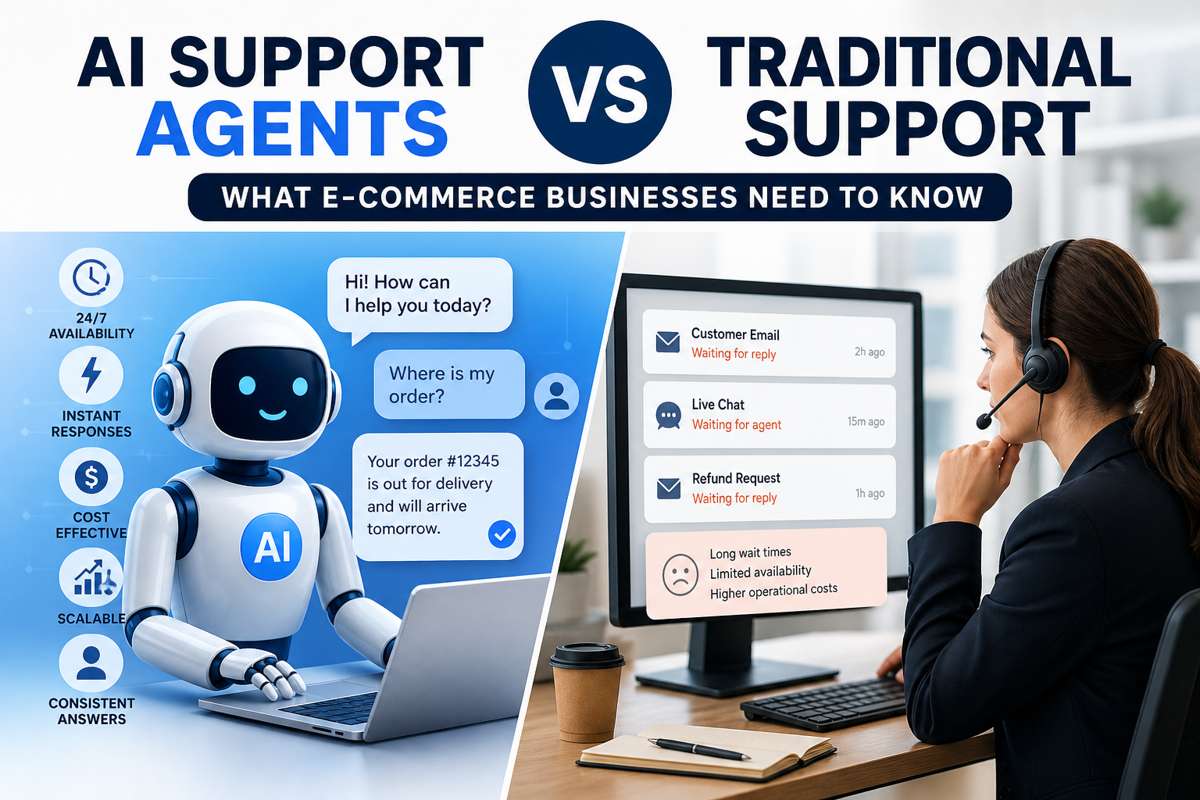
AI Support Agents vs Traditional Support: What E-commerce Businesses Need to Know
-
- May 06th, 2026
- 5,801 views

FREE SEO Topical Map Generator: Find Your Next Content Ideas
In today’s fast-paced e-commerce landscape, customer support has become a key differentiator between brands that grow and those that struggle to retain customers. Shoppers expect instant replies, personalized assistance, and seamless experiences across all touchpoints. This shift in expectations has forced businesses to rethink how they handle customer service.
At the center of this transformation is the growing debate: AI support agents vs traditional support—which one is better for e-commerce businesses? The answer isn’t as simple as choosing one over the other. Instead, understanding their differences can help you build a smarter, more scalable support system.
Understanding Traditional Customer Support
Traditional customer support relies on human agents to handle customer queries through email, live chat, or phone calls. This approach offers a human touch, emotional intelligence, and the ability to handle complex or sensitive issues.
However, traditional support comes with limitations:
- Limited working hours unless you hire large teams
- Slower response times during peak hours
- Higher operational costs (salaries, training, infrastructure)
- Inconsistent responses depending on the agent
While human support is essential, it becomes harder to scale as your e-commerce business grows.
What Are AI Support Agents?
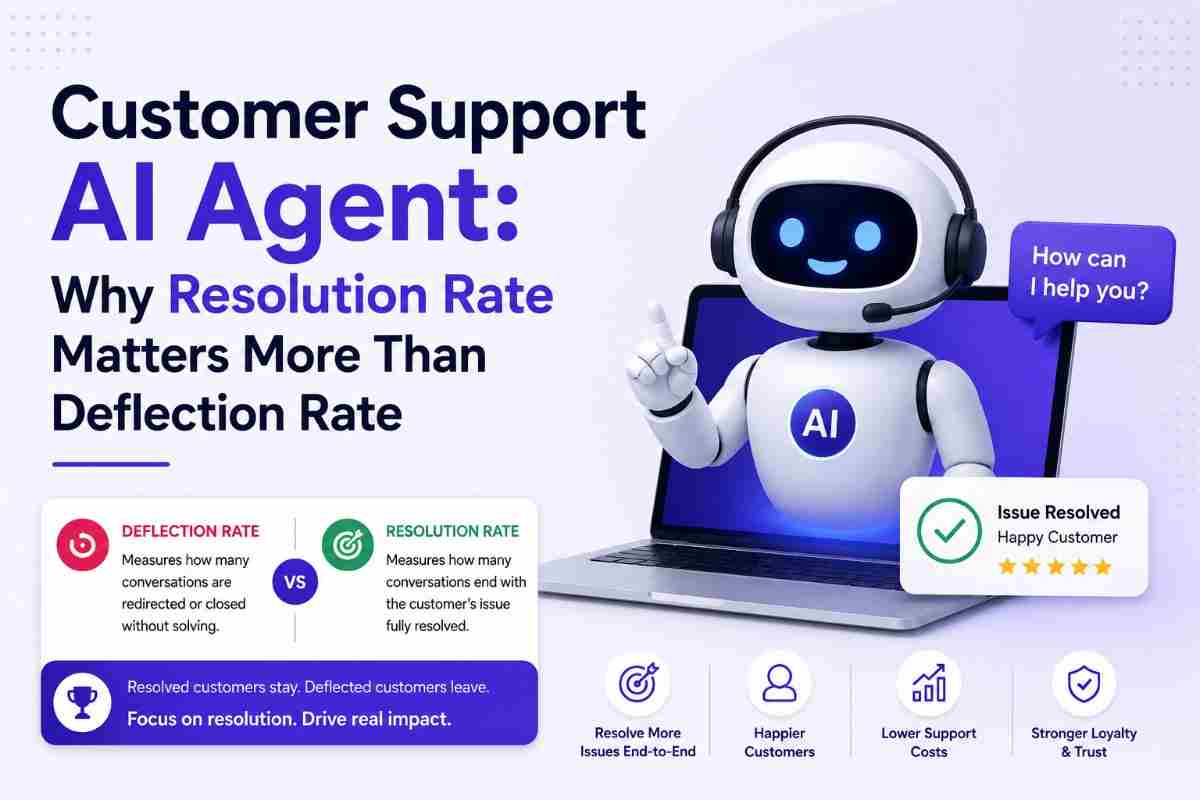
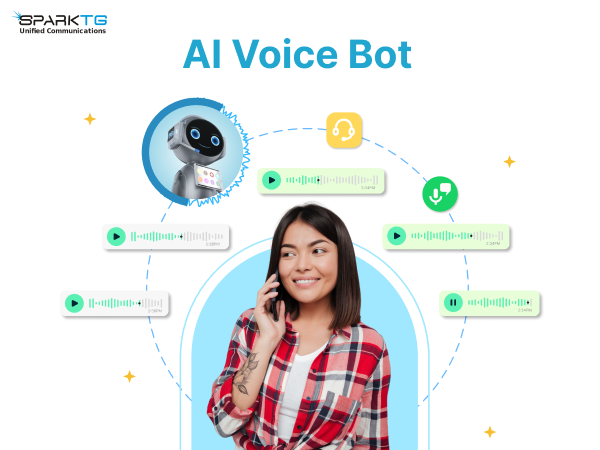
AI support agents are automated systems powered by artificial intelligence that can handle customer interactions in real time. These agents use machine learning and natural language processing to understand and respond to customer queries.
They can be integrated into websites, mobile apps, and messaging platforms to provide instant support without human intervention.
Common tasks handled by AI agents include:
- Answering FAQs
- Tracking orders
- Managing returns and refunds
- Recommending products
- Assisting customers during checkout
Speed and Availability: AI Takes the Lead
One of the biggest advantages of AI support agents is their speed. Customers no longer want to wait minutes—or hours—for a reply.
AI agents provide:
- Instant responses
- 24/7 availability
- Ability to handle thousands of queries simultaneously
Traditional support, on the other hand, depends on agent availability and workload. Even the best teams can struggle during high-traffic periods like sales or holidays.
For e-commerce businesses, faster response times directly translate into better customer satisfaction and higher conversion rates.
Cost Efficiency: Scaling Without Breaking the Bank
Hiring and maintaining a large support team is expensive. As your business grows, so does the need for more agents.
AI support agents offer a cost-effective alternative by:
- Reducing the need for large teams
- Automating repetitive queries
- Lowering training and operational costs
While there is an initial investment in AI tools, the long-term savings can be significant.
Personalization and Consistency
Modern AI systems are capable of delivering personalized experiences by analyzing customer data such as browsing behavior, purchase history, and preferences.
AI agents can:
- Recommend relevant products
- Provide tailored responses
- Maintain consistent tone and accuracy
Traditional support can also offer personalization, but it depends heavily on the individual agent’s experience and workload.
Consistency is where AI clearly stands out—it delivers the same quality of service every time.
Handling Complexity: Humans Still Matter
Despite all the advantages of AI, there are areas where traditional support remains essential.
Human agents excel at:
- Handling complex or unique issues
- Managing emotional or sensitive situations
- Building deeper customer relationships
AI agents may struggle with nuanced conversations or unexpected scenarios. This is why the most effective approach is not replacing humans but supporting them.
The Hybrid Approach: Best of Both Worlds
The smartest e-commerce businesses are adopting a hybrid model that combines AI support agents with human teams.
Here’s how it works:
- AI handles repetitive and simple queries
- Complex issues are escalated to human agents
- Humans focus on high-value interactions
This approach ensures efficiency without sacrificing the human touch.
Impact on Customer Experience
Customer experience is the ultimate measure of success. AI support agents enhance this experience by:
- Reducing wait times
- Providing instant solutions
- Offering round-the-clock assistance
At the same time, human agents ensure that customers feel heard and valued when dealing with more complex concerns.
Together, they create a seamless and satisfying support journey.
Which One Should You Choose?
If you’re running a growing e-commerce business, relying solely on traditional support can limit your scalability. On the other hand, using only AI may leave gaps in handling complex interactions.
The ideal strategy is to integrate AI support agents into your existing system while retaining human oversight. This allows you to:
- Scale efficiently
- Reduce costs
- Improve response times
- Deliver better customer experiences
Final Thoughts
The debate between AI support agents and traditional support isn’t about choosing a winner—it’s about understanding how they complement each other.
AI brings speed, efficiency, and scalability, while human agents bring empathy and problem-solving skills. Together, they form a powerful support system that meets modern customer expectations.
For e-commerce businesses looking to stay competitive, adopting AI support agents is no longer optional—it’s a strategic necessity.