AI-Powered Table Management: How It Actually Works for Restaurants
-

- Published Updated
- 82 views
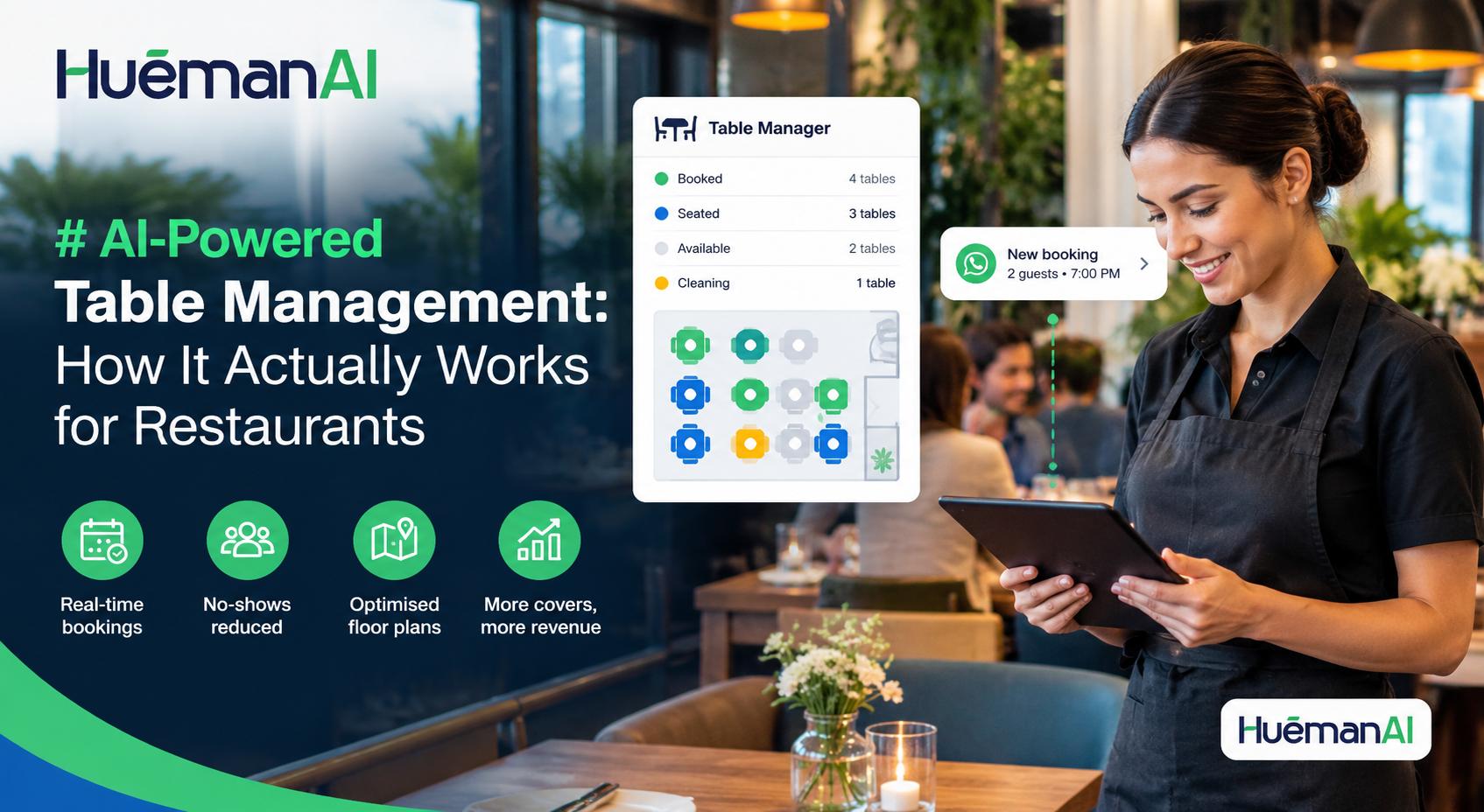
Walk into most restaurants during a Friday dinner rush, and you'll see the same scene: a host physically walking the floor to check which tables are free, juggling a paper waitlist, and trying to remember which table just got their check. It works — barely — right up until the moment two parties get seated at the same table, or a walk-in waits twenty minutes because nobody noticed Table 6 cleared out ten minutes ago.
This is exactly the gap AI-powered table management is built to close.
The Problem With Manual Table Tracking
Table status changes dozens of times an hour during a busy service — occupied, bussing, cleaned, reserved, seated again. When that information lives only in a host's head or on a paper chart, every handoff between shifts, every busy moment, every distraction is a chance for something to fall out of sync.
The result shows up in ways that are easy to miss individually but add up fast: walk-ins who leave because no one could tell them when a table would open, parties seated at tables that weren't actually clean yet, and a host stand that spends more time reconciling the floor than actually welcoming guests.
Key Takeaways for UK Restaurant Owners
-
Manual diaries cap your revenue — every double-booking or unmanaged no-show is a table that could have been resold.
-
Guests now book across multiple channels at once, and only a unified system can prevent them from clashing.
-
No-show prevention pays for itself quickly — deposit collection and automated reminders are the two highest-impact levers.
-
Pairing table management with wider guest communication — phone, WhatsApp, web — turns your booking system into a full revenue engine, not just a diary replacement.
What "AI Table Management" Actually Means
Strip away the marketing language, and real AI table management comes down to one idea: everyone on the floor sees the same, real-time table status — without anyone having to manually update it.
In practice, that means:
- Live table status — occupied, available, reserved, or being cleaned, updated automatically as it happens
- Smart waitlist matching — new walk-ins get matched to the next suitable table the moment it's ready, not whenever someone happens to notice
- Automatic reassignment — if a reserved guest is running late, the system can intelligently hold, reassign, or notify staff instead of leaving a table sitting empty
- One shared view — host stand, servers, and managers are all looking at the same live floor, not three different mental models of it
A Real Scenario
A party of four finishes their meal and the table is bussed and reset. Instead of a host walking over to confirm it's ready, the system marks Table 12 available the moment it's cleared. A waitlisted party of four that's been waiting fifteen minutes gets matched automatically, and the host sees exactly where to seat them — no walking the floor, no guessing, no double-booking a table that was already quietly reassigned by someone else.
Multiply that across a full service, and the time saved isn't really about the system working faster than a person — it's about nobody having to manually track dozens of moving pieces at once.
Why This Matters Beyond Convenience
Faster table turns and fewer seating mistakes aren't just operational nice-to-haves — they directly affect revenue. A table sitting empty for ten extra minutes because nobody noticed it was ready is ten minutes of lost covers during peak hours. A walk-in who gives up and leaves because the wait felt unpredictable is a guest (and their review) gone to a competitor down the street.
Real-time, accurate table status turns what used to be guesswork into something the whole team can actually rely on — host, servers, and kitchen included, since covers and timing affect everyone on the floor.
It's Not About Replacing Your Host
The goal isn't to automate away the host stand — it's to remove the part of the job that's pure bookkeeping, so hosts can spend their attention on the part that actually matters: greeting guests, managing the room's feel, and handling the judgment calls that genuinely need a person. HuemanAI's table management platform is built around that principle — the system handles the live tracking and matching; your team handles the hospitality.
The Bottom Line
Most restaurants aren't losing covers because their food or service is bad — they're losing them to the quiet inefficiency of a floor plan that only exists in one person's head. AI table management doesn't change what makes a restaurant good. It just makes sure the team running the floor is working from the same, accurate picture in real time, every service.
book a demo https://huemanai.co.uk/