Practical Guide: Using an AI Tarot Career Reading for Career and Financial Decisions
-

- Published Updated
- 285 views

An AI tarot career reading can add structure and consistency when exploring career and financial choices. This guide explains what an AI tarot career reading does, how to use it responsibly, and provides a repeatable C.A.R.E. framework and checklist to turn symbolic guidance into practical decisions.
AI tarot readings use pattern recognition and language models to generate interpretations of card spreads. Use AI tarot career reading as a prompt generator and reflection tool, not as a predictive oracle. Follow the C.A.R.E. framework (Clarify, Assess, Reflect, Execute), apply the included checklist, and consider trade-offs like bias and overreliance. A short example scenario and practical tips are included.
AI tarot career reading: what it is and what it is not
An AI tarot career reading combines symbolic tarot archetypes (Major Arcana, Minor Arcana, suits, court cards) with natural language models that generate interpretations, narrative patterns, or suggested action steps. This approach can surface angles or questions that might be missed during a solo reflection. It is not a guaranteed predictor of outcomes and should not replace professional financial, legal, or career counseling.
How AI tarot readings work for career and finances
Data and interpretation
AI models map card meanings and spread positions to likely themes (e.g., The Emperor + Three of Pentacles → leadership and collaboration). Models may use probability distributions over interpretations, then present the top-ranked narratives. Results depend on prompt quality, the spread chosen, and the model's training data.
Common spreads for career decision-making
Useful spreads include: a three-card Past–Present–Advice spread for context, a five-card Pros/Cons/Obstacles/Resources/Outcome spread for decisions, and the Celtic Cross for complex career transitions. Pair the chosen spread with explicit questions about skills, risks, and measurable outcomes.
C.A.R.E. framework: a step-by-step method
Apply this named framework to convert symbolic output into actionable steps.
- Clarify — Define the decision: promotion, job change, salary negotiation, investment choice. Turn vague questions into measurable objectives (e.g., "Increase salary by 15% within 12 months").
- Assess — Run the AI tarot career reading using a well-phrased prompt and a clear spread. Record the cards, positions, and the AI's plain-language interpretation. Note factual constraints and missing data (market conditions, savings, timelines).
- Reflect — Map symbolic insights to concrete options. Translate archetypes into resources or risks (e.g., The Hanged Man → need to pause; Eight of Pentacles → skill-building). Check for cognitive biases like confirmation bias.
- Execute — Convert reflections into testable experiments (informational interviews, a pilot project, a 30/60/90-day plan). Use the Tarot Decision Checklist below to finalize actions.
Tarot Decision Checklist
Use this quick checklist before acting on an AI tarot career reading:
- Is the objective clearly defined and measurable?
- Are factual constraints (budget, time, obligations) documented?
- Has the AI output been mapped to at least two concrete options?
- Is there a short experiment or milestone to validate the choice?
- Has professional advice been sought where stakes are high (financial planner, career coach)?
Practical tips for using AI tarot responsibly
- Phrase prompts specifically: include role, time horizon, and the exact question (e.g., "Three-card spread for deciding whether to accept a management role in the next 3 months").
- Keep a reading log: record card images or names, the prompt used, AI output, and follow-up actions for longitudinal learning.
- Cross-check symbolic advice with objective data: salary benchmarks, market trends, skill gaps, and network feedback.
- Limit frequency: use AI tarot readings as periodic reflection tools rather than daily directives to avoid overfitting choices to symbolic patterns.
Trade-offs and common mistakes
Trade-offs
AI tarot readings provide rapid, varied perspectives but trade interpretive nuance for speed. They can generate creative options but may also repeat common narrative templates. Combining AI outputs with domain expertise increases usefulness.
Common mistakes
- Treating the reading as deterministic rather than probabilistic.
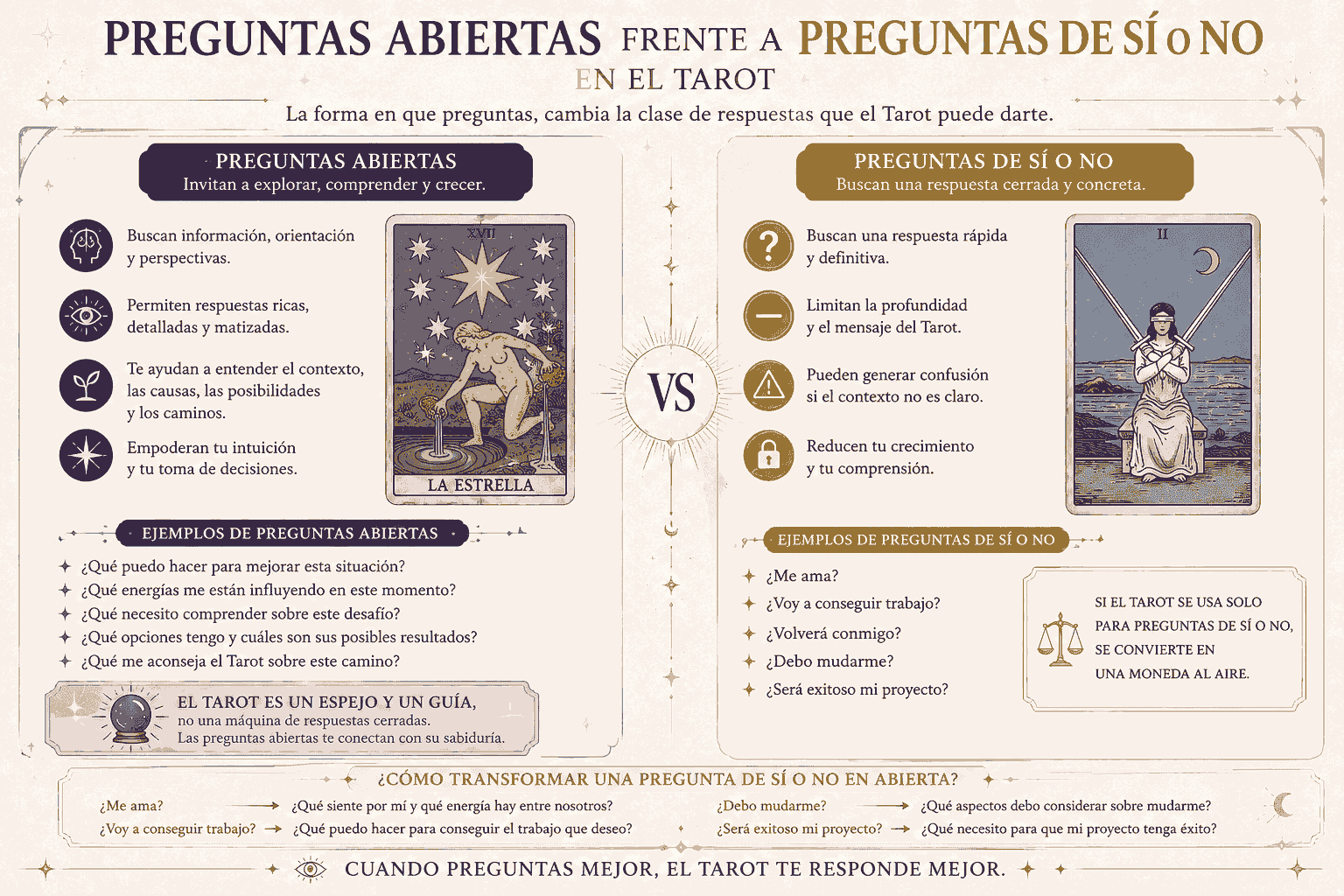
- Asking vague questions that produce vague advice.
- Ignoring real-world constraints and basing decisions solely on symbolic resonance.
- Overrelying on a single reading without testing hypotheses.
Real-world example
Scenario: A mid-level product manager must decide between accepting an internal promotion or switching to a startup. Objective: preserve income while expanding leadership skills within 12 months. After clarifying the objective, a five-card spread (Current Role / Opportunity / Skill Gap / Hidden Risk / Recommended Action) is run with an AI tarot career reading. The AI highlights skill-building and mentorship as actionable themes. Translate that into options: negotiate the promotion with a defined leadership development plan, or accept an external role with a 6-month trial period and clear performance milestones. The decision moves forward with a 90-day skill-development experiment attached to whichever offer is accepted.
Trust, governance, and model limits
AI models can reflect biases in training data and do not replace regulated financial or legal advice. For guidance on safe and trustworthy AI practices and risk management frameworks, consult authoritative resources such as the National Institute of Standards and Technology (NIST) AI Risk Management Framework for best-practice approaches to AI governance (NIST AI RMF).
Quick practical checklist before acting
- Translate symbolic advice into two concrete options with measurable milestones.
- Design a small, time-boxed experiment to test the chosen option.
- Document outcomes and iterate at the next decision point.
FAQ: Is an AI tarot career reading accurate for predicting career outcomes?
An AI tarot career reading is not a predictive tool in the statistical sense. It generates interpretations and scenarios that help frame decisions. Accuracy depends on prompt clarity, spread selection, and the integration of objective data. Treat the reading as a decision-support artifact rather than a forecast.
FAQ: How should a career decision tarot reading be integrated with professional advice?
Use the tarot reading to surface themes and questions, then validate with domain-specific experts—HR, mentors, career coaches, and financial advisors—especially for high-stakes choices like contract terms or investment moves.
FAQ: Can AI tarot tools be biased or misleading?
Yes. Models can reproduce cultural narratives or stereotyping found in training data. Mitigate bias by using multiple prompts, cross-checking output, and avoiding overreliance on single results.
FAQ: How often should tarot readings be used for career planning?
Use AI tarot readings at decision points or quarterly reflections, not as daily directives. Regular but spaced readings help track progress and prevent noise from driving choices.
FAQ: Can an AI tarot career reading replace a career coach?
No. AI tarot career reading is a reflective tool. A career coach or financial advisor provides tailored diagnostics, negotiation support, and accountability that an AI reading cannot replicate.