Detector IA: A Practical Guide to Understanding AI-Generated Text
-

- Published Updated
- 2,387 views

The process of producing written content has been altered by artificial intelligence. From drafting blog posts to preparing study material, AI-powered writing systems can produce readable text within seconds. This has made content creation faster, but it has also created a new challenge: determining whether a piece of writing was produced by a person, an AI system, or a combination of both.
A Detector IA is designed to help with this task. Rather than simply searching for copied sentences, it examines characteristics within the writing that may indicate automated generation. Understanding how these tools work can help writers, educators, editors, marketers, and businesses use them more responsibly.
What Is Detector IA?
Detector IA refers to an AI detection tool that evaluates text for signs commonly associated with machine-generated writing. The technology examines the linguistic characteristics of a passage and produces an assessment of whether the content appears to have been created with artificial intelligence.
This is different from a traditional plagiarism checker. A plagiarism system generally looks for similarities between submitted material and existing sources. An AI detector, on the other hand, focuses on the characteristics of the text itself.
For example, two articles may contain completely different sentences, meaning there is no obvious plagiarism, while one of them may still display patterns that an AI detection system considers machine-like.
How Does an AI Detector Examine Text?
A Detector IA does not normally identify AI writing by looking for one specific word or sentence. Instead, it can evaluate multiple characteristics at the same time.
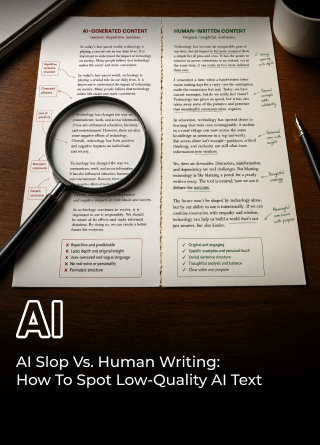
One important factor is predictability. AI-generated writing can sometimes follow highly expected linguistic patterns. If each sentence progresses in an unusually predictable way, a detection model may consider that relevant.
Another factor is variation. Human writers naturally change sentence length, vocabulary, rhythm, and structure. Automated writing can sometimes appear more consistent throughout a passage.
The system may also examine:
Sentence construction
Word selection
Repetition patterns
Vocabulary distribution
Writing rhythm
Predictability of phrases
Overall linguistic consistency
These signals are combined to produce an estimate rather than a guaranteed identification.
See more: KI detector
Detector IA Is Not the Same as a Plagiarism Checker
One of the most common misunderstandings is treating AI detection and plagiarism detection as identical processes.
They serve different purposes.
A plagiarism checker is primarily concerned with whether content resembles material already published elsewhere. An AI detector is concerned with whether the writing demonstrates patterns associated with automated text generation.
This distinction matters for content creators. An article can be completely original and still receive an AI-related assessment. Similarly, text written with AI assistance may contain no copied material at all.
Therefore, originality and AI detection should be considered separate aspects of content quality.
Why Are AI Detection Tools Becoming Important?
The rapid adoption of generative AI has increased the need for better methods of evaluating digital content.
Education
Teachers and academic institutions may use detection technology as one part of a broader process for reviewing assignments. It can encourage students to maintain authentic writing practices and document their research process.
However, an AI detection result should not automatically be treated as proof of misconduct. A false positive can occur, particularly when writing is formal, highly structured, or produced by someone using a limited vocabulary.
Content Marketing
Marketing teams may use AI tools to accelerate research and drafting. A Detector IA can provide an additional review step before publishing content.
This is especially useful when a brand wants its articles to reflect a distinctive editorial voice rather than sounding generic or repetitive.
Professional Writing
Freelancers, editors, and agencies can use AI detection as part of quality control. Instead of relying entirely on automated output, writers can revise drafts to add accurate information, genuine analysis, relevant examples, and a natural editorial perspective.
Can Detector IA Guarantee That Text Was Written by AI?
No detection system should be considered perfectly reliable.
AI-generated text can be edited by humans, while human-written material can sometimes resemble the predictable patterns associated with automated writing. This makes absolute classification difficult.
For that reason, an AI detector should be viewed as an analytical aid rather than a final judge.
A responsible evaluation can combine several factors, such as the writer's previous work, drafting history, sources, revisions, and the context in which the text was produced.
How Writers Can Improve the Quality of AI-Assisted Content
The goal should not simply be to manipulate a detector's score. A better approach is to make the content genuinely useful and reflective of human editorial judgment.
Verify the accuracy of the information first. AI systems can produce confident statements that require verification. Replace vague claims with specific, trustworthy information.
Next, improve the substance of the article. Add explanations based on genuine expertise, practical observations, original examples, and meaningful comparisons.
Additionally, the writing should have a distinct goal. Instead of filling paragraphs with general statements, each section should answer a question or provide information that the reader can actually use.
Finally, edit the complete draft rather than publishing automated output without review. Human editing can improve clarity, accuracy, tone, organization, and originality.
What Makes Content Feel More Authentic?
Authentic writing is not necessarily informal writing. Professional content can still feel human when it contains a clear point of view and meaningful information.
Useful characteristics include:
Specific explanations instead of empty statements
Natural transitions between ideas
Varied sentence structures
Relevant examples
Accurate terminology
Original observations
Strong editorial direction
Information that directly serves the reader
These qualities improve an article regardless of whether AI was involved during the drafting process.
Detector IA for Modern Content Evaluation
As AI becomes part of everyday writing workflows, the question is no longer simply whether artificial intelligence was used. A more useful question is whether the final content is accurate, valuable, original, and responsibly produced.
A Detector IA can contribute to that evaluation by identifying linguistic patterns that may warrant closer examination. Nevertheless, its result should be interpreted carefully because automated classification is an estimate, not an unquestionable verdict.
For writers and organizations, the strongest strategy is to combine technology with human judgment. AI can assist with productivity, while people remain responsible for fact-checking, editing, interpretation, and the final message.
Final Thoughts
Detector IA tools have emerged because modern publishing needs new ways to evaluate digitally produced text. They can be useful for identifying patterns associated with AI-generated writing, but they should not replace human review.
The most reliable approach to content evaluation combines detection technology with originality checks, factual verification, editorial review, and an understanding of the writer's process.
Ultimately, high-quality content should offer something beyond mechanically assembled sentences. It should communicate ideas clearly, provide useful information, demonstrate thoughtful judgment, and give readers a reason to trust what they are reading.
Further information: click here