Ancillaries vs. Anabolics: Understanding the Difference
-

- Published Updated
- 3,483 views
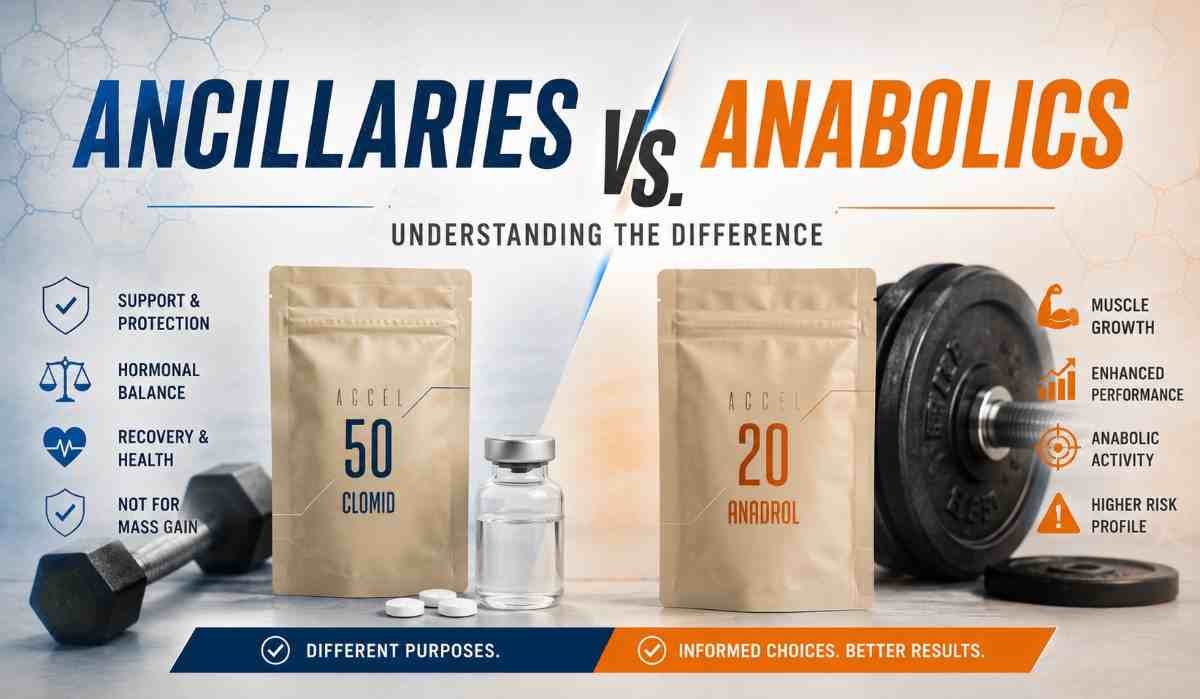
The terms "ancillaries" and "anabolics" are frequently used in bodybuilding and fitness discussions, but they describe different categories of substances and have different purposes. Because these terms can sometimes be used loosely online, beginners may find it difficult to understand what each one means and how they differ.
Understanding the distinction is important when researching bodybuilding-related substances, especially because some products can affect hormones, cardiovascular health, liver function, or other parts of the body. This guide provides a general, educational overview of ancillaries vs. anabolics, their commonly discussed roles, and the health considerations associated with them.
What Are Anabolics?
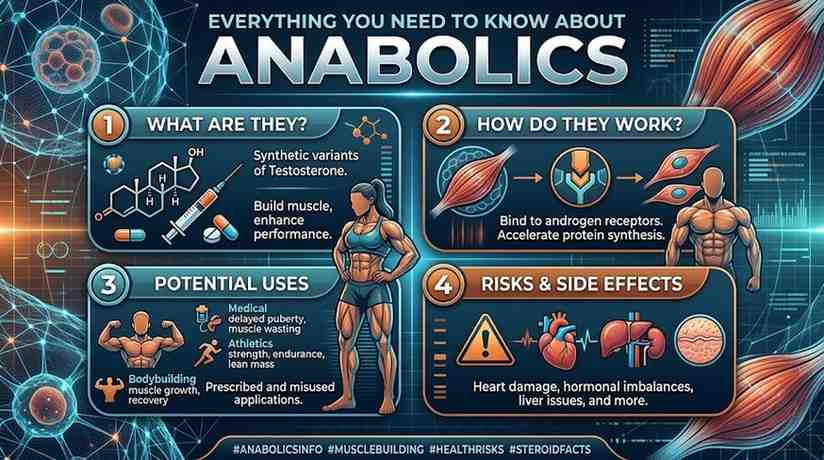
"Anabolic" generally refers to substances associated with anabolic activity, meaning processes involved in building or maintaining tissues such as skeletal muscle. The term is commonly used when discussing anabolic-androgenic steroids, which are synthetic substances related to testosterone.
Anabolic substances can influence biological pathways involved in protein synthesis and muscle tissue development. For a broader introduction, readers can learn more about what are anabolics and how anabolic processes relate to muscle development.
In medicine, certain anabolic-androgenic substances have legitimate therapeutic applications when prescribed and monitored by qualified healthcare professionals. However, non-medical use can involve significant health risks and should not be confused with medically supervised treatment.
What Are Ancillaries?
The term "ancillaries" is commonly used in bodybuilding communities to describe substances that are not primarily intended to produce muscle growth but may be discussed alongside anabolic substances.
Depending on the context, the term can refer to medicines or compounds discussed in relation to hormonal management, estrogen-related pathways, fertility, or other physiological concerns. However, ancillary is not a single medical drug category, and different substances have very different mechanisms, approved uses, and safety profiles.
This is why it is important to look at each substance individually rather than assuming that every ancillary works in the same way.
Ancillaries vs. Anabolics: The Main Difference
The simplest distinction is their primary purpose and biological role.
Feature |
Anabolics |
Ancillaries |
Primary discussion |
Muscle and tissue development |
Supporting specific physiological or hormonal concerns |
Common fitness context |
Muscle growth and performance |
Hormonal management and related concerns |
Biological action |
Can influence anabolic and androgenic pathways |
Depends heavily on the specific substance |
Medical status |
Some have legitimate medical applications |
Varies according to the individual medicine |
Risks |
Hormonal, cardiovascular, liver and other risks |
Varies significantly by substance |
Should they be self-managed? |
No |
No |
Anabolics are generally associated with anabolic activity and muscle tissue development, whereas ancillaries are usually discussed as supporting or managing particular physiological effects or health considerations.
The two categories can therefore be described broadly as follows:
FeatureAnabolicsAncillariesPrimary discussionMuscle and tissue developmentSupporting The table provides a general comparison only. Individual substances should always be evaluated according to their actual medical properties rather than their informal bodybuilding classification.
How Do Anabolics Affect the Body?
Anabolic-androgenic substances can interact with androgen receptors and influence processes related to protein synthesis and tissue development. These mechanisms help explain why anabolic substances are discussed in relation to muscle growth.
However, changing hormone activity can also affect normal physiological functions. Depending on the substance and individual circumstances, potential concerns may include changes in cholesterol, blood pressure, natural hormone production, liver function, mood, and cardiovascular health.
The effects can also vary considerably from one person to another.
For readers who want to understand the broader relationship between hormones, testosterone and estrogen provide useful background because both hormones play important roles in normal physiological function.
How Do Ancillaries Differ?
Ancillaries do not have one universal mechanism. Instead, their effects depend on the particular medicine or compound involved.
Some substances discussed as ancillaries may influence hormone receptors, while others may affect hormone production or related biological pathways. This means that grouping them together does not necessarily tell you how a specific substance works.
For example, topics involving estrogen management, testosterone levels, or fertility can involve completely different biological mechanisms. Readers interested in hormonal balance can explore information about healthy testosterone levels by age for additional context.
Why Are Ancillaries Discussed in Bodybuilding?
Ancillaries are often discussed because anabolic substances can influence the body's natural hormonal environment. Some people therefore look for information about substances that may affect particular hormonal pathways.
However, this does not mean that ancillaries automatically prevent side effects or make non-medical anabolic use safe. Using another medicine to address a side effect does not remove the underlying risks associated with the original substance.
Hormonal medicines can themselves have side effects and interactions. Their use should therefore be based on an appropriate medical assessment rather than advice from online forums or bodybuilding communities.
Potential Health Considerations
Both anabolics and substances commonly described as ancillaries can involve health considerations. The risks depend on the specific compound, medical history, interactions with other medicines, and how the substance affects the body.
Potential concerns associated with anabolic-androgenic substances may include:
Changes in cholesterol levels
Elevated blood pressure
Hormonal suppression
Changes in mood
Acne and other skin changes
Liver concerns with certain substances
Cardiovascular complications
Ancillary medicines can also have their own risks. Depending on the medicine, possible concerns may involve hormonal changes, cardiovascular effects, liver effects, or interactions with other treatments.
Anyone experiencing concerning symptoms should seek professional medical advice rather than attempting to manage the problem independently.
Ancillaries Do Not Make Anabolics Risk-Free
One of the most important misconceptions to understand is that using an ancillary does not automatically make anabolic use safer.
There is no universal combination of substances that eliminates the risks associated with anabolic-androgenic steroids. Individual responses can also be unpredictable, and adding additional medicines can create further interactions.
This is particularly important for people who obtain products from unofficial sources, where the identity, concentration, purity, or ingredients may not always be reliable.
Natural Approaches to Supporting Fitness Goals
Muscle development and physical performance depend on much more than any particular substance. Training, nutrition, recovery, and lifestyle habits remain important foundations.
A structured resistance-training program can provide a progressive stimulus for muscle development. Adequate protein and overall nutrition support recovery, while sufficient sleep allows the body to recover between training sessions.
For beginners, protein-rich foods for muscle growth can provide useful nutritional information. Similarly, sleep and muscle recovery explain why recovery is an important part of a consistent fitness routine.
Ancillaries vs Anabolics: Which Is Better?
There is no meaningful answer to which category is better because ancillaries and anabolics are not interchangeable categories.
Anabolics are generally discussed in connection with anabolic and androgenic effects, while ancillaries are a broad informal term covering various substances that may be discussed alongside them.
Choosing or using a medication should never be based solely on its popularity in bodybuilding. Medical purpose, individual health, potential interactions, and professional guidance are much more important considerations.
Final Thoughts
Understanding the difference between ancillaries and anabolics can help beginners navigate bodybuilding information more carefully. Anabolics are generally associated with anabolic-androgenic activity and processes involving muscle and tissue development, while "ancillaries" is a broader term often used for substances discussed in relation to hormonal or physiological management.
Neither category should automatically be considered safe simply because it is widely discussed in fitness communities. Different substances can have very different effects and risks, and some may have legitimate medical applications only under professional supervision.
For anyone interested in improving strength, muscle development, or overall fitness, consistent resistance training, balanced nutrition, adequate protein, and proper recovery provide important foundations. When medication or hormone-related treatment is being considered, speaking with a qualified healthcare professional is the appropriate next step.
Frequently Asked Questions
1. What is the difference between ancillaries and anabolics?
Anabolics are generally associated with anabolic-androgenic activity and muscle or tissue development. "An ancillary" is a broader bodybuilding term for substances discussed alongside anabolic compounds for various physiological or hormonal purposes.
2. Are ancillaries anabolic steroids?
Not necessarily. Ancillaries can refer to different types of medicines or compounds, and they do not all have anabolic or androgenic activity.
3. Do ancillaries remove the risks of anabolic substances?
No. Using an ancillary does not eliminate the potential health risks associated with anabolic-androgenic substances.
4. Can anabolics affect natural hormone production?
Yes. Anabolic-androgenic substances can interfere with the body's normal hormonal regulation, depending on the specific substance and individual circumstances.
5. Should ancillaries be used without medical advice?
No. Because different medicines have different effects, risks, and interactions, they should be considered with appropriate professional medical guidance rather than self-managed.