What Ask Maps means for businesses that rely on local discovery
-

- Published Updated
- 8,863 views

Google Maps used to be a utility. You opened it to find the quickest route to a dentist or to see if the hardware store was still open on a Tuesday at 7:00 PM. It was a digital atlas with some business listings pasted on top. But that version of Maps is effectively dead.
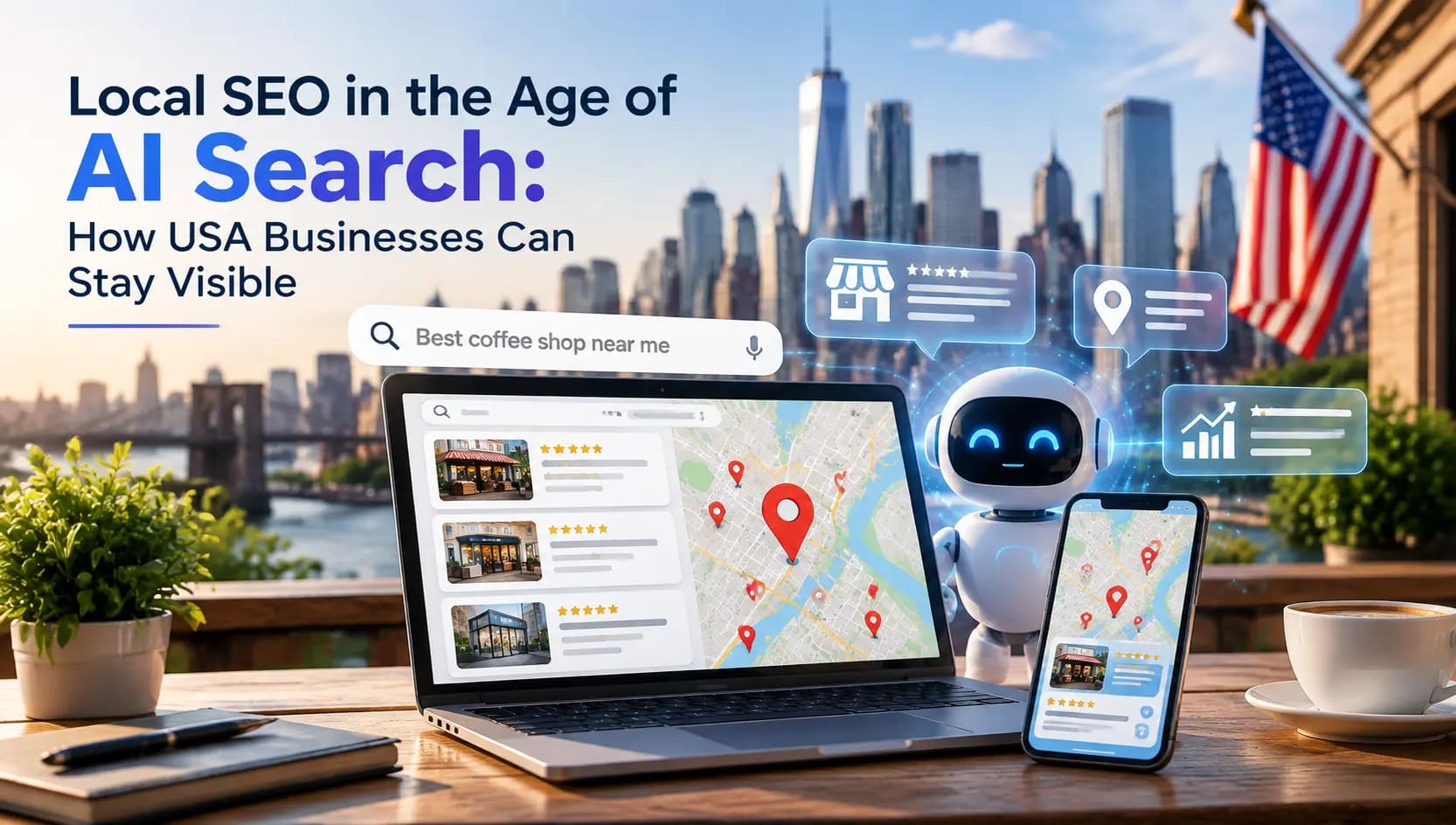
With the rollout of "Ask Maps"—Google’s integration of generative AI (powered by Gemini) directly into the map interface—we are moving from a search engine into an advice engine. This shift isn't just a UI update; it’s a fundamental change in how customers discover local services. For the business owner or the agency managing twenty locations, the stakes for how data is presented have never been higher.
From Keywords to Conversations
Historically, local SEO was a game of matching. If someone searched for "plumber in Chicago," Google looked for the most relevant, prominent, and proximate plumber. It was a relatively linear process.
Ask Maps changes the query structure. Instead of three words, users are now asking complex, multi-layered questions. They’re asking things like, "Find me a coffee shop in Brooklyn that’s good for working, has oat milk, and isn't too loud in the afternoons." To answer that, Google isn't just looking at your business name and category. It’s "reading" your reviews, scanning your photos to see if people are sitting with laptops, and parsing through the attributes you’ve selected in your Google Business Profile (GBP). If your profile says you have Wi-Fi but your reviews are full of people complaining about the lack of outlets, the AI might skip you. It’s looking for consensus between what you claim and what the public reports.
The Death of the "Near Me" Monopoly
We’ve spent a decade obsessed with the "near me" search. Proximity was king. While being close to the user still matters—physics hasn't been disrupted yet—relevance is becoming much more nuanced.
In the Ask Maps era, the AI acts as a filter. It’s trying to be a concierge. If a user asks for a "romantic Italian spot with a view of the skyline," a restaurant two blocks away might lose out to a restaurant two miles away if the AI can confirm the "skyline view" through user-submitted photos and mentions in reviews.
This means your digital footprint needs to be much more descriptive. You can’t just exist; you have to be defined. For agencies and multi-location brands, keeping track of these nuances across hundreds of listings is a massive undertaking. Many professionals now utilise local SEO reporting software to monitor how their attributes and review sentiment shift over time, ensuring the AI has the "correct" story to tell.
Why Reviews Are Your New "Code"
In traditional SEO, we talk about schema markup and H1 tags. In AI-driven local discovery, reviews are arguably the most important "code" you can write.
When a user asks a specific question, Gemini (the engine behind Ask Maps) pulls from the massive corpus of user-generated content. If five different reviewers mention that your dental office is "great with anxious kids," you suddenly become the top recommendation for a query about "dentists for children who are scared."
It’s no longer enough to have a 4.8-star rating. You need topical reviews. You need customers to use the language that future customers will use when talking to their AI. It’s a bit of a shift in mindset. Instead of just asking for a five-star review, businesses might start encouraging customers to mention specific services or features. "If you liked our outdoor seating, please mention it!" becomes a strategic SEO play.
The Photo Problem
Google has been talking about "Vision AI" for years, but Ask Maps brings it to the forefront. The AI can literally "see" what is in your photos. If you’re a contractor and you’ve only uploaded a photo of your truck, the AI has no visual proof of your work. But if you have high-resolution photos of remodelled kitchens, the AI can identify those elements.
When a user asks for "modern kitchen tile ideas near me," Google might pull up your business because it recognises the subway tile in your 2024 project gallery. It’s a level of automated indexing that makes the "Photos" tab on your GBP one of your most valuable assets. (And please, for the love of all things holy, stop using stock photos. The AI knows they aren't yours, and it won't give you credit for them.)
The "Zero-Click" Reality Gets Realer
The "zero-click" search—where a user gets their answer on the search results page without clicking through to a website—has been a point of contention for years. Ask Maps accelerates this.
If the AI gives a perfect summary: "Joe’s Auto is highly rated for brake repairs, offers a free shuttle, and most customers say they finish in under two hours," the user might just hit the "Call" button immediately. They didn't visit your "About Us" page. They didn't look at your "Services" page.
This makes your Google Business Profile your actual homepage. Your website is increasingly becoming a backend data source that feeds the AI, while the Map interface is the storefront. You need to make sure your website’s technical SEO—things like LocalBusiness Schema—is airtight so that Google’s crawlers can easily digest your pricing, hours, and service areas to feed into the Ask Maps responses.
What Should Businesses Actually Do?
It’s easy to get overwhelmed by the "AI-pocalypse" talk, but the fundamentals are surprisingly grounded. If you want to win in a world where people "ask" Maps for recommendations, you have to be the most "recommendable" option.
Audit Your Attributes: Go into your GBP and check every single box that applies to you. Are you woman-owned? Do you have gender-neutral restrooms? Is there a ramp at the entrance? These tiny details are the filters the AI uses to include or exclude you.
Clean Up Your NAP Name, Address, and Phone Number consistency is still the bedrock. If the AI sees three different phone numbers for you across the web, it smells "unreliability." And AI hates recommending unreliable sources.
Engage with Every Review: Don't just respond to the bad ones. Respond to the good ones too, and use natural language. If someone says the pizza was great, respond with, "Glad you enjoyed the wood-fired pepperoni pizza!" It adds more "keywords" to the AI's database in a way that feels human.
Monitor the Competition: Use tools to see who is winning the "Map Pack" for your most important queries. If a competitor is suddenly ranking for "best brunch patio," look at their photos and reviews. They probably have twenty people mentioning the "patio" in the last month.
The Future of Local Search
We are heading toward a future where the "search bar" is a "chat box." People won't type "lawyer." They’ll type, "I got a speeding ticket in Queens, and I need a lawyer who handles these quickly and doesn't charge a fortune." The businesses that thrive will be the ones that have a clear, consistent, and data-rich presence across the web. You can't hide behind a flashy website anymore if your local data is a mess.
Ultimately, Ask Maps is Google’s way of rewarding businesses that are actually good at what they do and are transparent about it. It’s a shift toward quality over "optimisation." And honestly? That’s probably a good thing for everyone involved.