Press Start or Take the Wheel? Choosing Between Automatic and Manual Massage
-

- Published Updated
- 71 views
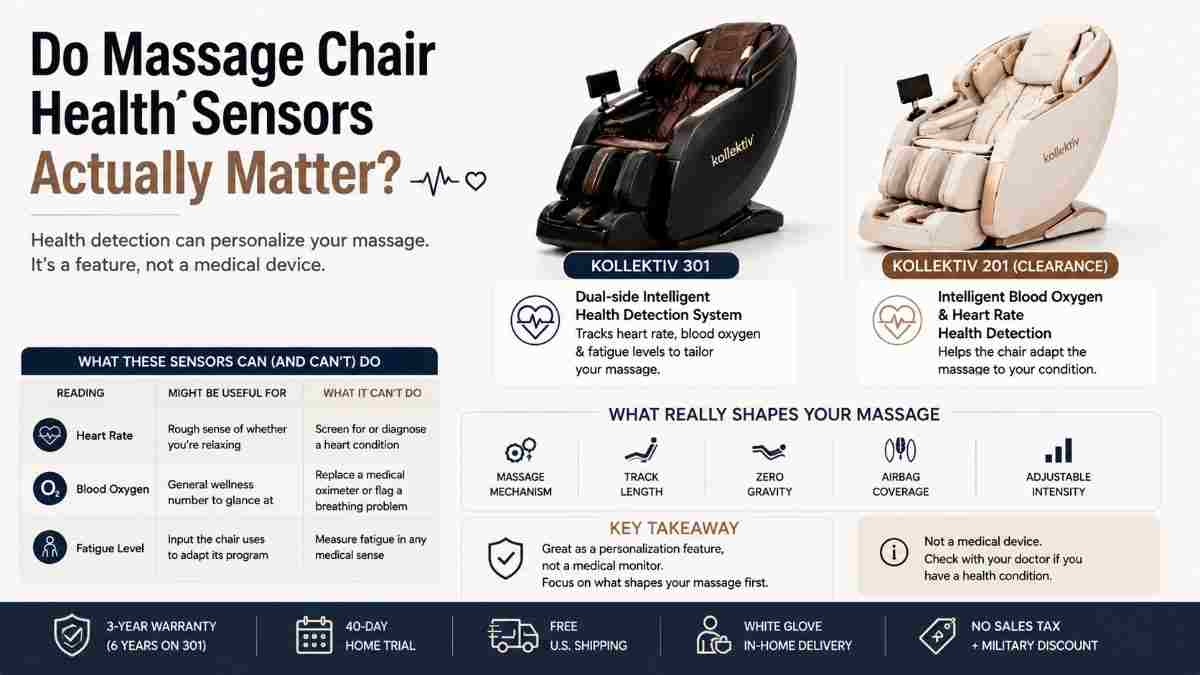
Quick answer: massage chair health detection, meaning sensors that read things like heart rate and blood oxygen while you sit, is best treated as a personalization feature rather than a health monitor. It can be a nice touch if you like the idea of a chair that adapts to you, but it isn’t a medical device, and it shouldn’t be the deciding factor between two chairs. For most buyers, the features that shape the massage itself (mechanism, track length, zero gravity, and body scanning) matter more.
Most conversations about a massage chair focus on hardware: how long the track is, how many airbags it has, what kind of rollers it uses. A quieter question gets less attention, even though it shapes how the chair feels every single day: how much of the session do you want to decide yourself, and how much do you want the chair to decide for you?
Some people want to sit down, press one button, and let the chair handle everything. Others know exactly where they're sore and want to steer. Neither approach is more advanced than the other, and the best chair for you depends on which one sounds like you.
The Three Levels of "Hands-Off"
It helps to separate three things that often get lumped together under words like "smart" or "adaptive."
Level 1: Preset programs. The chair offers a menu of automatic programs, such as relaxation, stretch, or recovery. You pick one, and it runs the same routine each time. Simple and predictable.
Level 2: Personalized at the start. The chair scans your body when the session begins, then adjusts the roller path to your frame. The program itself is still fixed, but it's fitted to you instead of a generic body.
Level 3: Adjusting during the session. Some chairs use additional inputs while you're sitting, and some flagship listings mention sensors for this purpose. Details vary a lot by model and manufacturer, so it's worth reading exactly what a listing says the chair changes, rather than relying on a label like "intelligent" or "AI."
Most buyers are well served by levels 1 and 2. Level 3 is a nice extra for people who like the idea, not a requirement for a good massage.
Who Tends to Prefer Automatic
Automatic programs suit people who:
- Want a short, reliable routine after work without making decisions
- Aren't sure yet which areas need the most attention
- Are new to massage chairs and want a gentle introduction
- Share the chair and would rather each person simply pick a program
Automatic is also the easiest option to build a habit around, since there's almost nothing to think about before starting.
Who Tends to Prefer Manual
Manual control suits people who:
- Already know their problem area, such as shoulders after desk work or calves after a long day on their feet
- Like adjusting intensity as a session goes on
- Want to skip areas that don't need attention
- Enjoy fine-tuning the experience
Here the chair's design matters. The Kollecktiv 208 is built around choosing whole-body, partial, or spot-targeted massage, which rewards someone who wants to steer. The Kollecktiv G18 leans toward convenience features, including saved personal settings and music-synced massage, which suit people who like a routine that remembers them.
A Simple Two-Week Experiment
If you already own a chair, or are about to, there's an easy way to find out which style fits you:
- Week one: use only automatic programs. Note whether you enjoy not deciding, or whether you keep wishing you could change something.
- Week two: use manual or targeted settings. Note whether the extra control feels useful, or like extra work.
- Compare: which week did you look forward to more? That's a better guide than any spec sheet.
Most people discover a preference quickly. A few end up using both, with automatic programs on tired evenings and manual settings when something specific is bothering them.
Questions to Ask Before Buying
Whichever way you lean, a few questions help you read a listing clearly:
- How many automatic programs are there, and what are they actually for?
- Can I adjust intensity and targeting during a program, or only before it starts?
- Does the chair scan my body at the start of each session?
- Can it save my settings, and can more than one person have their own?
- If a feature is described as adaptive, what specifically does it change?
A listing that answers these clearly is usually more helpful than one that leans on a single impressive-sounding term.
Where This Fits in Your Decision
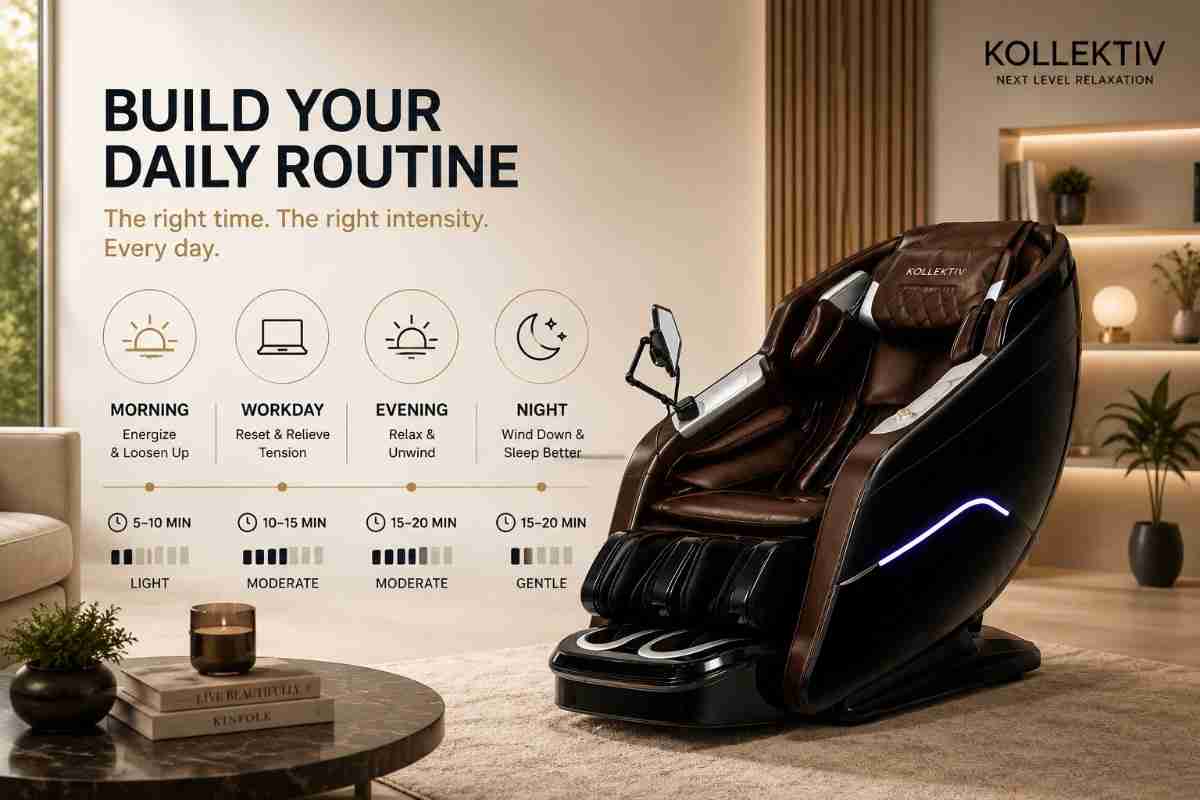
Control style is worth weighing alongside the basics, not instead of them. Fit comes first: check the listed height and weight range for everyone who'll use the chair. Then think about how you'll actually use it, and only then compare features.
The 4D Massage Chair collection is a good place to compare entry-level and mid-tier models side by side. For longer tracks and a broader range of coverage, the Full Body Massage Chair range is worth a look, and the full Massage Chair Collection lets you compare across price tiers. When you're ready to check current pricing, the massage chair sale page is the place to look.
FAQ
Is an automatic massage chair better than a manual one? Neither is better. Automatic programs are easier and more consistent, while manual control suits people who know exactly what they want to work on. Many chairs offer both.
Do I need a chair that adjusts itself during the session? Not for a good massage. Preset programs plus a body scan at the start cover what most people want, and in-session adjustment is a bonus for people who like the idea.
What does it mean when a massage chair is called "adaptive" or "intelligent"? The terms aren't standardized. Read the listing for what the chair actually changes, such as intensity, program, or roller path, rather than relying on the label.
Is it a good idea to share a chair if people prefer different styles? It can work well. Saved personal settings and adjustable targeting let one person run an automatic program while another steers manually, as long as everyone fits within the chair's listed range.
Can a massage chair replace medical care? No. Massage chairs are designed for relaxation and everyday muscle tension, not as medical devices. If you have a medical condition, are pregnant, or are recovering from an injury, check with your doctor before using one regularly.
Final Thoughts
The right amount of control is personal. Some people want a chair that quietly handles everything, and others want to steer every session. Figuring out which camp you're in before you compare specs saves time, and it helps you recognize which features will actually earn their place in your routine.
Massage chairs are designed for relaxation and everyday muscle tension relief. They aren't medical devices and shouldn't replace guidance from a healthcare provider.