Backpacker Budget Tool: Plan Long-Term Travel with the B.U.D.G.E.T. Framework
-

- Published Updated
- 276 views
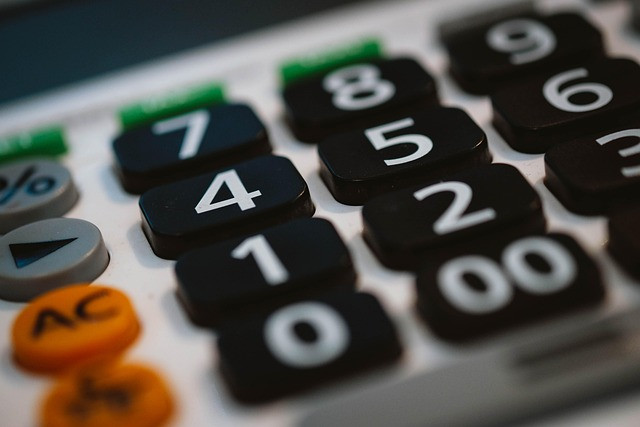
A reliable backpacker budget tool saves time and prevents surprises by turning rough travel ideas into tracked costs and decisions. This guide shows how to create, use, and maintain a backpacker budget tool for long-term travel planning, including a named framework, a real scenario, practical tips, and common mistakes to avoid.
Backpacker budget tool: what it should do
A backpacker budget tool must combine forecasted costs, a running ledger of actual expenses, and conversion logic for multiple currencies. Key outputs are daily target budget, monthly summary, buffer recommendations, and alerts for overspending. For reliable cross-country comparisons, use official conversion or purchasing power parity references such as World Bank PPP data to avoid misleading cost comparisons: World Bank PPP indicators.
Why use a backpacker budget tool for long-term travel
Longer trips amplify small forecasting errors. A tool prevents repeated mistakes: it separates fixed one-time costs (visas, flights), predictable recurring costs (accommodation, food), and variable categories (activities, transport). Tracking actual spending creates feedback that improves future estimates and reduces the chance of depleting funds midway.
How to build a long-term travel budget: the B.U.D.G.E.T. framework
Apply a repeatable framework named B.U.D.G.E.T. to structure planning and the tool itself:
- Breakdown — list all expense categories: visas, flights, transport, accommodation, food, activities, gear, insurance, vaccinations, communications.
- Unite costs — decide units (per day, per night, per week) and currencies for each category.
- Define durations — assign days/weeks per location and estimate stay lengths.
- Gross-to-net adjustments — factor taxes, booking fees, and local price variances.
- Emergency & buffer — set a percentage buffer (recommended 10–25% depending on risk tolerance and trip length).
- Track & update — record actuals, reconcile monthly, and re-forecast remaining months.
Step-by-step: set up a backpacker budget tool
1. Choose a format
A spreadsheet (Google Sheets, Excel) provides the simplest, portable tool. For multiple currencies and live rates, add a small conversion sheet or lightweight budgeting app that supports exports. Keep the layout: Inputs (estimates) | Ledger (actuals) | Summary (per day/month) | Forecast (remaining trip).
2. Enter baseline estimates
Populate categories using conservative estimates. Use local guides, hostel prices, and cost-of-living indexes as references. Break recurring costs into daily rates to compute per-day targets that drive daily spending choices.
3. Add one-time and variable items
Record set-up fees (SIM card, vaccinations), planned excursions, and gated expenses (international flights). Mark priority and flexibility for each item to decide what can be cut quickly if needed.
4. Set buffers and emergency funds
Assign an emergency line separate from daily buffers. The tool should show both: remaining daily budget vs. total emergency fund available.
5. Track daily and reconcile monthly
Enter actual expenses daily or upload receipts weekly. Reconcile currencies back to a base currency and update forecasts for the remaining trip.
Real-world example: six-month Southeast Asia backpacking plan
Scenario: a six-month trip with planned country hops across Thailand, Vietnam, and Indonesia. Baseline estimates: accommodation $12/night (hostels), food $15/day, local transport $5/day average, activities $200/month, flights & visas $800 total, insurance $350. Using the B.U.D.G.E.T. framework, the spreadsheet converts regional currencies to a base currency, adds a 15% buffer, and calculates a required total of roughly $4,500. After two months, recorded actuals show food spending $20/day in one city; the tool increases the forecasted monthly expense and recommends a cost-saving shift (cook more, choose cheaper dorms) to stay on track.
Practical tips for maintaining accuracy
- Update exchange rates before major bookings and monthly for forecasts.
- Record small purchases immediately—minor transactions accumulate fast on long trips.
- Use categories with sub-lines (e.g., food -> groceries, street food, restaurants) to identify savings opportunities.
- Keep emergency funds in an accessible but separate account to avoid accidental use.
- Review spending monthly and reset daily targets based on remaining budget and days left.
Common mistakes and trade-offs
Trade-offs: higher accuracy requires more time. A fully detailed ledger is accurate but may be burdensome; a coarse daily target is lighter but risks drift. Common mistakes include underestimating one-time fees (vaccines, visas), ignoring seasonal price spikes, and failing to update currency conversions. Also avoid mixing budgets for different travelers in one sheet unless splitting and assigning costs explicitly.
FAQ: How to use a backpacker budget tool effectively?
What should a long-term travel budget planner include?
Include fixed one-time costs, recurring daily costs, variable categories, travel insurance, emergency fund, and a running ledger of actual spending with currency conversion rules.
How much emergency buffer is recommended for extended travel?
A 10–25% buffer is common; choose higher for longer trips, remote destinations, or higher-risk activities. Keep emergency funds separate from daily cash.
Can the same tool handle multiple currencies?
Yes. Convert local expenses to a base currency for totals and keep a conversion log. For better cross-country comparisons, consider PPP references such as World Bank PPP indicators to contextualize cost differences.
How often should actuals be recorded?
Daily or weekly recording keeps forecasts accurate. Monthly reconciliation is essential to re-forecast remaining months.
Where to start if the spreadsheet feels overwhelming?
Start with three lines: weekly accommodation, daily average food/transport, and a monthly activities estimate. Add categories gradually and use the B.U.D.G.E.T. framework to expand only where needed.