Reconstitution Solution Bacteriostatic Water: Uses, Safety, and Medical Applications
-

- April 22nd, 2026
- 7,776 views
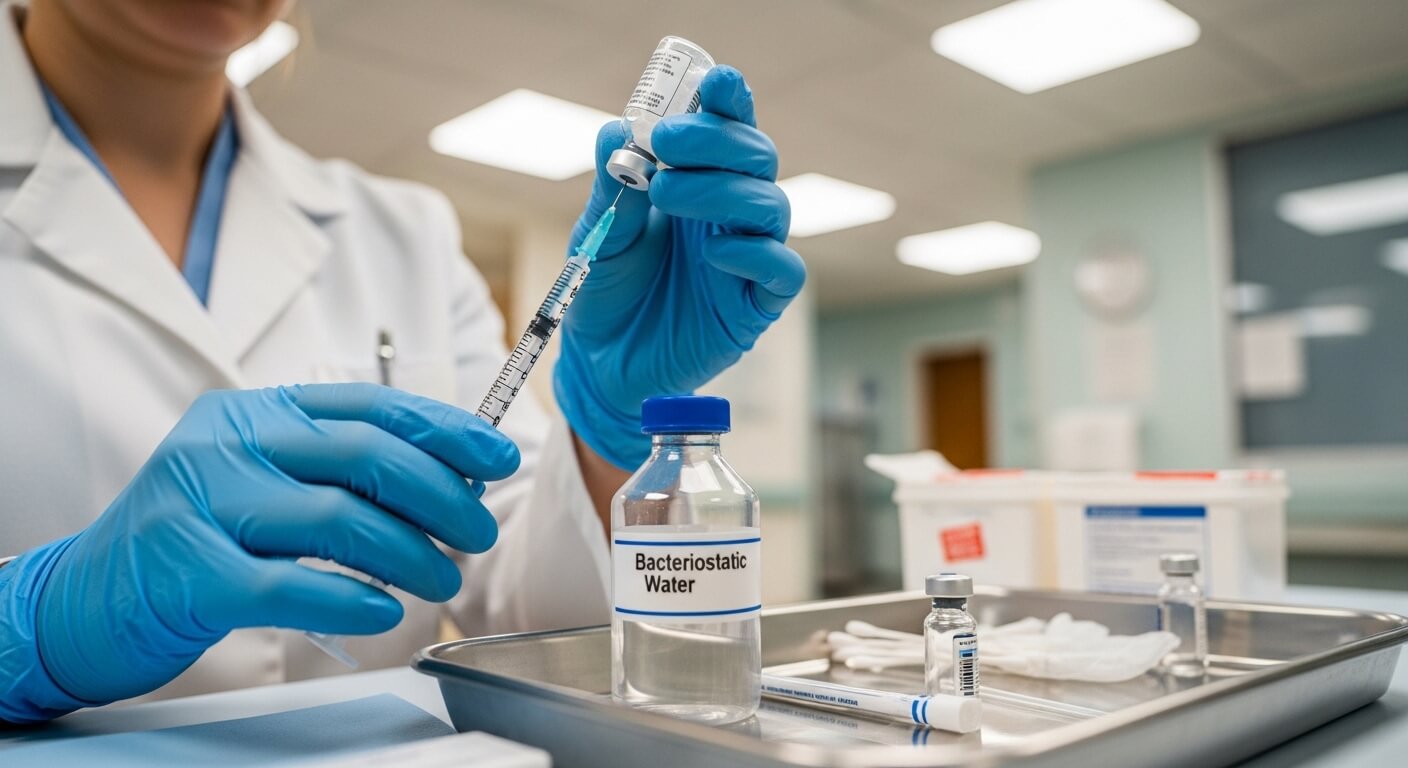
Healthcare professionals frequently rely on specialized diluents when preparing medications that arrive in powdered or concentrated form. One of the most commonly used solutions is Bacteriostatic Water for Injection, a sterile diluent designed specifically for medication reconstitution.
Medication reconstitution refers to the process of adding a sterile liquid to a dry or concentrated drug so it can be administered safely by injection. Many injectable medications—including certain antibiotics, hormones, and biologics—are manufactured in powder form to extend their shelf life. Before administration, clinicians mix the drug with a compatible solution to achieve the correct concentration.
Bacteriostatic water serves this role while offering an additional benefit: it contains a small amount of benzyl alcohol that inhibits bacterial growth. This preservative allows the solution to be used multiple times from the same vial when handled under sterile conditions.
Healthcare guidelines from organizations such as the U.S. Food and Drug Administration emphasize strict sterile handling to ensure safety during medication preparation.
What Is Bacteriostatic Water? (Approx. 200 words)
Bacteriostatic water is a sterile, non-pyrogenic solution used primarily as a diluent in pharmaceutical settings. Unlike regular sterile water, it contains a small concentration of benzyl alcohol—typically around 0.9%—which acts as a bacteriostatic preservative.
The term “bacteriostatic” refers to the ability to inhibit bacterial growth rather than kill bacteria outright. This property allows healthcare providers to withdraw multiple doses from a vial without immediate contamination risk, provided proper sterile technique is maintained.
Key characteristics of bacteriostatic water include:
- Sterile and free from microbial contamination
- Contains benzyl alcohol as a preservative
- Intended for dilution or dissolution of medications
- Suitable for multi-dose vials when handled correctly
Medical professionals use bacteriostatic water in hospitals, clinics, pharmacies, and research laboratories where injectable drugs require preparation before administration.
Regulatory bodies like the World Health Organization establish guidelines for injectable medication preparation, emphasizing sterility, proper storage, and compatibility between drugs and diluents.
Why Reconstitution Is Necessary in Modern Medicine (Approx. 170 words)
Many injectable medications are chemically unstable when stored in liquid form. Pharmaceutical manufacturers therefore produce them as lyophilized powders, which remain stable for longer periods during shipping and storage.
Before administration, healthcare professionals must reconstitute these medications with a compatible diluent. Bacteriostatic water is often selected because it maintains sterility while allowing flexible dosing.
Reconstitution serves several important purposes:
- Extends medication shelf life during storage
- Allows precise dosage preparation
- Maintains chemical stability of sensitive drugs
- Enables injectable delivery for medications that cannot be taken orally
For example, certain peptide-based drugs and antibiotics require immediate preparation prior to use. The reconstitution process ensures that the medication dissolves fully and reaches the correct concentration.
Clinical safety organizations such as the Centers for Disease Control and Prevention provide detailed protocols for injection preparation to reduce contamination risks and medication errors.
Bacteriostatic Water vs Sterile Water: Understanding the Difference (Approx. 220 words)
Although they appear similar, bacteriostatic water and Sterile Water for Injection serve different purposes in clinical settings.
Sterile water contains no preservatives. Once opened, it must be used immediately and cannot safely support multiple withdrawals from the same vial.
Bacteriostatic water includes benzyl alcohol, which suppresses bacterial growth and allows repeated access to the vial under sterile conditions.
Key Differences
Preservative Content
- Bacteriostatic water contains benzyl alcohol
- Sterile water contains no antimicrobial preservative
Usage Duration
- Bacteriostatic water can support multi-dose usage
- Sterile water is generally single-use
Typical Applications
- Bacteriostatic water: medication dilution requiring repeated dosing
- Sterile water: immediate reconstitution or large-volume dilution
Safety Considerations
Certain populations—including newborns—should not receive medications prepared with benzyl alcohol due to potential toxicity risks. Clinicians must carefully review medication guidelines and patient age before selecting a diluent.
Healthcare institutions often maintain strict protocols to ensure that the correct solution is used for each drug preparation.
Common Medical Uses of Bacteriostatic Water (Approx. 200 words)
Bacteriostatic water plays a critical role in many clinical and pharmaceutical applications where injectable medications must be diluted before administration.
Some common uses include:
- Reconstituting powdered antibiotics
- Diluting peptide-based medications
- Preparing injectable hormone therapies
- Pharmaceutical compounding in hospital pharmacies
- Research laboratory drug preparation
Because the solution is sterile and preserved, clinicians can withdraw multiple doses from the same vial without opening a new container each time. This efficiency helps reduce waste and improves workflow in busy healthcare environments.
Many biologic medications require careful dilution to maintain molecular stability. In these cases, healthcare professionals follow strict manufacturer guidelines to determine the correct diluent and volume.
Pharmaceutical compounding pharmacies also rely on bacteriostatic water when preparing customized medication formulations for patients with specific medical needs.
Safe Handling and Storage Practices (Approx. 180 words)
Proper handling remains essential when using bacteriostatic water as a reconstitution solution. Even though the preservative helps inhibit bacterial growth, it does not replace sterile technique.
Medical professionals follow aseptic procedures to maintain the integrity of the solution.
Important safety practices include:
- Cleaning vial stoppers with alcohol before each withdrawal
- Using sterile needles and syringes for every dose
- Storing vials according to manufacturer recommendations
- Discarding vials after the recommended time period
Healthcare providers also monitor expiration dates carefully. Once a vial has been punctured repeatedly over time, the risk of contamination gradually increases.
Hospitals typically enforce standardized medication preparation protocols to reduce errors and ensure patient safety.
Training programs for nurses, pharmacists, and clinicians emphasize sterile technique when preparing injectable medications.
Regulatory Standards and Quality Assurance (Approx. 150 words)
Injectable pharmaceutical products must meet strict quality standards before entering clinical use. Regulatory agencies such as the U.S. Food and Drug Administration require manufacturers to follow Good Manufacturing Practice (GMP) guidelines.
These standards ensure that bacteriostatic water products remain sterile, properly labeled, and free from contaminants.
Quality control processes include:
- Sterility testing
- Endotoxin testing
- Packaging integrity checks
- Preservative concentration verification
International healthcare organizations, including the World Health Organization, also provide guidance on injectable drug preparation and storage.
These regulatory frameworks help maintain consistent safety standards across hospitals, pharmacies, and medical research facilities worldwide.
Frequently Asked Questions
1. What is bacteriostatic water used for?
Bacteriostatic water is used as a sterile diluent to reconstitute medications that come in powder or concentrated form before injection.
2. Why does bacteriostatic water contain benzyl alcohol?
Benzyl alcohol acts as a preservative that inhibits bacterial growth, allowing multiple withdrawals from the same vial when handled properly.
3. Is bacteriostatic water the same as sterile water?
No. Sterile water contains no preservatives and is typically intended for single-use medication preparation.
4. Can bacteriostatic water be used for all patients?
Certain populations, especially newborns, should avoid medications prepared with benzyl alcohol due to safety concerns.
5. How long can a bacteriostatic water vial be used?
Many guidelines recommend discarding multi-dose vials after approximately 28 days once opened, though manufacturer instructions should always be followed.
6. Is bacteriostatic water safe for medication reconstitution?
Yes, when used according to clinical guidelines and sterile technique protocols.
7. Where is bacteriostatic water commonly used?
It is widely used in hospitals, pharmacies, research laboratories, and clinical settings where injectable medications require dilution.