Why Are My Gums Bleeding? Common Causes and When to See a Dentist
-
- June 02nd, 2026
- 4,064 views

FREE SEO Topical Map Generator: Find Your Next Content Ideas
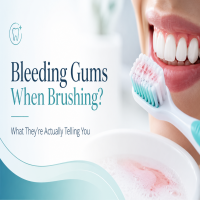
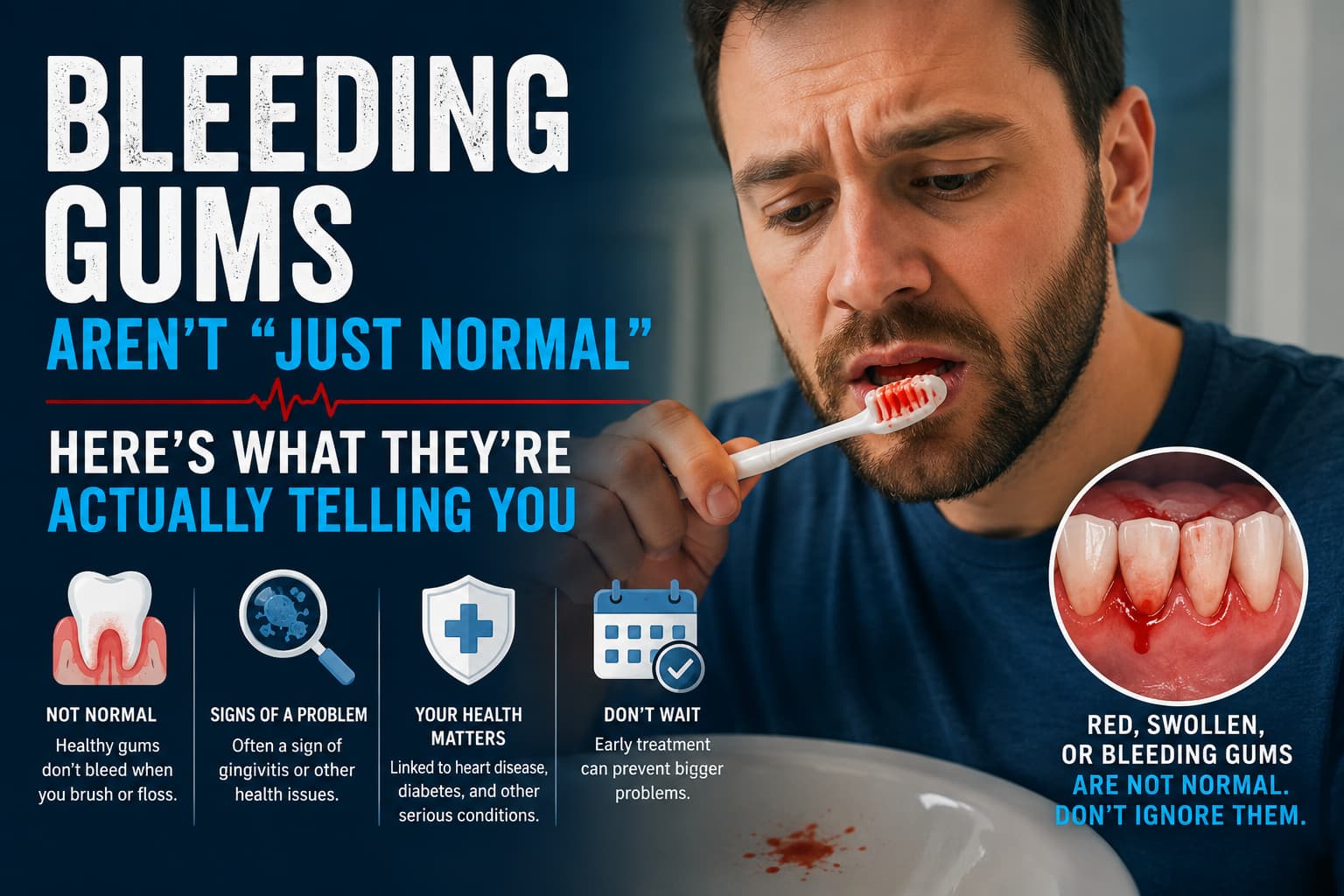
Bleeding Gums When Brushing Aren't "Just Normal" — Here's What They're Actually Telling You
You rinse after brushing and notice pink in the sink. You floss and see blood on the floss. You tell yourself it's nothing — everyone gets that sometimes, right?
Actually, no. Healthy gums don't bleed during regular brushing and flossing. When yours do, your body is signaling that something is happening beneath the surface — and understanding what that signal means is the first step to addressing it before it becomes something more serious.
Why are my gums bleeding? The answer depends on several factors, and not all of them are equally urgent. This guide walks through the most common causes, what the science says about bleeding gums and systemic health, and exactly when you should stop waiting and call a dentist.
The Most Common Cause: Gingivitis
The overwhelming majority of bleeding gums cases come back to one root cause — gingivitis, the earliest and most reversible stage of gum disease.
Gingivitis develops when plaque — the sticky bacterial film that forms on teeth — accumulates along the gumline and isn't adequately removed through daily brushing and flossing. The bacteria in that plaque trigger an inflammatory response in the gum tissue: the gums become red, puffy, and irritated. And inflamed gum tissue bleeds when disturbed — even by something as gentle as a toothbrush.
Gingivitis symptoms and bleeding gums go hand in hand. Other signs that gingivitis may be the culprit include:
- Gums that appear redder than usual (healthy gum tissue is coral pink, not bright red)
- Swollen or puffy gum tissue along the gumline
- Gums that feel tender when touched
- Persistent bad breath that doesn't resolve with brushing
- Gums that bleed consistently, not just occasionally
The important thing to understand about gingivitis is that it is completely reversible with professional treatment and improved home hygiene — but only at this early stage. Left untreated, gingivitis progresses to periodontitis, where the infection spreads below the gumline, damages the bone supporting your teeth, and becomes significantly harder to manage.
Other Common Causes of Bleeding Gums
While gingivitis is the most frequent culprit, it's not the only reason gums bleed. Several other factors can cause or contribute to this symptom.
New or aggressive brushing technique If you've recently switched to a harder-bristled toothbrush or started brushing more vigorously than usual, temporary gum bleeding can occur as the tissue adjusts. This typically resolves within a week or two. The solution is simple — switch to a soft-bristled brush and use gentle, circular motions rather than scrubbing.
Starting a new flossing routine Patients who haven't been flossing consistently often notice bleeding when they start. This is the gum tissue responding to the removal of plaque that has been accumulating undisturbed. With consistent daily flossing, this usually resolves within 1–2 weeks as the tissue becomes healthier.
Medications that affect clotting Blood thinners (warfarin, aspirin therapy, newer anticoagulants), certain antidepressants, and some cardiovascular medications can all increase bleeding tendency, including in the gums. If you've recently started a new medication and noticed increased gum bleeding alongside it, mention this to both your physician and your dentist.
Hormonal changes Pregnancy gingivitis is a well-documented phenomenon. Elevated progesterone levels during pregnancy exaggerate the gum tissue's inflammatory response to plaque, causing increased redness, swelling, and bleeding. This typically resolves after delivery but should still be professionally monitored during pregnancy — untreated periodontal disease has been associated with adverse pregnancy outcomes including preterm birth.
Hormonal fluctuations during puberty and menopause can also affect gum tissue behavior.
Vitamin deficiencies Vitamin C deficiency (scurvy in severe cases) specifically affects the integrity of connective tissue and gum health. Vitamin K deficiency can impair clotting. While severe deficiencies are uncommon in most developed countries, suboptimal levels can contribute to increased gum bleeding in some patients.
Ill-fitting dental appliances Dentures, retainers, or other oral appliances that don't fit properly can create chronic irritation of the gum tissue, causing localized bleeding at the contact points.
Is It Normal for Gums to Bleed?
The short answer is no — not routinely. Occasional, isolated bleeding from an accidental toothbrush slip is different from consistent bleeding every time you brush or floss.
Is it normal for gums to bleed at every single dental cleaning? Many patients assume yes, because they've experienced it. But bleeding on probing during a dental exam is actually a clinical indicator that your hygienist documents specifically — it signals inflammation, and inflamed tissue bleeds when touched. Healthy gums don't.
The persistence and pattern of bleeding matters. Occasional, single-incident bleeding after something unusual is different from regular bleeding with routine hygiene. If your gums bleed consistently — even gently — that consistency is the signal worth taking seriously.
The Bigger Picture: Bleeding Gums and Systemic Health
One of the most important reasons not to dismiss bleeding gums as a sign of gum disease is the growing body of research on the oral-systemic connection — the relationship between what happens in your mouth and what happens in the rest of your body.
Periodontal disease is associated with significantly increased risk of cardiovascular disease, with studies showing people with gum disease are two to three times more likely to experience a heart attack or stroke. The proposed mechanisms involve both direct bacterial migration into the bloodstream through inflamed gum tissue and the chronic systemic inflammatory burden created by an untreated infection in the mouth.
Type 2 diabetes and periodontal disease have a bidirectional relationship — uncontrolled blood sugar worsens gum disease, and uncontrolled gum disease worsens insulin resistance. Treating one consistently improves management of the other.
Your gums aren't just an aesthetic concern. They're part of your overall health picture.
How to Stop Bleeding Gums: What You Can Do at Home
If your bleeding gums are in the early gingivitis range and you haven't yet seen a dentist, here's where to start:
Improve your brushing technique. Use a soft-bristled toothbrush and brush at a 45-degree angle to the gumline with gentle circular motions for two full minutes, twice daily. Electric toothbrushes consistently outperform manual brushing for plaque removal at the gumline.
Floss daily — and don't stop when it bleeds. This is counterintuitive but important. If you stop flossing because it bleeds, the plaque causing the bleeding continues to accumulate. Consistent flossing reduces inflammation and the bleeding typically resolves within 1–2 weeks.
Rinse with an antiseptic mouthwash. Chlorhexidine-based rinses (available by prescription) or alcohol-free antiseptic rinses can help reduce bacterial load at the gumline.
Stay hydrated. Dry mouth reduces saliva's natural antibacterial effect and can worsen gum inflammation.
Review your medications with your doctor. If you're on medications that affect clotting, discuss this with your physician — not to stop the medication, but to be aware of it as a contributing factor.
When to See a Dentist for Bleeding Gums
Home care can address early gingivitis — but there are circumstances where professional evaluation is not optional:
Bleeding that persists for more than 2 weeks despite improved home hygiene
- Bleeding accompanied by pain, swelling, or abscess
- Gums that bleed spontaneously without brushing or flossing
- Any looseness in teeth alongside bleeding
- Significant recession visible alongside bleeding
- You haven't had a professional cleaning in more than 6 months
If you're in the North Dallas area and experiencing any of these symptoms, the team at Feel Good Dentistry in Frisco, TX specializes in non-surgical periodontal treatment — including deep cleanings (scaling and root planing) for patients whose gum disease has progressed beyond what a standard cleaning can address.
For patients whose bleeding gums suggest early gingivitis, a comprehensive dental exam and professional cleaning is the most direct path to turning the situation around — before it progresses to something more involved.
The Bottom Line
Bleeding gums are a symptom, not a nuisance to brush off. Whether the cause is gingivitis, a new medication, or a more advanced gum disease presentation, the pattern of consistent bleeding with routine hygiene deserves professional evaluation.
The earlier gum disease is caught, the simpler and more effective the treatment. Gingivitis reversed with a professional cleaning and improved home habits is a very different conversation from treating established periodontitis with bone loss. Both are manageable — but one is significantly easier than the other.
Don't normalize the pink rinse. Let your dentist tell you what it means.