Brand Activation Strategy: Practical Tactics to Boost Customer Engagement
-

- Published Updated
- 1,845 views
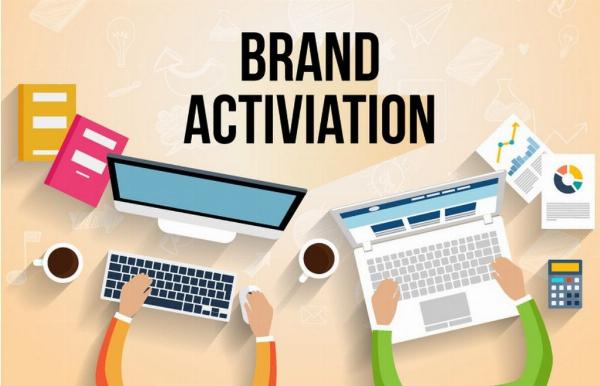
Brand activation is the set of tactics and programs that turn brand ideas into experiences that drive consumer attention, trial, and loyalty. A clear brand activation strategy aligns objectives, audience insights, creative execution, and measurement to move people from awareness to action.
- Brand activation translates strategy into measurable experiences across events, retail, and digital channels.
- Effective activation uses customer insight, omnichannel planning, and clear KPIs like reach, conversion, and retention.
- Compliance, data privacy, and partnerships are key governance considerations.
What brand activation means and why it matters
Brand activation covers experiential marketing, in-store promotions, trade activation, sampling, social campaigns, and other programs designed to provoke a consumer response. The objective may be short-term (trial or purchase) or long-term (brand preference). Organizations such as marketing associations and academic researchers emphasise that activation complements brand building by generating measurable consumer behaviour and feedback that can inform marketing investment decisions.
Core components of a successful activation program
Clear objectives and audience segmentation
Define specific, measurable objectives: awareness, trial, repeat purchase, or data capture. Use market research and customer data to segment audiences by behaviour, needs, and channels to tailor the activation approach.
Insight-driven creative concept
Translate customer insight into an activation idea that fits the chosen channel. For experiential programs, focus on immersive brand experience. For retail and trade activations, design offers and displays that reduce friction and encourage trial.
Channel strategy and omnichannel integration
Choose channels that reach target segments efficiently: events and pop-ups for experiential reach, retail activation for point-of-sale conversion, digital and social for amplification and retargeting. Integrate messaging and data across channels to create a seamless customer journey.
Planning, logistics, and partnerships
Operational planning
Develop detailed plans covering staffing, inventory, technology, venue logistics, permits, and contingency scenarios. Timelines and checklists reduce last-minute risks.
Partner and vendor management
Collaborate with agencies, retailers, experiential firms, and technology providers. Contracts should specify deliverables, timelines, KPIs, and compliance responsibilities.
Measurement and KPIs
Define meaningful metrics
Common activation KPIs include reach, impressions, engagement rate, conversion rate, incremental sales, repeat purchase rate, cost per acquisition (CPA), and lifetime value (LTV). Use baseline metrics and control or comparison groups where possible to estimate incremental impact.
Data collection and analytics
Collect first-party data during activations (consent-permitted). Link event or POS data to CRM and digital analytics to track subsequent behaviour. Statistical methods, such as A/B testing and matched-market analysis, support causal inference.
Legal, privacy, and ethical considerations
Regulatory compliance
Follow advertising standards, consumer protection rules, and local permit requirements. Where data is collected, comply with privacy frameworks such as GDPR, CCPA, or equivalent national regulations and maintain transparent consent practices.
Accessibility and inclusivity
Design activations to be accessible and inclusive. Accessibility guidelines and local regulations may apply to venues and digital interfaces.
Optimising and scaling activation efforts
Iterate based on evidence
Use post-activation analysis to identify what drove outcomes. Capture lessons on messaging, timing, staffing, and channel mix. Apply those learnings to future activations.
Scaling and repeatability
Standardise successful components into toolkits, templates, and playbooks that enable consistent execution across markets while allowing local adaptation.
Industry guidance and further reading
Professional bodies provide best-practice guidance on planning and measurement for marketing and activation programs. For general principles and industry standards, consult authoritative resources such as the American Marketing Association: https://www.ama.org/.
Common activation formats and use cases
Experiential and event marketing
Live experiences create memorable interactions and allow direct feedback. Use clear objectives and sampling or demo protocols to capture value.
Retail and trade activation
Point-of-sale displays, staff-led demonstrations, and in-store promotions target purchase decisions at the moment of truth.
Digital and social campaigns
Online activations leverage targeted ads, influencer partnerships, interactive content, and social commerce to generate low-friction trial or data capture.
Checklist for first-time planners
- State clear objectives and success metrics.
- Identify core audience segments and appropriate channels.
- Develop a measurable creative concept and activation plan.
- Set operational, legal, and data-privacy safeguards.
- Define method for measuring incremental impact.
- Capture learnings and create repeatable assets.
Conclusion
Brand activation bridges strategy and consumer behaviour through experiences and measurable programs. Successful activation depends on insight-driven creative, rigorous planning, clear KPIs, and attention to legal and ethical standards. Iteration and integration with broader marketing and sales systems enable sustained impact.
FAQ: What is brand activation?
Brand activation refers to marketing activities that create direct consumer interactions to drive awareness, trial, or purchase. It includes experiential events, retail promotions, sampling, and digital campaigns designed for measurable outcomes.
FAQ: How to measure success of an activation campaign?
Measure using predefined KPIs such as reach, engagement, conversion, incremental sales, and CPA. Employ control groups or matched-market analyses where possible to estimate causal impact.
FAQ: How does brand activation fit into overall marketing strategy?
Activation complements brand-building by generating short- and medium-term consumer responses and data that inform long-term positioning, media planning, and product development.