Why Businesses Need Reliable Financial Reporting and Audit Solutions in Today’s Competitive Market
-

- Published Updated
- 8,920 views
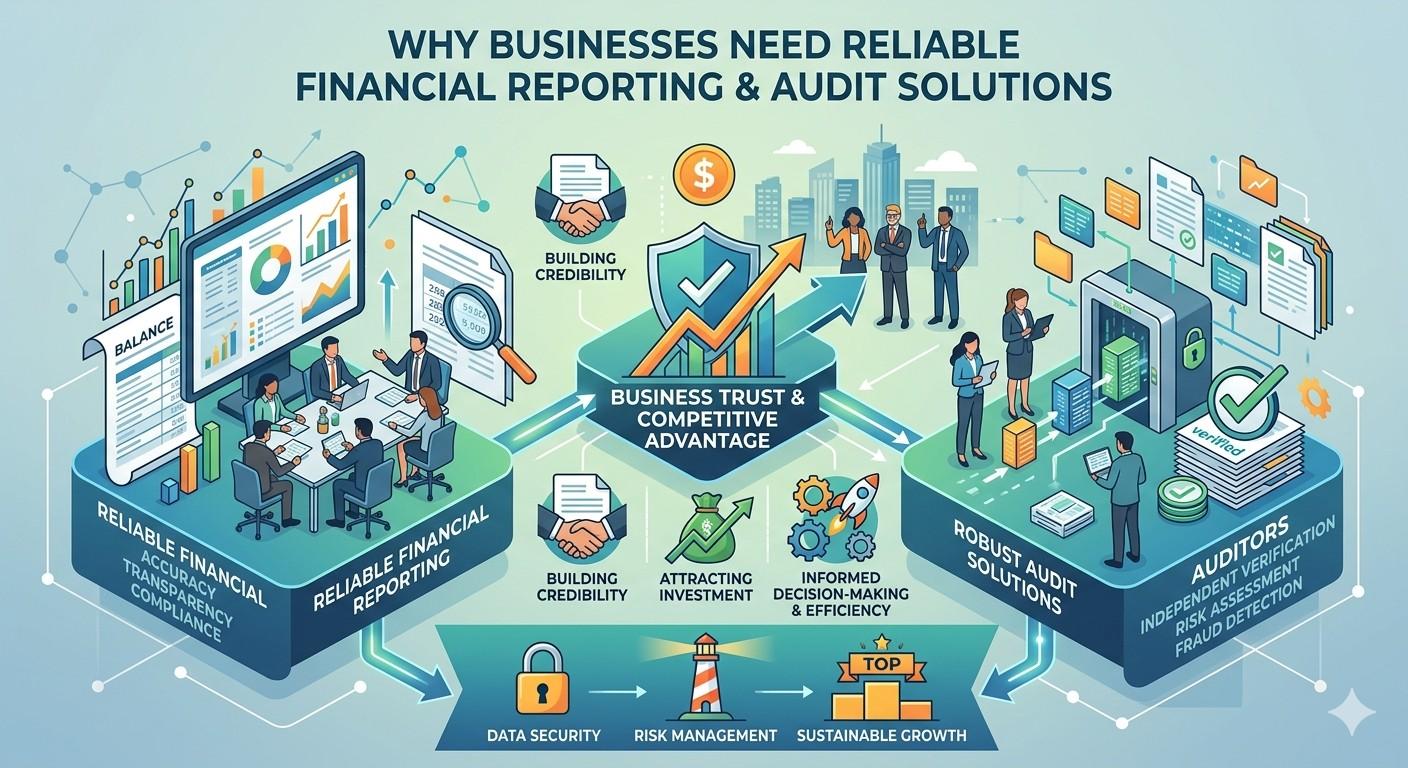
In today’s rapidly evolving business environment, financial clarity is more important than ever. Companies of all sizes rely on accurate financial data to make informed decisions, build trust with stakeholders, and remain compliant with regulatory requirements. This is where financial reporting and audit solutions play a critical role.
Without structured financial reporting and independent audits, businesses may struggle to understand their financial health, manage risks, or attract investors. Professional firms such as MMB+CO help organisations streamline financial processes, maintain transparency, and strengthen internal controls.
The Importance of Accurate Financial Reporting
Financial reporting is the backbone of any successful organisation. It provides a detailed picture of a company’s financial performance, including revenues, expenses, assets, and liabilities.
Accurate reporting helps businesses:
- Track profitability and performance
- Maintain regulatory compliance
- Build investor and stakeholder confidence
- Improve strategic decision-making
When financial statements are prepared correctly and consistently, business leaders can rely on them to identify growth opportunities and potential risks.
However, inaccurate or incomplete reporting can lead to serious problems, including regulatory penalties, financial losses, and reputational damage. This is why many companies choose professional financial reporting and audit solutions to ensure their financial information remains reliable and compliant.
Why Audits Are Essential for Business Transparency
An audit is an independent review of a company’s financial statements and internal processes. Its purpose is to verify that the financial records accurately reflect the organization's financial position.
Audits help businesses in several important ways:
1. Strengthening Credibility
An audited financial statement signals to investors, lenders, and partners that a company’s finances are trustworthy and transparent.
2. Identifying Financial Risks
Audits often uncover errors, inconsistencies, or potential fraud risks that businesses may not notice during routine accounting activities.
3. Ensuring Compliance
Businesses must follow financial regulations and industry standards. Audits confirm whether the organization meets these legal and regulatory requirements.
By implementing professional financial reporting and audit solutions, companies gain confidence that their financial systems are operating effectively and ethically.
How Financial Reporting and Audit Solutions Improve Decision-Making
Business leaders depend on financial data to guide strategy. Well-structured and regularly audited financial reporting provides decision-makers with a clearer understanding of their company's position.
Key benefits include the following:
- Better financial forecasting
- More accurate budgeting
- Improved cost management
- Increased operational efficiency
Professional advisory firms such as MMB+CO help businesses translate complex financial data into practical insights that guide long-term planning and growth.
The Role of Technology in Modern Financial Reporting
Modern businesses increasingly rely on digital tools and automation to manage their finances. Advanced accounting platforms and data analytics allow companies to generate reports faster and more accurately than ever before.
Technology-driven financial reporting and audit solutions provide benefits such as:
- Real-time financial insights
- Automated compliance checks
- Reduced human errors
- Faster reporting cycles
These innovations allow businesses to focus more on strategy and less on manual financial processes.
Why Growing Businesses Should Invest in Professional Audit Services
As companies grow, their financial operations become more complex. Managing multiple revenue streams, investments, and regulatory requirements can quickly overwhelm internal teams.
Professional audit and reporting services offer several advantages:
- Independent financial verification
- Improved internal controls
- Risk identification and mitigation
- Enhanced financial transparency
Organisations that partner with experienced firms like MMB+CO often find it easier to maintain financial discipline and scale their operations confidently, which can lead to improved decision-making and enhanced stakeholder trust.
Building Long-Term Financial Stability
Financial transparency is not just about compliance—it is about building long-term trust. Investors, clients, and partners prefer working with organisations that maintain clear financial records and demonstrate accountability.
Reliable financial reporting and audit solutions allow companies to:
- Maintain consistent financial oversight
- Strengthen governance structures
- Improve investor relationships
- Prepare for future growth or acquisitions
With the right systems in place, businesses can create a stable financial foundation that supports sustainable expansion.
Conclusion
In an increasingly complex business landscape, reliable financial oversight is no longer optional—it is essential. Accurate reporting and independent audits provide businesses with the clarity and credibility they need to thrive.
Professional financial reporting and audit solutions help organizations maintain compliance, improve financial decision-making, and strengthen stakeholder confidence. With the guidance of experienced advisory firms such as MMB+CO, businesses can transform financial data into meaningful insights that drive long-term success.
FAQs
1. What are financial reporting and audit solutions?
Financial reporting and audit solutions are professional services that help businesses prepare accurate financial statements, review internal controls, and ensure compliance with financial regulations.
2. Why is financial reporting important for businesses?
Financial reporting provides a clear overview of a company’s financial health, helping business leaders track performance, manage risks, and make informed decisions.
3. How often should a company conduct an audit?
Most organizations conduct annual audits, but the frequency may vary depending on regulatory requirements, company size, and stakeholder expectations, with some companies opting for semi-annual or quarterly audits to ensure more frequent oversight and compliance.
4. How do audit services help prevent financial risks?
Audits examine financial records and processes to identify errors, inconsistencies, or potential fraud, allowing businesses to correct issues before they become major problems.