C_SIGVT: What This SAP Certification Actually Involves
-

- September 21st, 2026
- 53 views
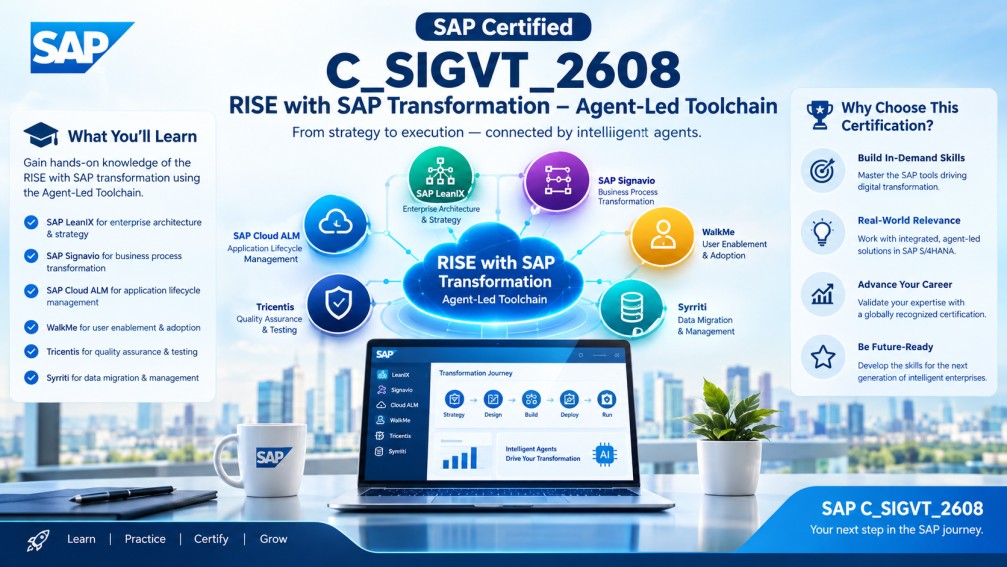
C_SIGVT is SAP's Certified - Validating Business Transformation credential, and if you're looking into it, the first thing worth knowing is that it doesn't work like most SAP certifications you've likely encountered before. Rather than a static bank of multiple-choice questions, this exam uses a scenario-based assessment format, which means preparation has to look different from the start.
The certification confirms that you can support and validate a business transformation using SAP's Business Transformation Framework at an associate level. It draws on SAP's cloud strategy, the RISE with SAP methodology and its integrated toolchain, and the practical validation of transformation metrics across different program phases. The exam context leans heavily on SAP Cloud ALM and SAP Signavio Process Manager, both central to the Business Transformation Management domain SAP built this credential around.
Who C_SIGVT Is Actually Built For
This certification is aimed at transformation leaders, project managers, and business users who guide or validate SAP S/4HANA transformation initiatives. If your role touches process improvement, enterprise architecture, or program monitoring, C_SIGVT sits squarely in your professional lane. It's positioned at an intermediate, project-facing level, which makes it a good fit for consultants and business analysts formalizing skills they already use informally, as well as people moving into a dedicated validation responsibility for the first time.
Having actual exposure to transformation programs, along with some direct time in the tools involved, makes a real difference in how smoothly preparation goes. This isn't a credential you can approach through pure reading. The scenario format assumes you've either lived through situations like the ones it presents or have taken deliberate steps to simulate that experience.
The Scenario-Based Format Changes Everything
This is where C_SIGVT departs most sharply from traditional SAP exams, and it's worth understanding before you start preparing. Instead of a sequence of unrelated multiple-choice questions, the exam presents a guided scenario activity. You interpret a described transformation situation and select the correct validation approach, rather than picking an answer from a fixed list disconnected from any real context.
The format tests applied reasoning rather than memorized facts. You're expected to compare how a process was designed against how it's actually running, spot inefficiencies or compliance gaps, and connect those findings to measurable business outcomes. Passing shows real command of the transformation-management tools involved, not just familiarity with the vocabulary surrounding them.
If your instinct is to prepare with flashcard-style repetition, this exam will feel unfamiliar at first. A better strategy is absorbing the reasoning behind transformation validation itself, then testing that understanding against scenarios that resemble what you'll actually face.
What the Exam Draws On Most
Four areas tend to anchor most of the scenario activities: validating transformation KPIs, identifying process deviations, assessing adoption progress, and confirming architecture alignment across an initiative. Nearly everything the exam asks connects back to one or more of these.
SAP Cloud ALM and SAP Signavio Process Manager are the practical backbone here. You need a working sense of how Cloud ALM tracks and reports transformation progress, and how Signavio Process Manager captures process performance and compares it against designed benchmarks. Conceptual familiarity helps, but understanding how these tools function inside a live transformation program helps considerably more.
RISE with SAP also matters, since much of the validation reasoning the exam tests assumes you understand how RISE structures a transformation journey and what its integrated toolchain actually looks like once a program is underway.
Preparing Without a Fixed Question Bank
Because this exam isn't built around a static set of multiple-choice questions, chasing a traditional dump of exam questions won't get you very far. What actually helps is working through sample scenarios that mirror SAP's reasoning style, then checking your validation logic against explanations of why one approach fits better than another.
Start by getting comfortable with the vocabulary and structure of the Business Transformation Framework itself. From there, spend time with SAP Cloud ALM and Signavio Process Manager, ideally in a trial or sandbox environment, since watching how these tools actually surface deviations and track KPIs makes scenario questions feel far more concrete.
Practice scenarios do more for you here than a typical question-and-answer format, because they train the specific kind of reasoning this exam actually tests. Instead of remembering that "Cloud ALM tracks transformation KPIs," the goal is reaching a point where, given a described situation, you can identify which validation step genuinely applies.
A Realistic Path Through Preparation
A reasonable sequence starts with grasping the framework conceptually. Understand what business transformation validation actually means and what the exam expects from someone in an advisory or project-facing validation role. From there, move into the specific tools, Cloud ALM and Signavio Process Manager, and focus not just on what they do but on how they're used to compare planned versus actual process performance.
Once that foundation feels solid, shift into scenario-based practice. Work through situations that ask you to identify a process deviation, connect it to a business outcome, and choose an appropriate validation response. This mirrors the actual exam far more closely than isolated fact recall, and it's what builds the applied reasoning the scenario format specifically rewards.
Pay particular attention to the link between technical findings and business outcomes, since that connection sits at the center of what this certification measures. Spotting a process deviation isn't enough on its own. You need to reason through what it means for the transformation's success and what the appropriate next step should be. This all efforts turns into successful SAP certification journey at the end.
Pulling It Together
C_SIGVT rewards applied understanding over memorization, which makes it a genuinely different kind of preparation challenge compared to most SAP certifications. Build a solid foundation in the Business Transformation Framework, get comfortable with Cloud ALM and Signavio Process Manager conceptually or hands-on, and practice reasoning through realistic scenarios rather than isolated questions. For candidates who want structured scenario-based practice material to sharpen that reasoning before exam day, TheExamQuestions is a solid resource worth checking out.
FAQs
Does C_SIGVT use a standard multiple-choice format?
No. It uses a scenario-based assessment where you interpret a transformation situation and choose the correct validation approach rather than answering a fixed set of unrelated questions.
Which SAP tools should I focus on for this exam?
Primarily SAP Cloud ALM and SAP Signavio Process Manager, both used within the Business Transformation Framework and the RISE with SAP methodology.
Who is C_SIGVT designed for?
Transformation leaders, project managers, and business users working in process improvement, enterprise architecture, or program monitoring within SAP S/4HANA transformation initiatives.
Do I need hands-on experience to pass?
It's not strictly required, but prior exposure to real transformation programs and the associated SAP tools makes the scenario-based reasoning noticeably easier to work through.
How does C_SIGVT differ from other SAP associate-level exams?
It emphasizes applied reasoning and scenario interpretation rather than memorized facts, requiring you to connect technical findings to measurable business outcomes instead of simply recalling definitions.