Cancer Diagnostics Market Expansion Driven by Innovation in Oncology Testing Technologies
-

- Published Updated
- 4,078 views

The global cancer diagnostics market is entering a transformative period as healthcare systems increasingly prioritize early detection, accurate diagnosis, personalized treatment planning, and continuous disease monitoring. Advances in molecular diagnostics, imaging technologies, liquid biopsy, genomic testing, biomarkers, and laboratory automation are strengthening the role of diagnostics across the cancer care pathway. Growing awareness about routine screening and technological improvements are further encouraging healthcare providers to adopt sophisticated diagnostic solutions.
The cancer diagnostics market size is likely to be valued at US$185.4 billion in 2026 and is expected to reach US$343.3 billion by 2033, growing at a CAGR of 9.2% during the forecast period from 2026 to 2033. This expansion reflects increasing demand for technologies capable of identifying cancer at earlier stages while supporting more precise clinical decision-making.
For More Industry Insights Read: https://www.persistencemarketresearch.com/market-research/cancer-diagnostics-market.asp
Early Detection Becomes a Central Healthcare Priority
Early diagnosis remains one of the most important factors influencing cancer treatment outcomes. Healthcare organizations are therefore placing greater emphasis on screening programs and diagnostic procedures designed to identify abnormalities before disease progression.
Diagnostic laboratories, hospitals, cancer centers, and specialty clinics are increasingly incorporating advanced testing platforms into routine clinical workflows. Greater awareness among patients and healthcare professionals is also supporting participation in cancer screening and encouraging timely diagnostic evaluation.
The expanding emphasis on preventive healthcare is expected to create opportunities for companies developing accessible, rapid, and accurate diagnostic solutions.
Molecular and Genomic Diagnostics Transform Cancer Detection
Molecular diagnostics and genomic technologies are changing how cancer is identified and characterized. Instead of relying exclusively on conventional diagnostic approaches, clinicians can increasingly evaluate genetic mutations, molecular signatures, and biomarkers associated with different cancer types.
These capabilities support precision oncology by helping healthcare professionals better understand tumor characteristics and select appropriate treatment strategies. Companion diagnostics are also becoming increasingly relevant as targeted therapies require accurate identification of eligible patient populations.
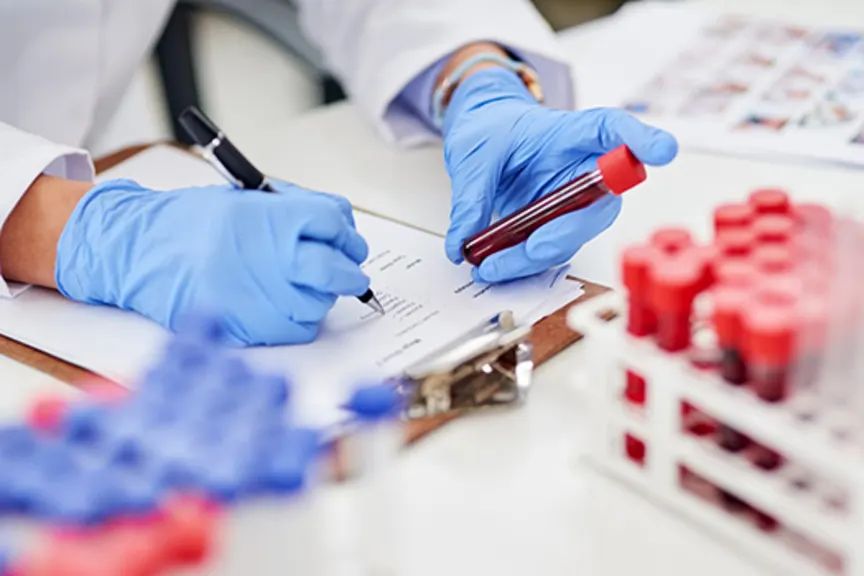
Liquid biopsy represents another important area of innovation. The ability to analyze cancer-related biomarkers through blood samples may support less invasive disease detection, monitoring, and assessment of treatment response.
Imaging Technologies Continue to Advance
Medical imaging remains a fundamental component of cancer diagnosis. Improvements in imaging resolution, digital workflows, image processing, and computer-assisted analysis are helping clinicians identify suspicious abnormalities with greater confidence.
Artificial intelligence and advanced analytics are also becoming increasingly integrated into diagnostic imaging environments. These technologies can assist healthcare professionals in reviewing complex medical images, identifying patterns, prioritizing cases, and improving workflow efficiency.
The combination of imaging, pathology, laboratory diagnostics, and molecular testing is creating a more integrated approach to cancer detection and clinical evaluation.
Automation Strengthens Diagnostic Laboratory Efficiency
Increasing testing volumes are encouraging laboratories to adopt automated platforms that improve throughput, consistency, and operational efficiency. Automation can streamline sample preparation, testing, analysis, and reporting while reducing repetitive manual processes.
Digital pathology is similarly gaining importance as laboratories transition from traditional workflows toward digitally enabled diagnostic environments. Digital platforms can improve collaboration between specialists and support remote interpretation, data management, and computational analysis.
As cancer diagnostics become increasingly data intensive, interoperability between instruments, laboratory systems, imaging platforms, and clinical information systems will remain an important area of development.
Competitive Landscape Encourages Continuous Innovation
The cancer diagnostics market includes established healthcare technology companies alongside specialized molecular diagnostics and precision oncology businesses. Competition is increasingly centered on diagnostic accuracy, testing speed, automation, clinical utility, workflow integration, and accessibility.
Companies are investing in advanced biomarkers, next-generation diagnostic platforms, artificial intelligence, genomic technologies, liquid biopsy solutions, and integrated laboratory systems. Partnerships between diagnostic companies, research organizations, healthcare providers, and pharmaceutical developers are also helping accelerate innovation.
Companies covered in the cancer diagnostics market include Abbott Laboratories, Becton Dickinson and Company, Biocare Medical, Biocartis, bioMérieux, Bio-Rad Laboratories, Danaher Corporation, Exact Sciences Corporation, F. Hoffmann-La Roche, GE HealthCare Technologies, Guardant Health, Hologic, Koninklijke Philips, QIAGEN, Siemens Healthineers, Sysmex Corporation, and Thermo Fisher Scientific.
Future Outlook
The future of cancer diagnostics is expected to become increasingly personalized, connected, and technology driven. Continued improvements in biomarker discovery, genomic profiling, artificial intelligence, imaging, liquid biopsy, and laboratory automation could make cancer detection more precise and efficient.
Companies capable of combining clinical accuracy with scalable testing platforms and streamlined workflows will be well positioned as healthcare systems expand diagnostic capabilities. Greater integration of multiple diagnostic methods may also enable clinicians to develop a more comprehensive understanding of individual cancers and improve treatment planning.
Market Segmentation
The cancer diagnostics market can be broadly evaluated across several key categories:
By Product: Instruments, consumables, assays, kits, reagents, and associated diagnostic solutions.
By Diagnostic Method: Imaging, biopsy, molecular diagnostics, immunodiagnostics, cytology, histopathology, and other diagnostic approaches.
By Cancer Type: Breast cancer, lung cancer, colorectal cancer, prostate cancer, cervical cancer, blood cancers, and other cancer types.
By Technology: Molecular testing, genomic analysis, biomarker testing, liquid biopsy, imaging technologies, and laboratory-based diagnostic technologies.
By End User: Hospitals, diagnostic laboratories, cancer diagnostic centers, research institutions, specialty clinics, and other healthcare facilities.
With cancer care increasingly focused on early intervention and precision medicine, diagnostics are becoming an essential foundation for identifying disease, guiding therapeutic decisions, monitoring response, and improving the overall cancer care pathway.