Cancer Treatment in India: What International Patients Need to Know Before Deciding
-

- May 05th, 2026
- 7,712 views
A cancer diagnosis forces decisions that nobody is prepared for. The medical decisions are hard enough. Layered on top are financial realities that, in many parts of the world, make treatment nearly impossible - or that consume a family's entire savings in months.
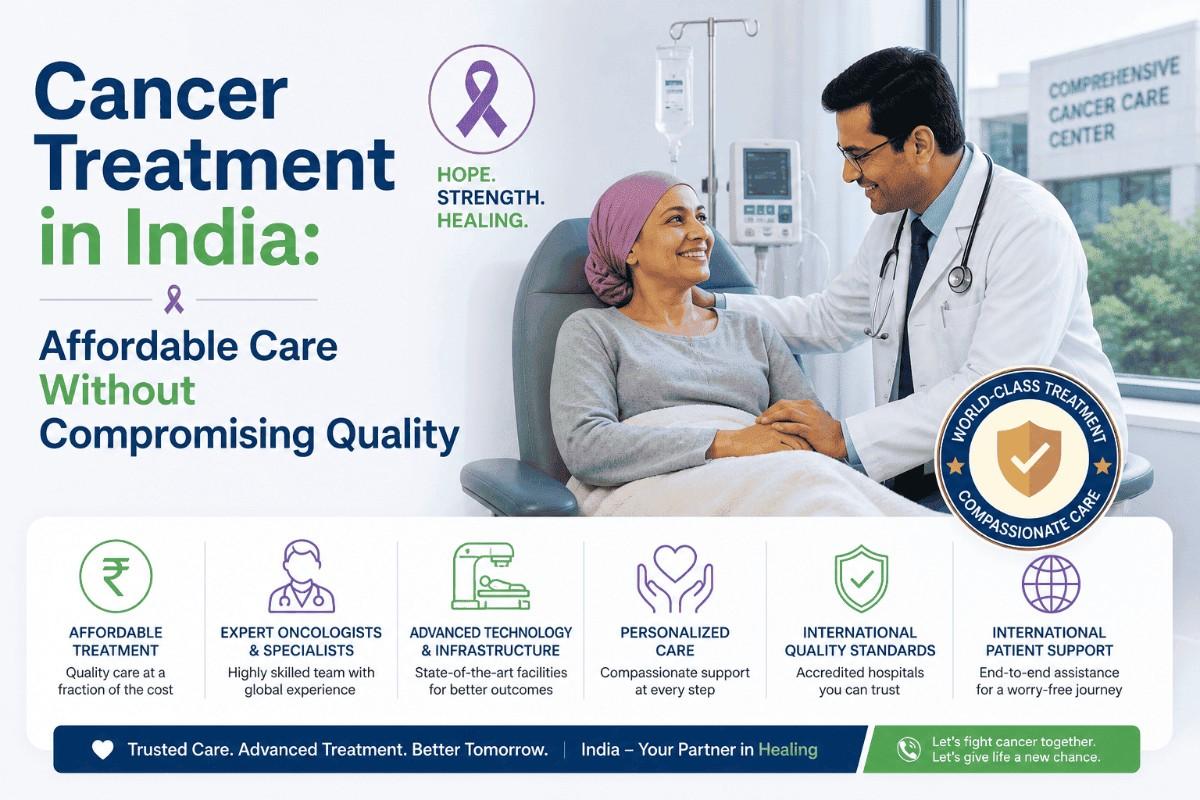
India has become a serious option for cancer treatment for patients from across Africa, the Middle East, Central Asia and even Western countries. The combination of oncology expertise, advanced technology and costs that are 60–80% lower than Western markets has made India a destination where patients don't have to choose between treatment and financial survival.
This is a realistic assessment of what India offers, what it doesn't and how to make the decision well.
Cost: The Gap Is Real
Chemotherapy for breast cancer: $50,000–$100,000 in the US. In India: $6,000–$15,000 for a full course.
Radiation therapy (30 sessions): $30,000–$60,000 in the US. In India: $3,000–$6,000.
Targeted therapy drugs: In the US, monthly costs for drugs like trastuzumab (Herceptin) or imatinib (Gleevec) can run $5,000–$10,000. Generic equivalents, which are legally manufactured in India under compulsory licensing, cost a fraction of that - often $200–$600 per month.
Bone marrow transplant (autologous): $100,000–$200,000 in the US. In India: $15,000–$25,000.
These numbers are real. For patients from countries where these treatments are not covered by insurance or public health systems - or simply don't exist locally - India offers a path to treatment that would otherwise be inaccessible.
What India's Top Cancer Centers Offer
India's leading oncology hospitals - concentrated in Delhi, Mumbai, Chennai, Bangalore and Hyderabad - operate at a level that competes with international centers. They offer:
Linear accelerator (LINAC) radiation therapy including IMRT, IGRT and VMAT
Robotic surgery (da Vinci system) for prostate, colorectal and gynecologic cancers
Bone marrow and stem cell transplant programs
Immunotherapy protocols including checkpoint inhibitors
PET-CT, 3T MRI and full molecular diagnostic capability
Tumor board reviews - multidisciplinary panels that review complex cases
The tumor board is worth emphasizing. In well-run oncology centers, every complex cancer case is reviewed by a panel of specialists - oncologist, radiologist, surgeon, pathologist and sometimes geneticist - before a treatment plan is finalized. This is the international standard of care. Ensure the hospital you choose follows this protocol.
Types of Cancer Treated
India's oncology centers handle the full range:
Breast cancer (all stages, including triple-negative)
Lung cancer
Colorectal cancer
Prostate cancer
Cervical and ovarian cancer
Blood cancers - leukemia, lymphoma, myeloma
Liver and pancreatic cancer
Head and neck cancers
Pediatric oncology
Brain tumors (glioma, glioblastoma)
For rare or complex cancers, some hospitals have specialized units - neurooncology, hepato-biliary oncology, sarcoma programs - with dedicated teams.
Bringing Your Records: What to Prepare
Before you travel, gather the following:
Pathology report (biopsy result with full histology)
Staging scans (CT, PET-CT, MRI - original files, not just reports)
Prior treatment records if any (surgery notes, previous chemotherapy cycles, radiation details)
Genetic/molecular testing results if done (BRCA, EGFR, HER2, PD-L1, etc.)
Complete blood panel
Most top Indian oncology hospitals offer remote case review within 24–72 hours of receiving records. A senior oncologist will review the case and provide a treatment recommendation and cost estimate before any travel commitment.
Do not travel without this remote review. It ensures the hospital has the capability to treat your specific cancer type and stage and confirms the cost before you leave home.
Duration of Treatment: Setting Realistic Expectations
This varies enormously by cancer type and stage. A surgical procedure for early-stage cancer may require 10–14 days. A full chemotherapy protocol may span 4–6 months of cycles. Radiation therapy typically runs 4–6 weeks of daily sessions.
For patients who cannot stay in India for extended treatment periods, some oncology centers work with patients on a hybrid model: planning and early treatment in India, with subsequent cycles managed locally with remote supervision from the Indian team.
This requires your local oncologist's cooperation - and it requires a hospital that takes international case management seriously. Not all do.
The Emotional and Logistical Reality
Cancer treatment is not like scheduling a knee replacement. The stakes are higher, the treatment duration longer, the side effects more demanding and the emotional weight more significant.
This makes the quality of your support system - both medical and logistical - especially important. You need a facilitator who understands oncology specifically, not just general medical tourism. DivinHeal, for instance, specializes in coordinating cancer care for international patients - managing everything from remote case review and hospital selection to accommodation, translation and post-treatment follow-up coordination.
The right support doesn't make cancer treatment easy. But it removes the administrative burden that, during an already difficult time, can become genuinely overwhelming.
What to Be Realistic About
India's cancer care, at the top tier, is excellent. But not every cancer is curable and no hospital - anywhere in the world - can guarantee outcomes. Be cautious of any facilitator or hospital that promises success rates without qualification. A good oncologist will give you probability-based information grounded in your specific diagnosis, not marketing language.
Also understand that India's advantages - cost, access, technology - exist primarily at the top tier of hospitals. The second and third tiers are significantly weaker. This makes hospital selection the single most important decision in your medical travel journey.
Get the pathology reviewed remotely first. Choose the hospital based on specific oncology capability for your cancer type. Use a facilitator with oncology experience. And go in with realistic, clear-eyed expectations.
The treatment is available. The quality is real. The cost savings are significant. With the right preparation, India can be the place where you access the care that your diagnosis demands.