How to Find the Right Keywords for a Cape Coral Local Business
-

- Published Updated
- 1,660 views
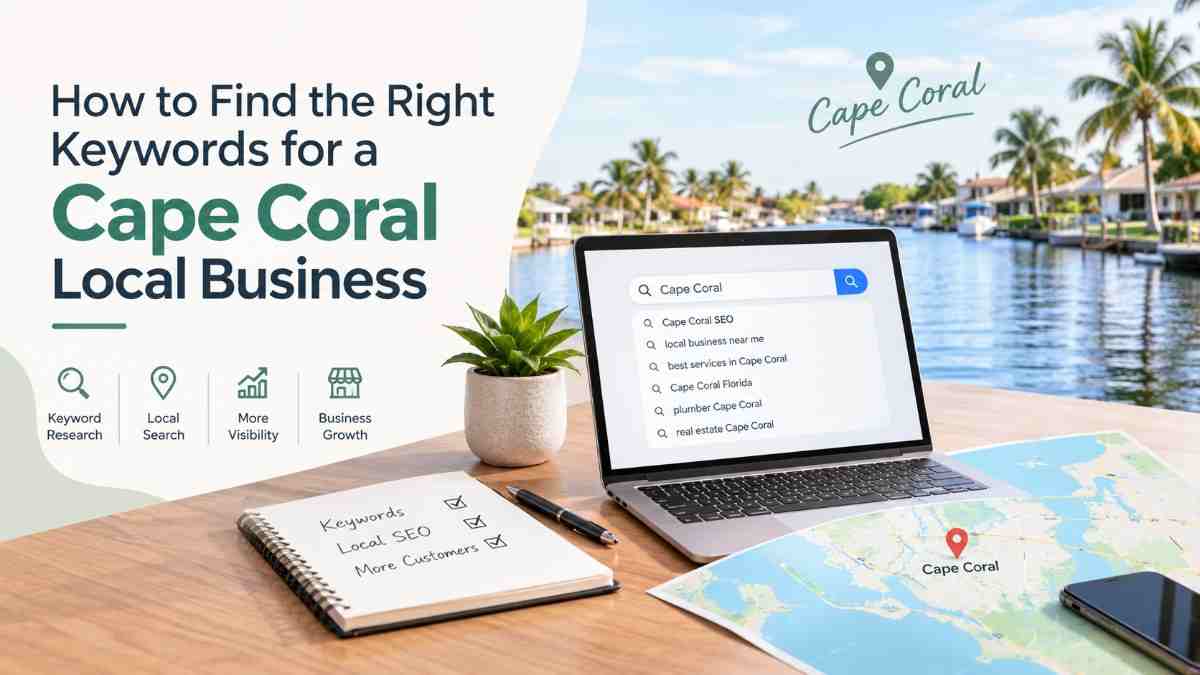
If you own a small business in Cape Coral, here's a question worth asking yourself today: when someone in your city searches for what you sell, does your business actually show up?
For most local business owners, the honest answer is "not really" or worse, "I have no idea." That's usually because of one missing piece: keywords. Not the boring, technical kind of keywords marketers throw around in meetings, but the actual words real people type into Google when they need something nearby.
This is where SEO Cape Coral comes in. It's simply the process of making sure your business shows up when local customers search for services like yours. And the starting point for all of it is figuring out exactly what words your customers are using.
Why "Local" Keywords Work Differently
Here's something most people don't realize: Google already knows where you are. So when someone searches "plumber near me" while standing in Cape Coral, Google shows them Cape Coral plumbers first even if the word "Cape Coral" was never typed.
This changes how you should think about keywords. You're not just fighting for attention against every business in Florida. You're competing with a much smaller, more local group. That's actually good news for a small business; it means you have a real shot at showing up, without needing a huge marketing budget.
There's another local twist too. Cape Coral has a strong seasonal rhythm: snowbirds, tourists, and part-time residents come and go throughout the year. Searches for things like boat rentals, pool cleaning, or vacation home services spike at certain times of year. A smart keyword strategy pays attention to this instead of treating every month the same.
Step 1: Listen Before You Search
Before opening any tool, do this simple exercise: think about how your actual customers talk.
What do they say when they call you?
What words show up in your Google or Facebook reviews?
What do they ask before booking an appointment?
A plumber's customer probably doesn't say "residential plumbing solutions." They say, "my sink won't stop leaking." A salon customer doesn't search "hair restoration services" they search "best hair salon near me."
Write down 15–20 phrases your real customers use. This becomes your foundation, and it's more valuable than anything a tool will tell you at first.
Step 2: Combine Your Services With Cape Coral
Once you have that list, start pairing your services with local terms. This is the heart of local SEO.
For example, if you run a landscaping business, you'd want to target phrases like:
Landscaping Cape Coral
Lawn care near me
Best landscaper in Cape Coral
Cape Coral lawn mowing service
Don't stop at just "Cape Coral" either. If you also serve nearby areas like Fort Myers or North Fort Myers, including those too, local searches often blend neighboring city names depending on where someone lives.
Step 3: Use Simple, Often Free Tools to Confirm Your Ideas
You don't need expensive software to get started. Here are a few easy ways to validate your keyword list:
Google Autocomplete – Type your service into Google and see what it suggests. These are real searches people are already making.
"People Also Ask" section – This shows related questions people ask, which can spark ideas for blog posts or FAQs on your website.
Google Business Profile Insights – If you already have a listing, check what search terms brought people to your profile. This is gold, it's literally your customers' own words.
Google Keyword Planner – Free with a Google Ads account, this shows estimated search volume and lets you filter by city, which is perfect for Cape Coral-specific research.
If you want to go a step further, paid tools like Ubersuggest or SEMrush can show you what keywords your competitors already rank for helpful, but not necessary when you're just starting out.
Step 4: Peek at What Your Local Competitors Are Doing
You don't need to reinvent anything here. Pick 3–4 businesses in Cape Coral similar to yours and see what they're doing well.
Look at their website, their Google Business Profile categories, and the kind of language they use in their service descriptions. This isn't about copying, it's about understanding what's already working in your specific market, and spotting the gaps they might be missing.
Step 5: Understand What People Actually Want (Intent Matters More Than Volume)
This is the part most people skip, and it's the most important one.
Not every search means the same thing. Someone typing "how much does AC repair cost" is just researching. Someone typing "emergency AC repair Cape Coral" wants help right now.
Here's a simple way to think about it:
Just curious → they're reading, not ready to buy
Comparing options → they're close to choosing someone
Ready to act → they want to call or book today
A keyword that only gets 10 searches a month but shows someone is ready to book is often far more valuable than a keyword with 1,000 searches from people who aren't ready to spend money yet.
Step 6: Don't Sleep on Long, Specific Phrases
Short keywords are competitive. Longer, more specific ones are often easier to rank for and bring in customers who know exactly what they want.
A few examples:
"Affordable roof repair after storm Cape Coral"
"Weekly pool cleaning service Cape Coral"
"Best-rated dentist for kids Cape Coral"
These might not get huge search volumes individually, but together they bring in steady, high-quality traffic and bigger competitors often ignore them completely.
Step 7: Think About How People Talk, Not Just How They Type
More people are searching by voice than ever through phones, smart speakers, and cars. Someone driving through Cape Coral might say, "find a tire shop near me that's open now," instead of typing a short phrase.
To capture this kind of search, write your website content the way people actually speak. Keep your Google Business Profile updated with accurate hours and services, and consider adding a simple FAQ section that answers common questions in natural language.
Step 8: Keep Checking What's Actually Working
Keyword research isn't something you do once and forget. Use Google Search Console (it's free) to see which keywords are actually bringing people to your website, and which pages are close to ranking on page one with a little extra push.
This ongoing check-in helps you adjust your strategy over time instead of guessing blindly.
A Few Mistakes to Avoid
Targeting only broad terms like "plumber" without any local angle
Repeating "Cape Coral" unnaturally over and over (this actually hurts more than it helps)
Ignoring seasonal shifts in search behavior
Never updating your keyword list as your business grows or changes
Wrapping It Up
Finding the right keywords for your Cape Coral business isn't about guessing or copying a checklist. It's about genuinely understanding how your customers search, then shaping your website and content around those real words and real intentions.
If all of this feels like a lot to manage on top of actually running your business, that's completely normal. This is exactly the kind of work a good Cape Coral SEO company handles for local businesses every day. Devoptiv, for instance, focuses on this kind of hands-on, research-backed local SEO helping small businesses in Cape Coral figure out exactly what their customers are searching for and turning that insight into real growth. If you'd rather focus on running your business while someone else handles the keyword research, it's worth having that conversation.