Chemical Belt Scrap Sales: How Chemical & Dye Plants in Gujarat & Maharashtra Monetize Scrap
-

- Published Updated
- 4,125 views
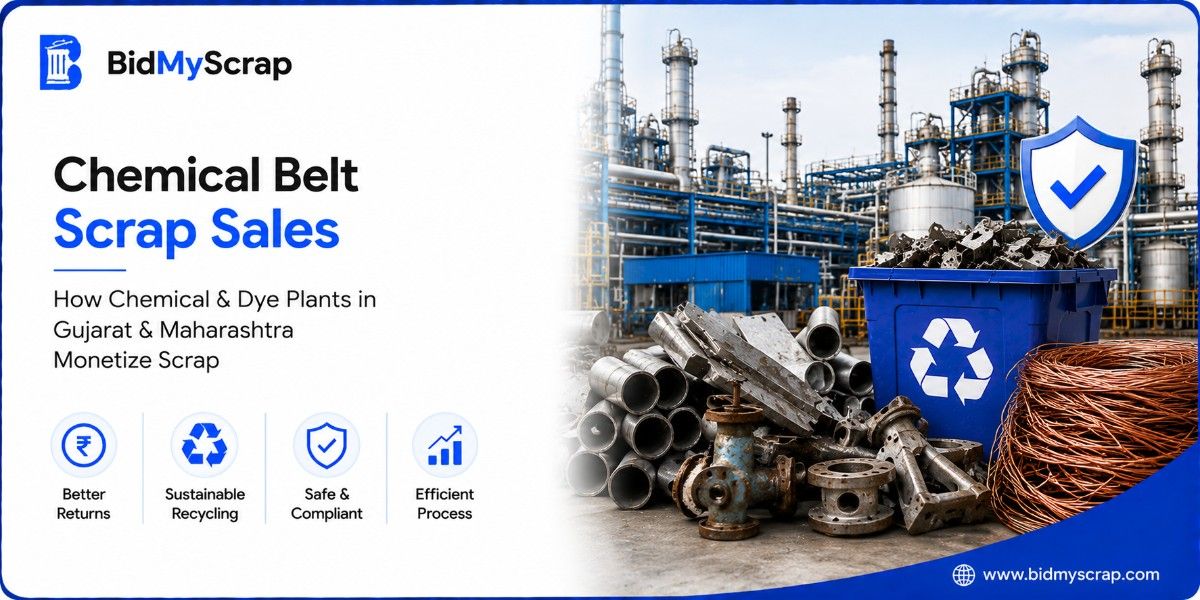
India’s chemical, agrochemical, pharmaceutical, specialty dye, pigment, and polymer manufacturing sectors are supported by some of the country’s largest industrial clusters. Major manufacturing belts around Ankleshwar, Vapi, Dahej, Bharuch, Tarapur, and Taloja (Navi Mumbai) contain a wide range of chemical processing facilities, storage units, utilities, warehouses, and engineering operations.
These facilities regularly use specialized equipment designed to withstand corrosive chemicals, high temperatures, pressure, and demanding production conditions. Over time, equipment replacement, plant maintenance, modernization, debottlenecking, capacity expansion, and shutdown activities can generate significant quantities of scrap and surplus assets.
Unlike ordinary commercial scrap, chemical plant scrap may require additional attention to material identification, contamination status, safe handling, transportation, documentation, and buyer eligibility. Materials can include SS 304 and SS 316/316L equipment, titanium components, heat exchangers, process piping, pumps, motors, electrical equipment, empty HDPE drums, IBC containers, batteries, and other retired plant hardware.
For chemical manufacturers, the challenge is not simply selling unwanted material. The objective is to dispose of assets responsibly while maintaining safety, regulatory discipline, traceability, and competitive value. This is where a structured online scrap auction system can provide a more organized approach.
The Challenges of Informal Chemical Scrap Sales
Traditionally, factories may depend on local scrap dealers or regional traders to dispose of surplus materials. While this can sometimes provide a quick solution, an informal process can create challenges when dealing with specialized industrial equipment or materials that require careful handling.
Chemical-exposed containers, used process equipment, residue-containing vessels, batteries, and other potentially sensitive materials should not be treated in exactly the same way as ordinary clean metal scrap. The condition and contamination status of each lot should be properly assessed before sale and dispatch.
A structured auction process can help manufacturers establish clear terms for buyers, define material conditions, collect required documentation, and maintain records throughout the transaction.
For plant management and EHS teams, this structured approach can make scrap disposal easier to monitor while reducing dependence on fragmented offline processes.
Compliance and Safety Should Come First
Chemical manufacturing facilities operate within a highly controlled environment. Scrap removal can involve external buyers, transporters, loading crews, weighbridge operators, warehouse teams, security personnel, and environmental teams.
For this reason, buyer qualification and documentation are important considerations when selling industrial scrap.
Depending on the material and applicable regulations, businesses may need to evaluate documents such as recycler authorizations, pollution-control consents, transporter information, vehicle documents, safety requirements, and other applicable permissions.
A digital auction platform can provide a centralized mechanism for collecting and reviewing relevant buyer information before a transaction progresses. However, the exact compliance requirements should always be determined according to the material category, applicable Indian environmental regulations, and the policies of the individual plant.
Unlocking the Value of High-Grade Industrial Scrap
Chemical processing equipment is often manufactured from valuable engineering materials. Stainless steel, titanium, specialized alloys, copper, aluminium, and other metals can have significant recovery value when equipment reaches the end of its operational life.
For example, SS 316 and SS 316L are widely valued because of their corrosion resistance and industrial applications. Similarly, titanium components and specialized heat exchanger materials can attract buyers with specific recycling or recovery capabilities.
Selling these materials through a traditional local channel may limit the number of potential buyers who know how to assess their value. An online scrap auction can make the opportunity visible to a broader pool of interested businesses.
Detailed lot descriptions can include:
- Material and alloy grade
- Approximate quantity or weight
- Equipment dimensions
- Condition of the material
- Photographs
- Available inspection details
- Location of the material
- Applicable auction terms
- Pickup and dispatch requirements
Providing accurate information helps potential buyers understand what is being offered and prepare more informed bids.
Competitive Bidding Can Improve Price Discovery
One of the key advantages of a digital scrap auction is competitive price discovery.
Instead of depending entirely on a single buyer's quotation, multiple eligible participants can compete within a defined auction process. Competitive bidding can help sellers understand the market's interest in a particular material while providing buyers with a transparent opportunity to participate.
This can be especially useful for high-value industrial scrap, where differences in alloy composition, equipment condition, quantity, and recovery potential can significantly influence the value of a lot.
A scrap auction online platform can therefore support a more systematic process for discovering competitive market prices while allowing sellers to establish their own auction terms and eligibility criteria.
Digital Management of Chemical Plant Scrap
Managing an industrial scrap transaction involves much more than receiving bids. Once an auction is completed, the winning buyer may need to complete payment, documentation, scheduling, loading, transportation, and material collection.
A comprehensive digital platform can bring several of these activities into one workflow.
Useful capabilities may include:
- Buyer Registration and Verification: Businesses can register and submit relevant company and compliance documents for review.
- Digital Auction Management: Sellers can create lots, establish auction conditions, publish material details, and manage bidding.
- EMD and Payment Management: Applicable deposits and payments can be tracked through a structured digital process.
- Document Management: Auction-related documents can be organized and accessed through a centralized system.
- Sales and Delivery Orders: Post-auction activities can be managed through digital order workflows.
- Material Tracking: Dispatch and collection information can be recorded for better visibility.
- Transaction Records: Digital records can make it easier for relevant teams to review completed transactions.
These capabilities can reduce paperwork and help create a clearer audit trail.
Gate Control and Safe Material Dispatch
Chemical plants often have strict access-control procedures because external personnel and vehicles enter operational premises.
When scrap is ready for collection, the plant may need to verify the winning buyer, transporter, vehicle, driver information, payment status, and required documentation before allowing material to leave the premises.
A modern e auction scrap platform can support this workflow by connecting auction information with relevant dispatch and gate-management processes.
For example, a plant can establish requirements under which the successful bidder completes applicable documentation and payment procedures before collection is scheduled. Security and EHS teams can then verify the required information according to the facility's internal procedures.
Digital records can also help reduce dependence on handwritten registers and scattered paperwork.
Better Traceability for EHS and Finance Teams
Traceability is particularly important for industrial organizations managing large volumes of scrap.
When auction information, buyer details, payment records, material descriptions, orders, and dispatch information are maintained digitally, authorized teams can access a more structured history of the transaction.
This can benefit several departments:
EHS teams can review material-handling and dispatch information.
Finance teams can monitor auction values, payments, and transaction documentation.
Procurement teams can manage buyer participation and auction processes.
Plant teams can coordinate inspections, loading, and collection.
Management teams can review auction performance and overall scrap realization.
Digital records do not replace statutory compliance requirements, but they can make internal monitoring and documentation more efficient.
Why Chemical Manufacturers Should Consider an eScrap Auction Platform
Electronic and electrical equipment is another important waste stream in industrial facilities. Control panels, cables, motors, electrical components, batteries, obsolete equipment, and other materials can accumulate during modernization and maintenance projects.
An eScrap auction can provide a structured channel for offering eligible electronic and electrical scrap to appropriate buyers.
The same principle applies to other industrial materials. Whether a company is disposing of stainless steel equipment, obsolete machinery, plastic containers, electrical components, or recyclable metal, the auction process can be organized around clearly defined lots and buyer requirements.
The important factor is proper classification. Different materials may have different handling, recycling, transportation, and environmental requirements. Businesses should therefore establish the applicable compliance conditions before listing a lot.
BidMyScrap and the Digitalization of Scrap Trading
Platforms such as BidMyScrap are helping move industrial scrap trading toward a more organized digital environment. The platform is designed to connect businesses with buyers and sellers while supporting auction-related processes.
For organizations searching for an e scrap auction platform, scrap auction portal, or broader digital solution for industrial scrap disposal, a centralized system can simplify the process of listing materials, inviting eligible participants, conducting auctions, and managing post-auction activities.
The goal is not simply to replace a traditional scrap dealer with a website. A successful digital approach should improve the complete transaction lifecycle from material listing and bidder participation to payment, documentation, order management, and dispatch.
Modernize Your Chemical Plant Asset Recovery Process
Chemical and agrochemical manufacturers generate valuable material streams during plant maintenance, equipment replacement, expansion, and decommissioning. Managing these materials through a structured auction process can help organizations improve transparency, expand buyer participation, maintain better records, and potentially achieve stronger price discovery.
A well-designed online scrap auction system can bring auction management, buyer participation, documentation, payment processes, and material dispatch into a more coordinated workflow.
For chemical plants operating in industrial hubs such as Ankleshwar, Vapi, Dahej, Bharuch, Tarapur, and Taloja, digitalization offers an opportunity to modernize how industrial scrap and surplus assets are managed.
With the right processes in place, businesses can focus on three important objectives: responsible disposal, transparent transactions, and better value recovery.
By adopting a structured Scrap auction and digital bidding model, manufacturers can move beyond fragmented offline processes and create a more scalable approach to industrial asset recovery.