Can Civil Engineers Move Into Infrastructure Management?
-

- Published Updated
- 1,331 views

Civil engineering builds strong technical knowledge around structures, construction, materials, design and project execution. As engineers gain experience, many begin working with budgets, contractors, procurement, contracts, schedules and stakeholders as well. This wider responsibility often creates a natural pathway into infrastructure management. Civil engineers who want to move from technical execution to project and business leadership therefore often compare specialised programmes offered by MBA colleges in Pune.
Why Does Civil Engineering Provide a Strong Foundation?
Civil engineers already understand how infrastructure projects take shape on the ground. They are familiar with construction processes, design requirements, materials, safety considerations and project constraints.
This technical foundation becomes valuable in management roles because infrastructure managers frequently work with engineering teams, consultants and contractors. They need to understand the consequences of design changes and identify how technical decisions affect project cost and timelines.
The career shift is therefore not about leaving engineering behind. It is about adding commercial and managerial skills to existing technical knowledge.
What Changes When You Move Into Infrastructure Management?
A civil engineer may initially focus on questions such as whether construction meets drawings, specifications and quality standards. An infrastructure manager needs to consider a wider set of questions.
Is the project financially feasible? Are contracts structured correctly? Is procurement aligned with the schedule? How should project risks be managed? Are regulatory requirements being followed? How should different stakeholders be coordinated?
These responsibilities require knowledge of finance, strategy, contracts and leadership, which explains why engineering graduates interested in broader project responsibilities may consider an MBA in Pune.
Why Does Infrastructure Finance Matter?
Large projects cannot move forward only because they are technically possible. They also need to be commercially and financially viable.
Future infrastructure managers should understand project appraisal, cash flows, financing sources and financial risk. SCMHRD's MBA in Infrastructure Development and Management specifically focuses on structuring projects that are technically, commercially, financially, socially and environmentally feasible. SCMHRD This connection between engineering feasibility and financial decision-making is central to careers involving infrastructure and development.
How Important Are Contracts and Procurement?
Infrastructure projects involve contractors, suppliers, consultants, government bodies and financial partners. Clear contracts help define what each party is responsible for.
Civil engineers moving into management should therefore develop an understanding of tendering, bidding, procurement and contract administration.
SCMHRD's infrastructure curriculum includes areas such as Project Execution Planning and Control, Supply Chain Management, Public Private Partnerships and project-related contractual management.
These subjects help professionals understand what happens around the engineering work, not only within it.
Do Civil Engineers Need Project Management Skills?
Yes. Project management is often one of the most natural bridges from engineering into management.
Civil engineers may already work with schedules, resources and contractors. Management education expands this understanding by connecting execution with risk, finance, procurement and strategy.
Infrastructure managers also need to understand how delays in one activity affect later work. They may coordinate several teams and make decisions when resources, costs or timelines change unexpectedly.
The role becomes less about completing one technical task and more about keeping the entire project moving towards its objective.
What About Regulations and Stakeholders?
Infrastructure projects are affected by regulatory frameworks, governance requirements and public interests.
Managers may need to coordinate with government authorities, local communities, consultants, investors and project developers. Communication and negotiation therefore become important alongside technical knowledge.
SCMHRD describes its programme as covering regulatory and governance frameworks, legal and contractual issues, leadership and project management.
For a civil engineer, these skills help expand responsibility beyond the construction site.
Which Infrastructure Sectors Can Civil Engineers Explore?
Infrastructure management is not restricted to traditional construction companies.
Professionals may work across transportation, energy, urban infrastructure, consulting, project finance, development organisations and infrastructure corporations. SCMHRD's programme includes sector-focused learning in areas such as transportation, energy and urban infrastructure.
Civil engineers can therefore use their technical background while moving towards roles involving project planning, execution, consulting, contracts, finance or infrastructure strategy.
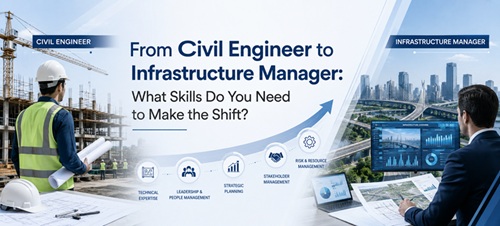
What Skills Should You Build Before Making the Shift?
Start by strengthening the skills that engineering education may not cover in depth.
Useful areas include:
Project finance and financial evaluation
Contract and claims management
Tendering and procurement
Project planning and control
Risk management
Supply chain management
Business communication
Negotiation and stakeholder management
Advanced Excel and analytical skills can also support project evaluation and reporting.
The objective is not to replace engineering expertise. It is to learn how technical, financial and managerial decisions connect across the project lifecycle.
Conclusion
Civil engineers can move into infrastructure management because they already understand one of the most important parts of infrastructure projects: how physical assets are designed and built. The next step is developing the finance, contracts, strategy, risk and leadership skills required to manage projects from feasibility through execution and operations.
The MBA in Infrastructure Development and Management at Symbiosis Centre for Management and Human Resource Development (SCMHRD) is designed around this transition. The programme combines infrastructure planning with project execution, finance, regulatory frameworks, contracts and general management. It offers functional specialisations in Execution and Finance, followed by sectoral exposure to areas such as Transportation, Energy and Urban Infrastructure.
The programme's objective also emphasises structuring feasible projects, managing execution and contractual relationships, handling project lifecycle risks and developing project business capabilities. For civil engineers who want to progress from technical responsibilities towards wider project leadership, this multidisciplinary approach provides a structured way to connect engineering knowledge with the commercial and managerial realities of infrastructure.