From Civil Engineer to Infrastructure Manager: What Skills Do You Need to Make the Shift?
-

- Published Updated
- 3,784 views
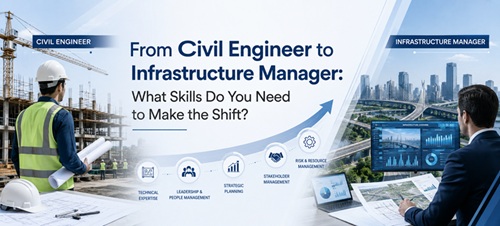
Civil engineering teaches you how infrastructure is designed and built, but moving into infrastructure management changes the questions you need to answer. Instead of focusing only on technical execution, you begin thinking about budgets, contracts, risks, stakeholders, timelines and the commercial viability of projects. You also need to understand how different teams work together, how delays affect project costs and how financial and regulatory decisions influence the final outcome. This shift requires a broader view of the entire project lifecycle, from planning and procurement to execution and long-term operations. Civil engineers planning this transition often compare MBA colleges in Pune to find programmes that connect technical knowledge with management skills and prepare them for larger decision-making responsibilities.
Why Do Civil Engineers Move Into Infrastructure Management?
Civil engineers often begin their careers around design, construction, quality control or site execution. As responsibilities increase, technical knowledge alone may not cover every decision.
An infrastructure manager may need to coordinate contractors, evaluate project costs, manage procurement, understand regulations and report progress to senior stakeholders.
The transition therefore involves expanding your perspective from how do we build this? to how do we deliver this project successfully?
1. Develop Strong Project Management Skills
Project management is one of the most important skills for this transition.
Infrastructure managers need to understand scheduling, resource allocation, procurement, quality, safety and project monitoring. They also need to identify potential delays before they become expensive problems.
These capabilities become particularly important because infrastructure and development projects often involve several contractors, agencies and stakeholders working together.
2. Learn Infrastructure Finance
A technically feasible project is not automatically financially viable.
Infrastructure managers should understand budgets, cash flows, project appraisal, financing options and risk assessment. This helps them participate in decisions about whether a project makes financial sense and how it should be funded.
Civil engineers do not need to become investment bankers, but they should be comfortable discussing the commercial side of a project.
3. Understand Contracts and Procurement
Large infrastructure projects depend heavily on contracts.
Managers need to understand tendering, bidding, procurement, contract administration and vendor management. They should know what different stakeholders are responsible for and how contractual decisions affect project cost and timelines.
Your engineering background helps you understand technical requirements. Management knowledge helps you evaluate their commercial and contractual implications.
4. Improve Stakeholder Management
Infrastructure rarely involves one team working independently.
A project may involve government authorities, consultants, contractors, investors, suppliers and local communities. Each stakeholder may have different expectations.
Good infrastructure managers communicate clearly, negotiate when priorities conflict and keep teams aligned with project objectives.
5. Build Risk Management Skills
Infrastructure projects face many uncertainties.
Material prices may change. Approvals may take longer than expected. Supply chains can be disrupted, and environmental or site conditions may create new challenges.
Infrastructure managers need to identify these risks, understand their possible impact and develop appropriate responses.
6. Understand Regulations and Policy
Infrastructure operates within regulatory and governance frameworks.
Civil engineers moving towards management should develop an understanding of policies, approvals, environmental considerations and legal requirements. This is especially important for large transportation, energy and urban infrastructure projects.
It helps managers understand not only whether something is technically possible, but also whether it meets wider regulatory requirements.
7. Move From Site Thinking to Business Thinking
Perhaps the biggest shift is in mindset.
A civil engineer may focus on completing a technically sound structure. An infrastructure manager must also consider cost, financing, risk, contracts, operations and long-term value.
You are no longer looking at one part of the project. You are learning to understand the entire project lifecycle.
Conclusion
Moving from civil engineering to infrastructure management does not mean leaving your technical background behind. It means adding finance, project management, contracts, procurement, risk assessment and leadership skills to it.
The MBA in Infrastructure Development and Management at Symbiosis Centre for Management and Human Resource Development (SCMHRD) is designed around this combination of technical and managerial understanding. The programme covers areas such as project execution, supply chain management, procurement, contract administration, project feasibility, financial evaluation and risk assessment. It also offers functional specialisations in Execution and Finance, along with sectoral exposure to areas such as transportation, energy and urban infrastructure. This multidisciplinary approach can help engineering graduates prepare for broader responsibilities across the infrastructure project lifecycle.
For civil engineers who want to move beyond site-level responsibilities, this kind of management education can provide a clearer understanding of how infrastructure projects are planned, financed, governed and delivered. It can also support the transition into roles involving project leadership, consulting, development, operations and strategic decision-making across the infrastructure sector.