Clay Lime Plaster: Everything Property Owners Need to Know
-

- July 04th, 2026
- 3,245 views

FREE SEO Topical Map Generator: Find Your Next Content Ideas
Building materials have a habit of coming full circle.
Products that were once dismissed as old-fashioned often return years later, not because they're trendy, but because people start recognising the qualities that made them valuable in the first place.
That's very much the story with clay lime plaster.
For decades, many renovation projects defaulted to modern gypsum-based products without much thought. They were fast, widely available and familiar to contractors. Yet as homeowners have become more conscious of moisture management, indoor air quality and sustainable construction, traditional materials have started attracting renewed interest.
Clay lime plaster sits firmly within that movement.
And for many properties, particularly older buildings, it's proving to be a remarkably sensible choice.
What Is Clay Lime Plaster?
At its simplest, clay lime plaster combines natural clay and lime-based materials to create a breathable wall finish.
While formulations vary between manufacturers and craftspeople, the principle remains the same: creating a finish that works with a building rather than fighting against it.
That's a subtle distinction, but an important one.
Many modern materials are designed to seal surfaces. Clay and lime-based plasters take a different approach. They allow moisture vapour to move through walls naturally, helping buildings regulate humidity levels more effectively.
Anyone who has spent time in an old cottage or a well-restored period property may have noticed the difference without realising what caused it. Rooms often feel comfortable in a way that's difficult to explain. Less stuffy. Less damp. More balanced.
The wall finishes often play a larger role than people realise.
Why Clay Lime Plaster Has Returned to the Spotlight
Part of the growing interest comes from sustainability.
Part comes from building science.
And part comes from experience.
Conservation specialists have spent years dealing with the consequences of inappropriate modern materials being applied to traditional buildings. Cement renders, impermeable paints and hard gypsum finishes can trap moisture where it doesn't belong.
The result is rarely immediate.
Problems often emerge years later through damp patches, flaking finishes, mould growth or deterioration of masonry.
Clay lime plaster helps avoid many of those issues by allowing moisture to evaporate naturally.
It isn't a miracle product. No building material is.
But it tends to work in harmony with the way older structures were originally designed.
Benefits of Clay Lime Plaster
One reason professionals continue recommending clay lime plaster is that its advantages extend beyond heritage restoration.
Breathability
This is usually the headline benefit.
Walls can absorb and release moisture rather than trapping it behind impermeable layers. That moisture-regulating ability can help create healthier indoor conditions.
Natural Appearance
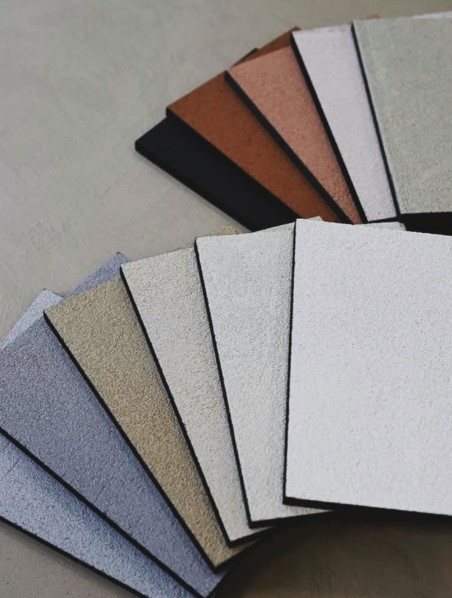
Clay lime plaster doesn't have the perfectly uniform appearance associated with modern plasterboard finishes.
That's often exactly why people like it.
Subtle texture variations create character and depth that machine-perfect walls sometimes lack.
A wall finished with clay lime plaster tends to feel handcrafted rather than manufactured.
Environmental Credentials
Many natural plasters have significantly lower environmental impacts compared with heavily processed alternatives.
For homeowners trying to reduce the embodied carbon of renovation projects, this can be an attractive factor.
Improved Indoor Comfort
This benefit receives less attention than it deserves.
Many occupants report that rooms finished with breathable materials simply feel more comfortable throughout the year.
That observation may sound subjective, but anyone involved in natural building projects hears it repeatedly.
Clay Lime Plaster in Period Properties
Older buildings often present unique challenges.
Victorian terraces, Georgian townhouses, farmhouses and listed properties were typically constructed using materials designed to manage moisture naturally. Stone, brick, timber and lime all worked together as a system.
Introducing impermeable products can disrupt that balance.
This is why conservation professionals frequently favour clay lime plaster during restoration work.
Rather than forcing an old building to behave like a modern one, the material allows the structure to continue functioning as intended.
In practical terms, that can mean fewer moisture-related problems and greater long-term durability.
Clay Lime Plaster for Modern Homes
Some people assume clay lime plaster is only relevant for centuries-old buildings.
That's not really the case anymore.
Architects increasingly specify natural plasters in contemporary homes because of their aesthetic qualities and environmental performance.
A newly built property can benefit from breathable wall finishes just as much as a traditional cottage.
The visual appeal is another factor.
Modern interiors often risk feeling slightly sterile. Clay lime plaster introduces texture, depth and warmth without becoming overly rustic.
Used well, it can look remarkably contemporary.
Common Misconceptions
One misconception is that clay lime plaster is fragile.
In reality, properly applied systems can be highly durable.
Another assumption is that it's only suitable for luxury projects.
While specialist materials and skilled labour may increase costs compared with basic plastering, the difference is often less dramatic than people expect.
There's also a belief that traditional materials are somehow incompatible with modern performance requirements.
The opposite is often true.
Building professionals are increasingly recognising that some traditional materials solve moisture-related issues more effectively than many modern alternatives.
Things to Consider Before Installation
Clay lime plaster isn't a one-size-fits-all solution.
The existing wall construction matters.
The building's age matters.
The condition of the substrate matters.
Successful installation relies heavily on preparation and understanding how the entire wall system functions.
That's why experienced installers and conservation specialists are worth consulting before major renovation work begins.
The cheapest quote isn't always the most economical decision when dealing with specialist materials.
Correct application tends to pay dividends over time.
Final Thoughts
Interest in clay lime plaster continues to grow for good reason.
It offers a combination of breathability, sustainability, character and practical performance that many modern materials struggle to replicate. While it isn't the right answer for every project, it remains one of the most effective wall finishes available for both heritage restoration and environmentally conscious construction.
For property owners seeking healthier buildings and more sympathetic renovation approaches, clay lime plaster is far more than a traditional material. It's a proven solution that continues to earn its place in modern construction.
FAQ Section
What is clay lime plaster used for?
Clay lime plaster is commonly used for internal walls and ceilings in heritage buildings, eco-homes, renovation projects and modern properties seeking breathable finishes.
Is clay lime plaster breathable?
Yes. One of its main advantages is its ability to regulate moisture by allowing water vapour to move through wall structures naturally.
Can clay lime plaster help reduce damp problems?
It can assist with moisture management in suitable buildings by allowing trapped moisture to evaporate. However, it is not a cure for structural damp issues or water ingress.
Is clay lime plaster environmentally friendly?
Generally, yes. Natural clay and lime-based materials typically have lower environmental impacts than many synthetic or heavily processed construction products.
Does clay lime plaster cost more than standard plaster?
Often it does, particularly when specialist installation is required. However, many property owners consider the long-term benefits and performance worth the additional investment.
Can clay lime plaster be used in new-build homes?
Absolutely. While commonly associated with traditional buildings, clay lime plaster is increasingly specified in contemporary homes due to its appearance, sustainability and indoor comfort benefits.