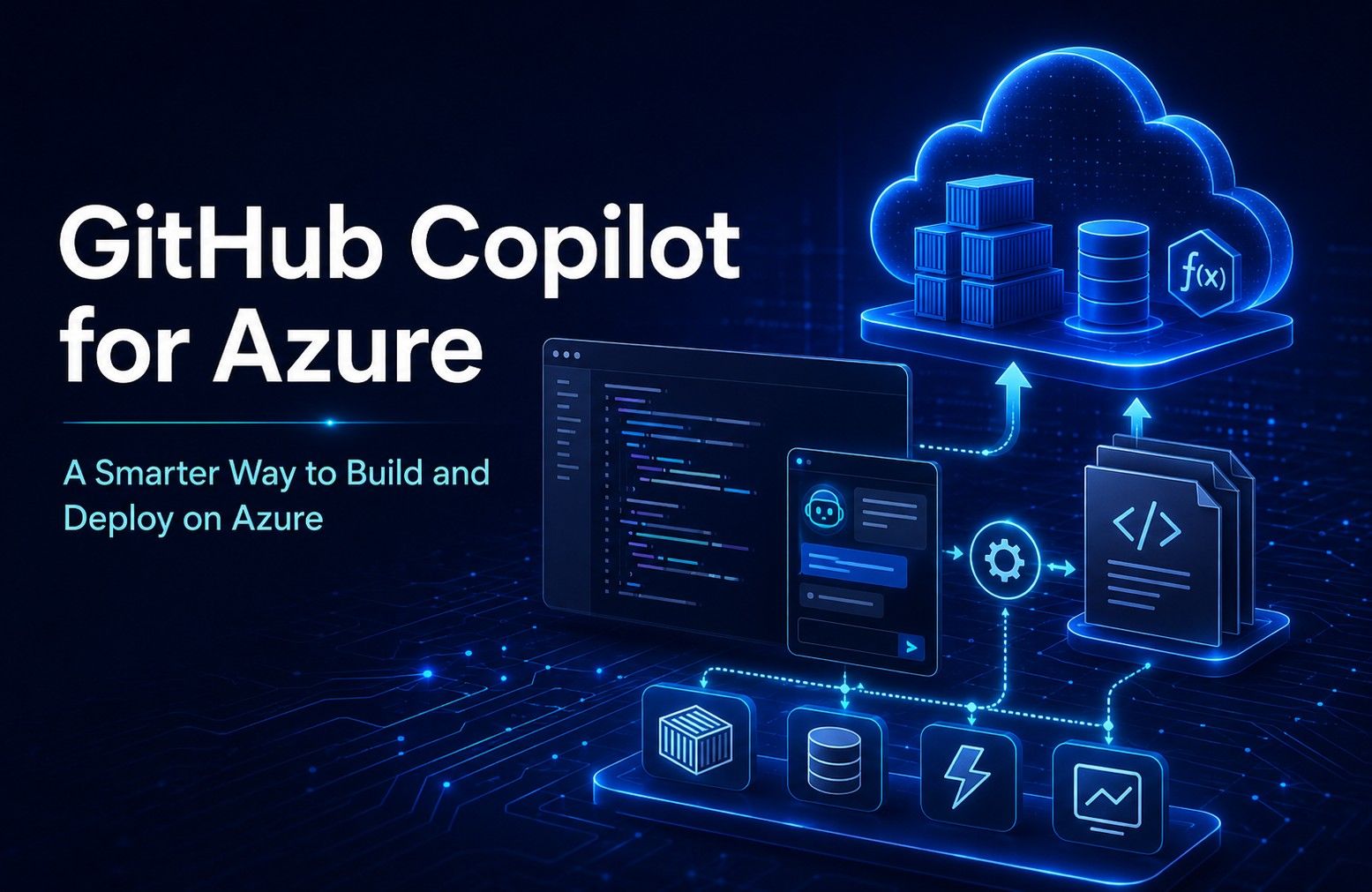
Why Cloud-Native App Development Is the Future of Software
-

- March 15th, 2026
- 1,267 views

FREE SEO Topical Map Generator: Find Your Next Content Ideas
Why cloud-native app approaches matter now
The cloud-native app approach reshapes how software is designed, built, and operated by emphasizing containers, microservices, and automated operations. This model supports rapid delivery, resilient architectures, and efficient use of cloud infrastructure while aligning development and operations through DevOps and GitOps practices.
- Cloud-native app design uses microservices, containers, and orchestration to increase agility and scalability.
- Automation—CI/CD, infrastructure as code, and observability—is central to reliable delivery and operations.
- Operational models like serverless and container orchestration lower operational overhead and speed innovation.
- Security, governance, and cost management remain essential as deployments scale across multi-cloud and hybrid environments.
Key characteristics of a cloud-native app
Cloud-native applications commonly share several technical and organizational characteristics. Architecturally, they favor microservices: small, independently deployable components that communicate over APIs. Containers provide process-level isolation and consistent runtime environments. Container orchestration platforms manage deployment, scaling, and recovery. Operationally, continuous integration and continuous delivery (CI/CD) pipelines, infrastructure as code (IaC), and telemetry-driven observability form the backbone of reliable delivery and incident response.
Technical building blocks
Microservices and APIs
Microservices break monolithic applications into focused services that can be developed and released independently. Clear API contracts and versioning practices help reduce coupling and enable parallel development across teams.
Containers and orchestration
Containers package code, dependencies, and configuration into reproducible units. Orchestration platforms automate scheduling, scaling, rolling updates, and recovery, reducing manual intervention for routine operations.
CI/CD and automation
Automated pipelines ensure code changes are built, tested, and deployed reliably. Practices such as canary releases, blue-green deployments, and automated rollback improve deployment safety while accelerating release cadence.
Observability and resilience
Logging, metrics, and distributed tracing provide insight into runtime behavior. Built-in health checks, circuit breakers, retries, and service meshes contribute to fault tolerance and graceful degradation under load.
Benefits that drive adoption
Scalability and elasticity
Cloud-native designs enable applications to scale horizontally in response to demand. Elastic provisioning makes it possible to optimize cost and performance across variable workloads.
Faster time to market
Independent services, automated testing, and deployment pipelines reduce the time between idea and production. Teams can iterate more quickly and validate features with lower risk.
Operational efficiency
Infrastructure as code, immutable infrastructure patterns, and orchestration reduce manual configuration and minimize configuration drift. Centralized policies and automation lower operational overhead for routine tasks.
Challenges and considerations
Complexity and skill requirements
Moving to a cloud-native approach introduces architectural and operational complexity. Teams must adopt new skills in distributed systems, containerization, orchestration, and observability tools.
Security and compliance
Security must be integrated across the development lifecycle. Identity and access management, secure supply chains, vulnerability scanning, and runtime protection are essential. Compliance and governance frameworks should be applied consistently across environments.
Cost management
Cloud consumption can grow rapidly without visibility and controls. Tagging, usage monitoring, and automation to scale down unused resources help manage costs while preserving agility.
Operational models: hybrid, multi-cloud, and serverless
Cloud-native applications often run across hybrid and multi-cloud environments to balance resilience, latency, and regulatory requirements. Serverless functions and managed services can reduce operational burden for certain workloads, while containers remain suitable for long-running services and complex systems.
Standards, governance, and community resources
Industry organizations provide definitions, best practices, and certification programs that help organizations adopt cloud-native patterns responsibly. The Cloud Native Computing Foundation (CNCF) maintains a landscape of projects and guidance for container orchestration, observability, and service meshes. Official frameworks such as NIST’s cloud definitions and governance recommendations can inform organizational policy and compliance efforts. For more information on community standards and projects, see the CNCF website: https://www.cncf.io.
Preparing teams and organizations
Training and organizational change
Adoption requires investment in training, cross-functional teams, and culture change toward DevOps practices. Clear ownership of services and strong collaboration between development and operations teams improve outcomes.
Incremental migration
Gradual migration strategies—strangling a monolith, extracting services, and introducing automation iteratively—reduce risk. Pilot projects and measuring key performance indicators help validate approaches before broader rollout.
Long-term outlook
Cloud-native app architectures support modern business requirements for velocity, resilience, and scale. As observability, security automation, and orchestration technologies mature, cloud-native patterns are likely to become the default approach for many types of software. Continued standardization from industry bodies and a growing ecosystem of tools will make adoption more accessible across organizations of different sizes.
Conclusion
Adopting a cloud-native app strategy aligns technical architecture with modern operational practices and business demands for faster delivery and resilient systems. While the transition introduces complexity, careful planning, governance, and incremental adoption reduce risk and unlock the long-term benefits of agility, scalability, and improved reliability.
FAQ
What is a cloud-native app?
A cloud-native app is an application designed to leverage cloud computing models—using microservices, containers, orchestration, CI/CD, and automation—to achieve scalability, resilience, and easier operations.
How does cloud-native development affect security?
Security for cloud-native systems requires a shift-left approach that integrates security into CI/CD pipelines, supply chain protections, runtime defenses, and consistent policy enforcement across environments.
Can legacy systems be migrated to a cloud-native architecture?
Yes. Migration can be incremental: refactor critical components into microservices, containerize parts of the application, and introduce orchestration and automation gradually while maintaining interoperability with legacy systems.
Does a cloud-native app always require public cloud providers?
Not necessarily. Cloud-native patterns can be applied across public cloud, private cloud, and hybrid environments. The defining characteristics are architectural and operational practices rather than a specific hosting model.
What skills are most important for teams building cloud-native apps?
Key skills include distributed systems design, containerization, orchestration management, CI/CD pipeline development, observability and telemetry, security automation, and infrastructure as code.