Cloud Telephony Solutions for Business | Mishtel Communication Services
-

- Published Updated
- 1,844 views
Cloud Telephony Solutions for Business: Complete Guide to Smart Communication
Introduction
A customer tries to reach your business three times in one day and gives up after the third failed attempt. That customer probably will not try again. This kind of lost communication happens across small and large businesses every single day. Cloud Telephony Solutions solve this exact problem by making sure every call is answered, routed, and tracked properly. In 2026, with customers expecting instant responses, businesses that rely on outdated phone systems are falling behind their competitors.
Mishtel offers a complete range of cloud telephony tools built for Indian businesses. This guide explains what cloud telephony is, how it works, and how it can help your company communicate better.
What Is Cloud Telephony?
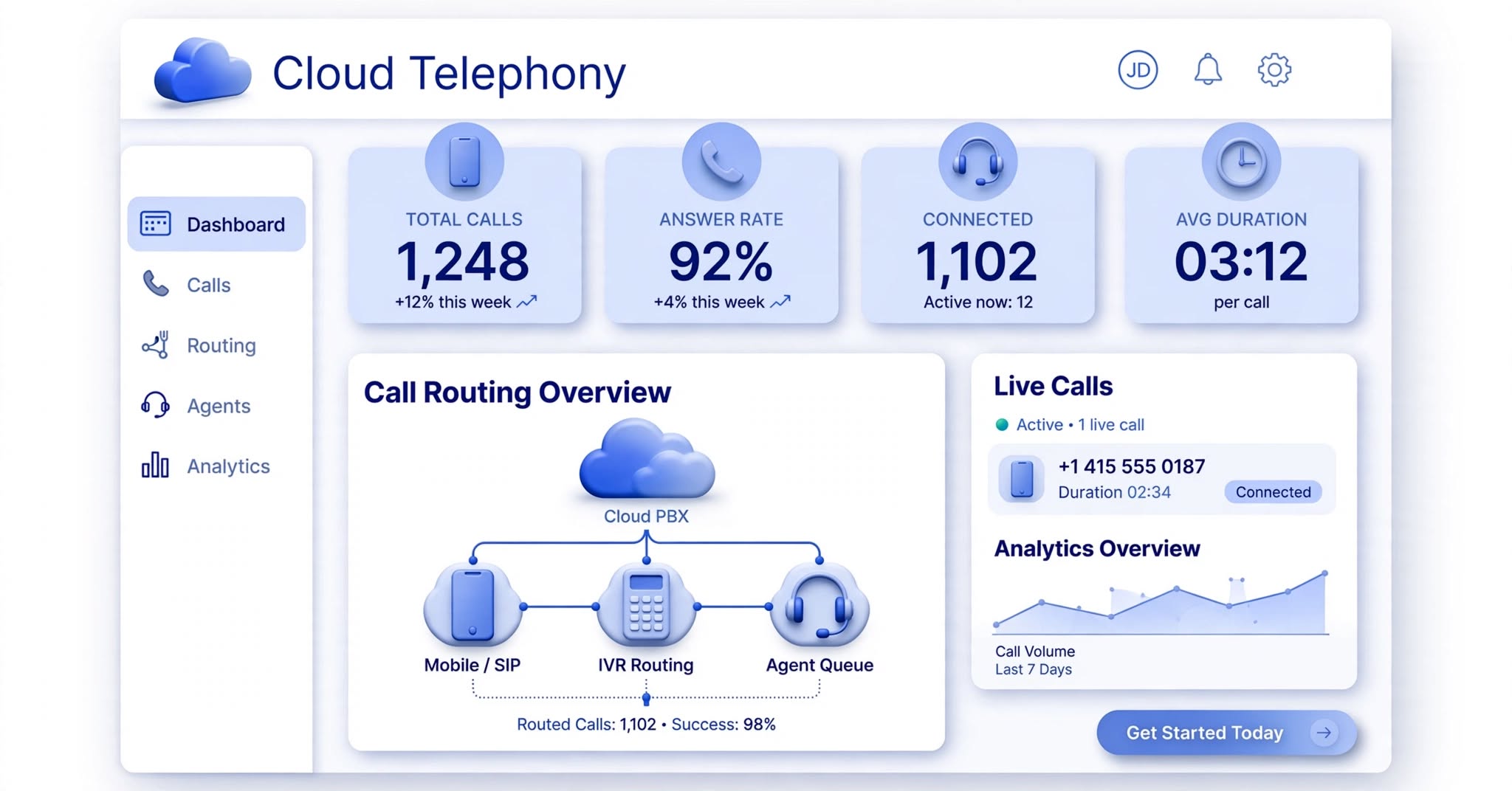
Cloud telephony is a system that manages business calls through the internet instead of traditional phone lines. It includes tools like call routing, automated voice menus, and toll-free numbers, all managed from a single online dashboard.
Startups, enterprises, banks, hospitals, and government offices use cloud telephony to handle large call volumes without needing physical phone infrastructure. The IVR Service is one of the most common examples, allowing businesses to greet callers automatically and guide them to the right department.
Businesses need this technology because manual call handling is slow, expensive, and prone to human error. Cloud-based systems fix these issues by automating repetitive tasks and giving teams better control over every customer interaction.
How Does Cloud Telephony Work?
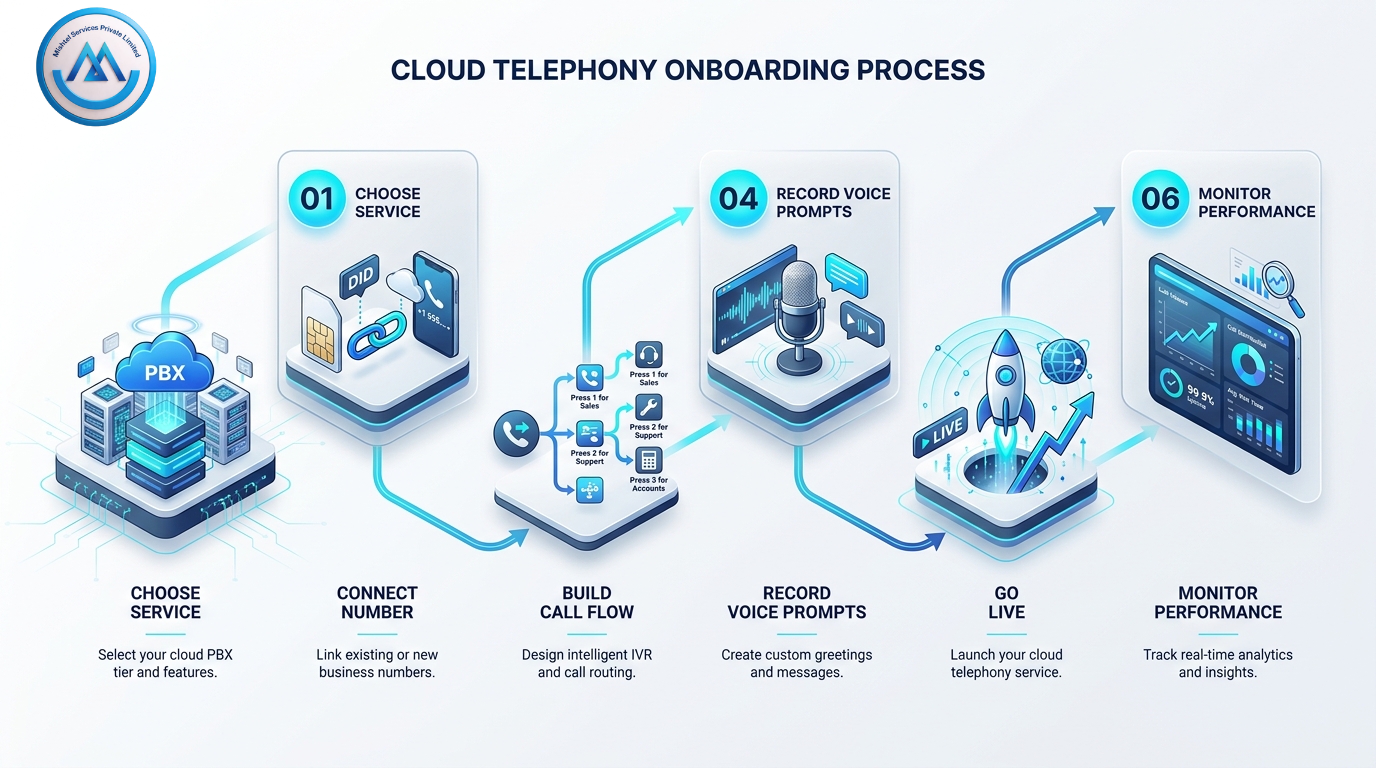
Setting up a cloud telephony system is simpler than most business owners expect. Here is the typical process:
Choose the right service based on your need, such as call routing, bulk calling, or a toll-free number.
Connect your existing phone numbers or activate new ones through the platform.
Build your call flow, including menu options and team routing rules.
Record voice prompts for greetings, menus, or automated announcements.
Go live, and the system starts handling incoming and outgoing calls automatically.
Monitor performance through real-time reports and adjust the setup as needed.
Most businesses can complete this setup within a single day, without needing any technical team.
Key Features to Look For
A strong cloud telephony platform should offer more than just basic calling. Here are the features that matter most.
Smart call routing ensures customers reach the right department quickly. A reliable IVR Service makes this possible by offering simple keypad-based menus.
Backup call handling prevents missed opportunities. The Call Forwarding Service automatically redirects unanswered calls to another number or team member.
Instant website connection helps convert online visitors into customers. The Click to Call Service lets a website visitor connect with your team in a single click, without dialing manually.
Low-cost lead capture works well for budget-conscious campaigns. The Missed Call Service lets customers give a missed call, and the business follows up automatically.
Free-to-call access builds customer confidence. A Toll-Free Service allows customers to reach support without paying anything themselves.
Group call support is useful for internal coordination. The Conference Service allows several team members to join one call for meetings or planning sessions.
Pre-recorded information delivery saves agent time. The Playback Service plays recorded details, such as order status or account information, without needing a live agent.
Benefits of Cloud Telephony
Businesses that adopt cloud telephony see clear, practical improvements across daily operations.
Customer experience improves because calls are answered faster and routed correctly the first time, reducing frustration and repeated calls.
Communication becomes noticeably faster, since automated systems handle interactions instantly, something a manual team simply cannot match at scale.
Lead generation increases, especially through tools like missed call campaigns, which make it easy for interested customers to respond without any cost.
Cost efficiency is a major advantage too. Businesses reduce dependency on large calling teams while still managing high call volumes smoothly.
The system is also highly scalable. A business can start with basic features and expand as call volume grows, without replacing the entire setup.
Tracking and analytics give teams a clear picture of call patterns, helping them make better staffing and campaign decisions.
Finally, brand trust grows steadily, since consistent and professional call handling reflects well on any business, regardless of its size.
Cloud Telephony Use Cases
Different industries apply cloud telephony in their own practical ways.
Banking and BFSI companies use automated calls for payment reminders and account alerts, keeping customers informed without extra branch visits.
Healthcare providers use appointment reminders and automated follow-ups to reduce missed visits and improve patient communication.
Education institutions use these tools for admission updates and fee reminders, helping parents stay informed quickly.
E-commerce businesses rely on order confirmations and delivery updates to keep customers engaged throughout their purchase journey.
Real estate companies use missed call campaigns and click-to-call buttons to capture leads directly from property listings.
Travel companies use booking confirmations and journey alerts to reduce confusion around trip schedules.
Government and public services use IVR systems and toll-free helplines to manage large volumes of citizen queries efficiently.
How These Services Work Together
Cloud telephony works best when multiple services are combined into one connected system.
A typical setup looks like this:
Incoming Call → IVR Service → Call Forwarding Service → Missed Call Service for follow-up → Bulk Voice Service for updates → OBD Service for reminders.
This combination ensures every customer interaction is handled smoothly, from the very first call to the final follow-up message.
Pricing Considerations
Cloud telephony pricing usually depends on a few common factors. Usage volume plays a major role, since higher call numbers affect overall cost. The number of active agents or team members can also influence pricing.
Additional features, such as advanced IVR menus or detailed analytics, may add to the total cost. Integration needs, setup charges, and monthly service fees are other factors worth discussing directly with your provider before signing up.
How to Choose the Right Provider
Before selecting a cloud telephony provider, review these important points.
Reliability of call connections and system uptime
Call quality and clarity during conversations
Reporting accuracy and depth of analytics
Integration support with your existing business tools
Scalability to match future business growth
Customer support availability when issues arise
Compliance with telecom regulations
Pricing transparency, without hidden charges
Security of customer data and call records
API availability for custom technical integrations
A provider that meets most of these standards is usually a dependable choice for long-term use.
Why Choose Mishtel?
Mishtel brings together a full suite of cloud telephony tools, including IVR, toll-free numbers, missed call service, call forwarding, and click-to-call solutions, all managed from a single platform. This reduces the need to work with multiple vendors for different communication needs.
The platform offers simple onboarding, real-time reporting, and responsive customer support, making it accessible even for businesses with no technical team. Mishtel's services are also built to work together, so a business can combine the Toll-Free Service with the Conference Service to build a stronger, more complete communication setup as their needs grow.
Comparison: Choosing the Right Service
Service |
Best For |
Cost to Customer |
Toll-Free Service |
Support helplines |
Free for customer |
Missed Call Service |
Lead generation |
Free for customer |
Click to Call Service |
Website conversions |
Free for customer |
Convincing Campaign Service |
Reminders and outreach |
Not applicable |
This table gives a quick comparison to help you decide which service fits your specific business goal.
FAQs
1. What is cloud telephony used for?
It helps businesses manage calls through the internet, including call routing, automated menus, and toll-free access.
2. How much does cloud telephony cost?
Cost depends on call volume, number of agents, and features used. It is best to request a custom quote from your provider.
3. Can small businesses use cloud telephony?
Yes, these systems are designed for businesses of every size, from small shops to large enterprises.
4. How long does setup usually take?
Most cloud telephony systems can be set up within a single day.
5. Which service works best for capturing leads?
The Missed Call Service and Click to Call Service are both effective for quick lead capture.
6. Does cloud telephony work with other communication tools?
Yes, it often connects with services like bulk voice calling and outbound dialing for a complete communication flow.
7. Is customer data safe with cloud telephony providers?
A reliable provider should follow telecom compliance standards and offer secure data handling. Always confirm this before choosing a provider.
Conclusion
Reliable call management has become essential for businesses that want to stay connected with their customers. From automated call routing to backup call forwarding, Cloud Telephony Solutions help companies handle communication more efficiently every day. Mishtel offers a complete set of these tools, built to support Indian businesses of every size and industry. If your business wants to improve how it manages customer calls, exploring a proper cloud telephony setup could be a smart next step.