Company Closure in India: Legal Process, Documents and Compliance
-

- Published Updated
- 2,231 views
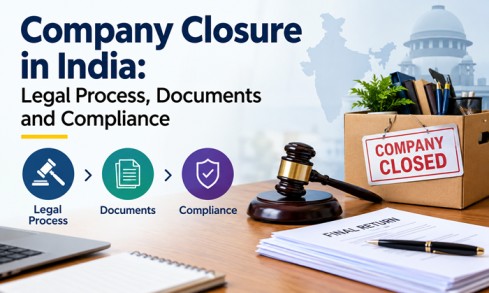
If there is no intention to continue the business, closing the company properly can be a practical option. In India, however, company closure is not simply a matter of shutting the office or stopping business activities. The company has to complete the required legal and financial formalities before its name can be removed from the Register of Companies.
For eligible companies, one of the commonly used routes is striking off the company's name under Section 248 of the Companies Act, 2013. The Ministry of Corporate Affairs (MCA) currently processes voluntary strike-off applications through the prescribed procedure, including Form STK-2.
What Does Company Closure Mean?
Company closure generally means bringing the legal existence and business affairs of a company to an end in accordance with the applicable law.
There is an important difference between an inactive company and a legally closed company. A business may stop trading, but that does not automatically remove the company from the records of the Registrar of Companies (ROC).
Until the required closure process is completed, the company may continue to have statutory obligations.
For a company that has stopped operations and has no outstanding liabilities, voluntary removal of its name from the Register of Companies may be available, subject to the conditions prescribed under law.
When Can a Company Apply for Strike Off?
Section 248(2) of the Companies Act, 2013 allows a company to apply for removal of its name after extinguishing its liabilities, subject to the prescribed conditions. The application can be made pursuant to a special resolution or with the consent of 75% of members in terms of paid-up share capital.
This route is generally relevant where the company has genuinely stopped carrying on business and there is no reason to keep it active.
Before filing the application, directors should therefore review the company's financial and statutory position carefully. Any outstanding loans, taxes, employee dues, vendor payments or other liabilities should be dealt with before applying for closure.
Situations Where Strike Off May Not Be Available
The law places restrictions on applications for removal of a company's name.
For example, Section 249 restricts an application in certain situations, including where the company has recently changed its name or shifted its registered office from one State to another, disposed of property or rights in specified circumstances, carried on certain activities other than those necessary for closure, has a pending application for compromise or arrangement, or is being wound up under the applicable provisions.
This is why it is important to check the company's recent activities and filings before beginning the strike-off process.
Step-by-Step Process for Closing a Company
1. Stop Business Activities
The first practical step is to ensure that the company has stopped its business operations or otherwise meets the conditions for closure.
The directors should review contracts, bank accounts, assets, employees, customers, suppliers and outstanding obligations. Any remaining business affairs should be settled before proceeding.
2. Clear Outstanding Liabilities
A company should not treat strike off as a way of avoiding its financial obligations.
Outstanding loans, creditors' dues, taxes, employee payments and other liabilities should be identified and settled. The MCA's STK-2 instructions specifically state that a company applying voluntarily must have extinguished its liabilities.
Proper documentation of these settlements should also be retained for future reference.
3. Prepare the Required Documents
The documentation required for closure depends on the company's circumstances, but the application process generally requires supporting declarations and financial information.
The company should have its statutory records, financial statements, bank details and other relevant documents in order before filing.
The directors also need to ensure that information submitted to the MCA is accurate and consistent with the company's actual position.
4. Pass the Required Resolution
The company must obtain the required approval from its members.
Section 248(2) provides for a special resolution or the consent of members holding 75% of the paid-up share capital, as applicable.
The resolution and supporting corporate records should be properly maintained as part of the company's closure documentation.
5. File Form STK-2
The formal application for voluntary removal of the company's name is made through Form STK-2 under Section 248(2) and Rule 4 of the Companies (Removal of Names of Companies from the Register of Companies) Rules, 2016. The current MCA instruction kit describes STK-2 as the application used for closure and removal of a company's name from the Register.
The application is processed through the MCA system and, under the current framework, the Centre for Processing Accelerated Corporate Exit (C-PACE) handles the prescribed strike-off process.
6. ROC/C-PACE Examination and Public Notice
Filing the application does not immediately dissolve the company.
Under Section 248, the Registrar is required to follow the prescribed notice procedure. A public notice is issued, allowing an opportunity for objections or representations before the name is removed.
The authorities may also examine the information submitted with the application.
If there is an objection, discrepancy or missing requirement, the closure may take longer or the company may need to respond to the issue.
7. Publication of Strike-Off Order
If the prescribed requirements are satisfied and there is no valid reason preventing removal, the company's name can be struck off.
Section 248 provides that once the required notice is published in the Official Gazette, the company stands dissolved.
It is important to understand that dissolution does not necessarily erase all historical liabilities or responsibilities connected with the company.
Documents Generally Required
Although the exact requirements can vary, a company should generally keep the following records ready:
- Board and shareholder resolutions relating to closure
- Application and supporting documents filed with the MCA
- Financial statements or statement of accounts, as applicable
- Details of outstanding liabilities and their settlement
- Bank account information
- Indemnity-related documents prescribed under the rules
- Affidavits and declarations required for the application
- Identification and address documents of the concerned directors
- Copies of relevant tax and statutory records
The documents should reflect the actual financial and legal position of the company. Incorrect or incomplete information can create problems during processing.
Tax and Other Compliance Before Closure
Closing a company with the MCA does not automatically settle every other regulatory matter.
The company should review its income-tax position and complete applicable tax filings. GST registration, if applicable, may also need to be cancelled or otherwise dealt with. Employee-related obligations, professional tax, licenses, bank accounts and other registrations should also be reviewed.
If the company owns property, has investments, has pending litigation or has unresolved statutory dues, professional advice should be obtained before filing for strike off.
What Happens After the Company Is Struck Off?
Once the company's name is removed and the dissolution takes effect, the company generally ceases to operate as a registered company.
However, Section 248 also makes it clear that certain liabilities and responsibilities can continue. The liability of directors, managers, officers and members in the circumstances covered by the section may continue to be enforced as if the company had not been dissolved. The Act also preserves the Tribunal's power to wind up a company in appropriate circumstances.
Therefore, company closure should never be treated as a way to simply walk away from unresolved obligations.
Final Thoughts
Closing a company in India requires more than stopping business operations. The company must first put its financial and statutory affairs in order and then follow the prescribed legal procedure for removing its name from the Register of Companies.
For an eligible inactive company with no outstanding liabilities, voluntary strike off can provide a formal route to closure. The process generally involves settling liabilities, obtaining the required member approval, preparing supporting documents, filing STK-2 and responding to any issues raised during processing.
The safest approach is to review the company's complete compliance position before filing the closure application. A proper review can help identify unpaid dues, pending returns, tax matters or other issues that could otherwise delay the closure process.