How Conversational AI Solutions Transform Business Operations and Customer Experience
-

- Published Updated
- 1,454 views
How Conversational AI Solutions Transform Business Operations
Conversational AI solutions are software systems that enable automated, human-like interactions through text or voice. Organizations integrate these systems into contact centers, sales platforms, and internal workflows to automate routine tasks, scale customer engagement, and surface insights from natural language interactions.
- Conversational AI solutions improve efficiency by automating common inquiries and supporting agents.
- Key use cases include customer service chatbots, virtual assistants, and internal knowledge search.
- Implementation requires attention to data quality, integration, and user experience design.
- Measurement focuses on response time, containment rate, customer satisfaction, and cost metrics.
- Compliance, privacy, and ethical considerations are central as adoption grows.
Conversational AI solutions: operational benefits
Deploying conversational AI often leads to faster response times, higher first-contact resolution for routine issues, and reduced manual workload for repetitive tasks. When combined with automation and back-end systems, conversational agents can perform transactions, route requests, and update records without human intervention, increasing throughput while maintaining consistency in interactions. Improvements to workforce productivity and scalability are among the most frequently reported operational benefits.
Key use cases across business functions
Customer service and contact centers
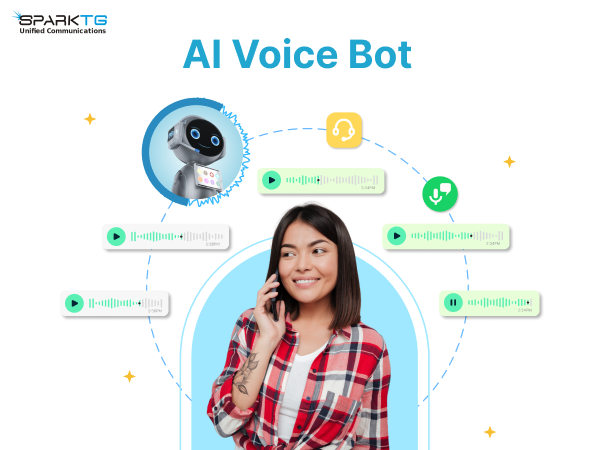
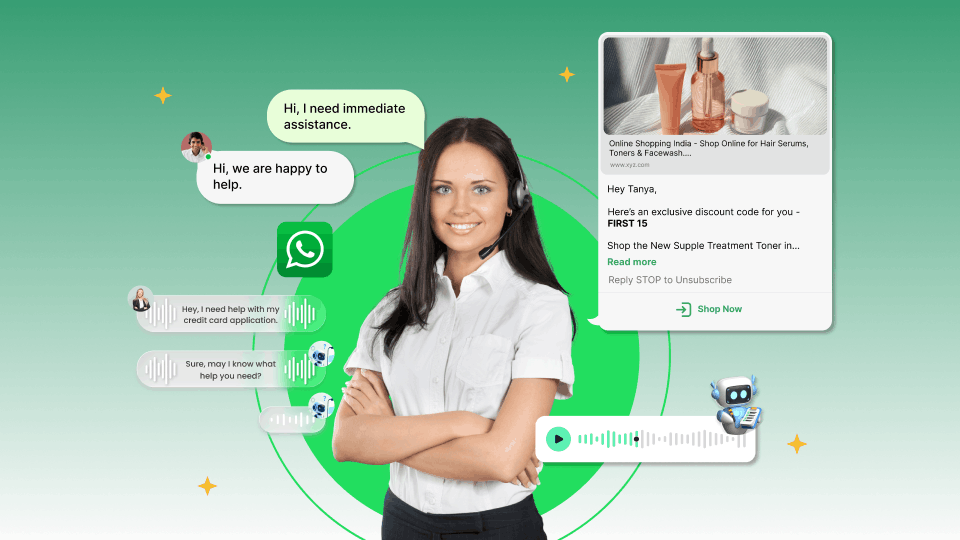
Chatbots and voice bots handle frequently asked questions, appointment scheduling, payment processing, and simple troubleshooting. These bots can operate 24/7 to reduce wait times and triage complex cases to human agents, often integrating with CRM systems to provide context-aware responses.
Sales and lead qualification
Conversational flows qualify leads, capture prospect information, and schedule demos. Automated assistants can follow qualification scripts, score leads based on responses, and hand off high-value prospects to sales representatives.
Internal support and knowledge management
Organizations use virtual agents to support HR inquiries, IT service requests, and employee onboarding. Natural language search over corporate knowledge bases helps employees find guidance quickly, reducing dependency on subject-matter experts for routine questions.
Implementation considerations
Data quality and training
Performance depends on available training data, intent and entity design, and ongoing maintenance. Labelled conversation logs and a clear taxonomy of intents improve accuracy. Regular monitoring and retraining address drift as customer language and product offerings evolve.
System integration and architecture
Integrating conversational AI with CRM, ticketing systems, and databases enables transactional capabilities and contextual responses. Considerations include API stability, latency, and error-handling workflows to ensure smooth handoffs between bots and humans.
User experience and accessibility
Designing concise, polite, and helpful dialogue flows reduces frustration. Accessibility features—such as alternative modalities, clear prompts, and support for multiple languages—expand coverage and reduce barriers for diverse users.
Measuring impact and ROI
Metrics to evaluate conversational AI initiatives include containment rate (percentage of issues resolved without human help), average handle time, customer satisfaction (CSAT) or Net Promoter Score (NPS) impacts, and cost per contact. Business KPIs such as conversion rates for sales bots or reduction in ticket volume for support bots help quantify economic value. Pilot projects with A/B testing provide evidence before broader rollout.
Regulation, privacy, and ethical issues
As conversational AI handles personal data and makes automated decisions, compliance with data protection laws (for example, the EU General Data Protection Regulation) and emerging AI-specific regulations is essential. Organizations should establish clear data retention policies, obtain appropriate consent, and provide transparency about automated decision-making. Industry guidance from regulators and standards bodies can inform governance frameworks; for example, international AI principles and policy recommendations are available from the OECD.
Security controls, bias mitigation, and human oversight reduce operational risk. Log auditing, access controls, and explainability practices support regulatory compliance and build user trust.
Scalability and future trends
Advances in natural language understanding, multimodal interfaces, and real-time analytics are expanding what conversational AI can do. Hybrid models that combine automated agents with human review for complex or sensitive interactions are becoming common. Investment in platform modularity and observability helps organizations scale without compromising reliability.
Best practices for successful adoption
- Start with high-impact, narrow use cases and iterate based on user feedback.
- Ensure integration with core business systems to enable end-to-end automation.
- Implement governance for data, model updates, and performance monitoring.
- Train staff on bot supervision and escalation procedures to maintain service quality.
For policy frameworks and high-level AI principles from an international body, see the OECD guidance on AI governance: OECD AI principles and policy resources.
Conclusion
Conversational AI solutions are becoming foundational tools for improving efficiency, scaling customer engagement, and enabling new service models. With clear objectives, strong data practices, careful integration, and attention to regulatory and ethical considerations, these technologies can deliver measurable operational improvements across business functions.
What are conversational AI solutions and how do they work?
Conversational AI solutions use natural language processing and machine learning to interpret user input and generate appropriate responses via text or voice. Systems typically include intent recognition, dialogue management, and integration layers for executing transactions or retrieving information from back-end systems.
Which business areas benefit most from conversational AI solutions?
Customer service, sales, marketing, HR, and IT support commonly see immediate benefits. Tasks that are repetitive, well-defined, and high-volume are prime candidates for automation with conversational agents.
How should effectiveness be measured after deployment?
Measure technical performance (accuracy, latency), operational KPIs (containment rate, ticket reduction), and user-centric KPIs (CSAT, task completion rate). Combine quantitative metrics with qualitative feedback to guide improvements.
What privacy and compliance steps are necessary?
Establish data minimization, consent mechanisms, secure storage, and retention policies. Review relevant regulations and maintain documentation for audits. Implement role-based access and monitoring to protect sensitive data.