Hiring Conveyors to Keep Materials Moving on Busy Australian Sites
-

- Published Updated
- 64 views
Every construction schedule in 2026 is a delicate balancing act. Materials need to reach the right floor or slab edge at the perfect moment, yet labour budgets keep shrinking and access routes seem to get narrower every year. Add unpredictable weather and late-arriving deliveries, and it’s no wonder site managers hunt for kit that shaves minutes off every lift or handball.
Why Temporary Conveyors Make Sense
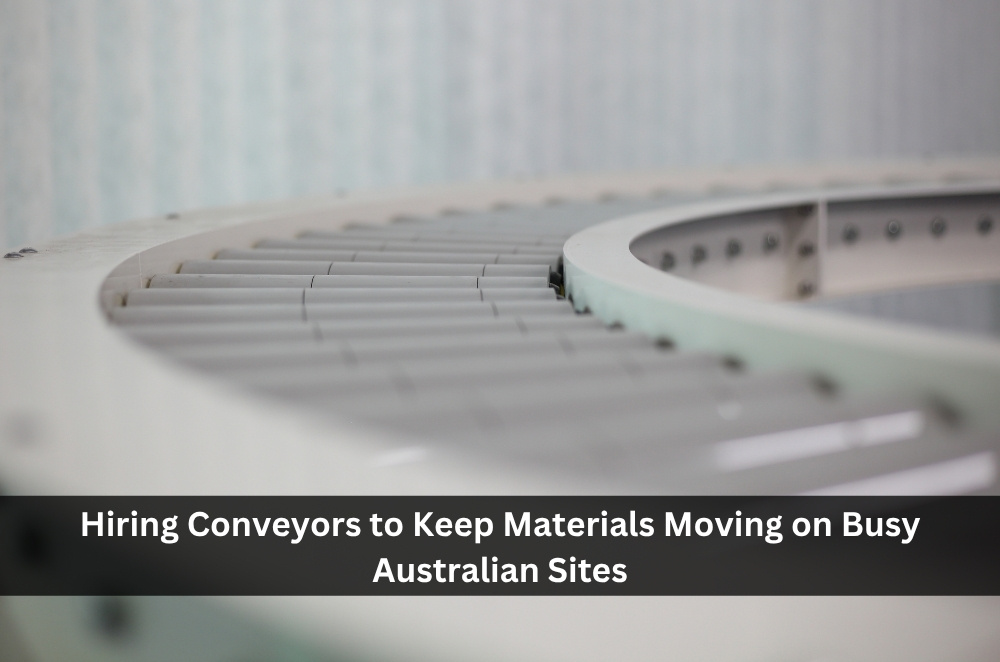
On a multi-storey refurb, debris and fit-out materials often travel through stairwells or tight scaffolding bays. Each manual transfer introduces risk—strained backs, foot injuries, and the age-old problem of product damage. Bringing in roller conveyor hire changes the maths. A gravity roller line lets two people do what once took a chain of six, and it does so without engines or complex controls. Sections pin together quickly, curve around obstacles, and disassemble just as fast when the job moves to the next level.
Temporary hire rather than outright purchase suits contractors who only need conveyors for a handful of weeks each quarter. The equipment lands on site, performs its task, and leaves before storage headaches appear. No capital outlay, no servicing between jobs, and no depreciation sitting on the balance sheet—all of which keeps accountants and project managers equally happy.
Matching Conveyor Style to Site Conditions
Not every project faces the same bottlenecks. A heritage hotel fit-out in Hobart might involve narrow corridors, while a warehouse extension in Brisbane prioritises throughput. Choosing the right conveyor setup is half the battle. For example, lightweight aluminium rollers carry plasterboard with minimal friction, whereas heavier steel rollers cope with pallets of tiles or brick packs.
An effective way to narrow the choice is to walk the intended path, measure clearances, and list your heaviest single load. Then compare hire inventory against that reality. A previous article on BuildSource breaks down load calculations and incline limits.
Where height changes are unavoidable, crews sometimes pair gravity rollers with small powered belt sections. The belt drives material up a modest incline so the remainder of the run can stay passive. Because hire fleets mix and match components, you avoid the cost of purchasing multiple specialist units you’ll rarely use again.
Quick reference table: Hire vs Buy at a glance
Consideration |
Hire |
Buy |
Up-front spend |
Low weekly rate |
High capital cost |
Maintenance |
Covered by supplier |
Your responsibility |
Storage between jobs |
None |
Requires warehouse space |
Flexibility to scale |
Order extra lengths next week |
Limited to stock on hand |
Tax treatment |
Operational expense |
Depreciable asset |
Safety and Efficiency Go Together
Any gear that moves loads automatically draws the eye of safety officers. Roller conveyors have a head start because they rely on gravity rather than motors, reducing entanglement hazards. Still, pinch points, runaway loads on steep slopes, and uneven surfaces can catch out an inexperienced crew.
National guidance emphasises designing out manual handling risk wherever practicable. The Safe Work Australia guidance on material movement notes that even small reductions in lift frequency cut injury likelihood dramatically. Setting up a roller line at waist height eliminates repeated stooping, and adding simple edge guards prevents side-offs when the platform sees vibration from nearby demolition.
Training matters too. Walk new subcontractors through loading practices—centre the board, keep fingers clear of rollers, stagger heavy items so momentum doesn’t build. Hire suppliers often include laminated setup sheets; pin them next to the conveyor start point and you tick a compliance box at the same time.
When Hiring Beats Buying Outright
Buying makes sense on high-volume manufacturing floors where the conveyor stays bolted down for years. Construction, however, lives on ever-shifting deadlines. Your first-fix day may change three times, and holding idle plant for a fortnight chips away at margins. Hiring keeps you agile:
You size the equipment to the job, not the other way round.
Costs mirror utilisation; pack-up day ends the bill.
Upgrades arrive automatically as hire fleets refresh stock.
A Sydney fit-out contractor recently rotated the same sixty metres of gravity roller through three separate CBD sites over eight months, yet only paid for fourteen hire weeks in total. Their project foreman summed it up bluntly: ownership would have meant “babysitting steel” for half the year.
Choosing a Reliable Hire Partner
Late deliveries derail programmes, so vet lead times and backup stock levels. National coverage helps when contracts bounce between states; a supplier with depots in Melbourne, Perth and Townsville saves you scrambling for local alternatives. Ask for proof of recent inspections—scuffed rollers or bent frames slow jobs and breach safety plans.
It also pays to quiz the hire team about add-ons. Telescopic out-feed stands, drop-in skate wheels for awkward curves, and quick-release safety rails often separate a slick install from a fiddly one. If the rep can’t explain which accessory suits your gypsum board run, keep looking.
Some contractors bundle conveyors with rubbish chutes and material hoists from the same provider, simplifying PO paperwork. That approach only works if the supplier’s service team holds spare parts for each product line, so a late-night bearing swap doesn’t halt the following morning’s pour.
A Last Word on Keeping Jobs Flowing
Labour shortages and tight city footprints aren’t easing in 2026. Every movement you automate frees skilled hands for higher-value tasks and trims fatigue risk. Gravity rollers offer a neat, low-tech slice of that efficiency, and hiring them means you capture the benefit without tying up cash or yard space. The next time a supervisor complains about double-handling, roll out a temporary conveyor and keep the schedule on track.
FAQs
How steep can a gravity roller conveyor run before loads accelerate too quickly?
Most hire providers recommend slopes under four degrees for sheet goods and under eight degrees for boxed items; beyond that you’ll need braking rollers or a short powered section.
Does a hired conveyor require tagging like powered plant?
Because gravity rollers have no motors, they fall outside typical test-and-tag regimes, but you must still inspect frames, stands and guarding before use and note the check in your SWMS.
What length should I book if I’m unsure?
Measure the straight-line distance, then add ten per cent for slight detours or staggered bays. Hire yards usually allow swaps within 24 hours if you over- or under-estimate.
Can I run sharp demolition rubble on rollers?
Loose, irregular debris chews through bearings and stops freely; consider a belt conveyor instead, or pre-bag rubble before loading to keep fragments contained.
Related Articles