Copy Trading Is Not About Copying Profits — It Is About Choosing Risk
-

- September 22nd, 2026
- 3,296 views
Copy trading sounds simple.
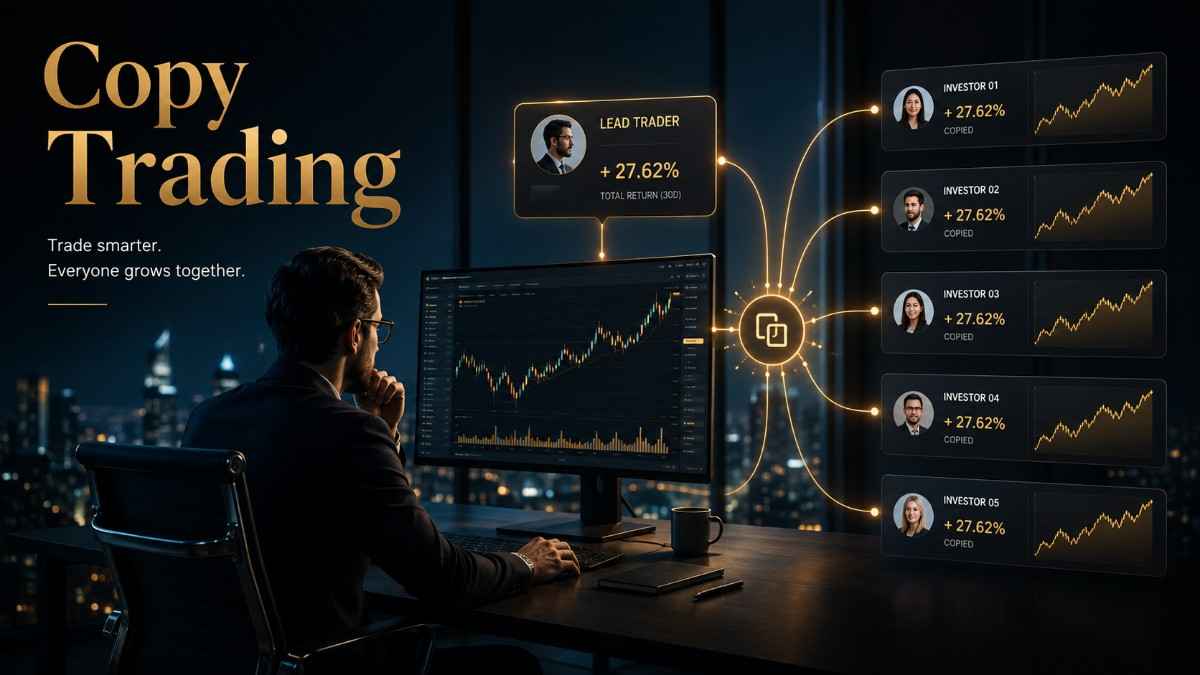
Find a trader with good performance, follow them, and let the system automatically mirror their trades.
That simplicity is exactly what makes the idea attractive, especially for people who do not want to spend hours watching charts or studying every market movement.
But there is an important difference between copying someone’s trades and copying their results.
Those two things are not the same.
A Good Return Does Not Tell the Whole Story
When people choose a trader to follow, the first number they often notice is return.
Someone showing strong recent performance naturally attracts attention. A trader with an impressive profit chart can look far more appealing than someone whose results appear slower or less dramatic.
But return alone tells very little about how that result was achieved.
A trader may have used aggressive leverage, accepted large drawdowns, concentrated heavily in one position, or simply benefited from market conditions that happened to suit their strategy.
Two traders can produce similar returns while taking very different levels of risk.
That means the better question is not:
“Who made the most money?”
It is:
“What level of risk was required to produce those results?”
This is where many new users can misunderstand copy trading. A strong performance number can look reassuring, but without understanding the strategy behind it, that number may create more confidence than it deserves.
Copy Trading Still Requires Decisions
Automation can remove the need to manually replicate every order, but the follower still has important decisions to make.
How much capital should be allocated?
How much loss is acceptable?
Is the trader’s style compatible with your own risk tolerance?
How long are you willing to follow the strategy if performance becomes weaker?
Should you stop copying after a certain drawdown?
These decisions cannot be outsourced completely.
Platforms increasingly give users controls around these choices. For example, BYDFi’s Copy Trading system allows users to select traders and configure their own copy settings rather than simply following every strategy blindly.
That distinction matters.
Copy trading works best when automation handles execution while the user still controls exposure.
Past Performance Can Be Misleading
A trader may look excellent during a strong bull market because their strategy is naturally aggressive.
Another trader may appear less impressive because they prioritize capital preservation and avoid taking large positions.
When market conditions change, those rankings can change quickly.
A strategy that performs well in a strong trend may struggle in a sideways market. A trader who benefits from high volatility may perform differently when the market becomes quiet.
This is why looking only at short-term profit can create false confidence.
Useful questions include:
- How long has the trader been active?
- How consistent are the results?
- How large have previous drawdowns been?
- Does the trader frequently use leverage?
- How concentrated are their positions?
- Is performance dependent on one particularly successful trade?
- Does their strategy appear stable across different market conditions?
A strong profile should be evaluated as a strategy, not simply as a leaderboard score.
Risk Should Be Personal
Another mistake is assuming that because a lead trader accepts a certain level of risk, the follower should accept the same level.
Everyone has different goals.
Someone trading with money they can easily afford to lose may take risks that make no sense for another person.
A professional or highly experienced trader may also be comfortable with volatility that would make a newer user panic and stop copying at exactly the wrong moment.
That is why position size matters just as much as trader selection.
Even a strategy you believe in can become uncomfortable if too much capital is allocated to it.
The goal should not be to copy another person’s risk tolerance.
It should be to use their strategy within your own limits.
Automation Can Create Too Much Trust
One of the biggest strengths of copy trading is convenience.
It is also one of its biggest weaknesses.
Once trades happen automatically, it becomes easy to stop paying attention.
The follower may begin to assume that because someone else is making the trading decisions, there is no longer much need to monitor what is happening.
But automation does not mean the strategy should never be reviewed.
Market conditions change.
A trader may change their behavior.
Performance may deteriorate.
The original reason you chose that trader may no longer exist.
Good automation should reduce repetitive work, not eliminate oversight.
The follower should still understand what kind of trading activity is taking place and whether it continues to match their original expectations.
Choosing a Trader Is Similar to Choosing a Strategy
Instead of asking which trader looks most impressive, it may be more useful to think of every trader as a strategy.
One may focus on short-term momentum.
Another may trade less frequently and hold positions longer.
Some may prefer aggressive futures positions, while others operate more conservatively.
Some traders may perform better during trending markets, while others are more comfortable when prices move within a range.
Once viewed this way, copy trading becomes less about personalities and more about portfolio construction.
You are not simply following a person.
You are deciding whether their trading approach deserves a place in your own risk plan.
That shift in thinking can make copy trading much more practical.
Diversification Does Not Mean Following Everyone
It may also be tempting to follow several traders at once in the hope of reducing risk.
That can help in some situations, but only if the strategies are genuinely different.
Following five traders who all take similar leveraged positions on the same assets is not meaningful diversification.
Their profiles may look different, but their risk exposure could be almost identical.
A more thoughtful approach is to understand whether different traders use different timeframes, assets, market styles, or risk levels.
The goal is not to collect as many traders as possible.
It is to understand how each strategy contributes to the overall portfolio.
When Should You Stop Copying?
Starting a copy-trading relationship is easy.
Knowing when to stop can be much harder.
A few losing trades do not necessarily mean a strategy has failed. Every trading approach experiences periods of weaker performance.
But there should still be clear limits.
A follower might decide in advance what level of drawdown is unacceptable, what changes in trading behavior would be concerning, or how long they are willing to evaluate a strategy before reconsidering it.
This is another reason why risk rules should be defined before copying begins.
Making those decisions during a losing period is much more difficult because emotion is already involved.
Copy Trading Should Reduce Work, Not Thinking
The biggest misconception about copy trading may be that it allows someone else to take full responsibility for your decisions.
It does not.
What it can do is reduce repetitive execution and give users access to trading approaches they may not have the time or experience to operate manually.
That can be useful.
But the follower still needs to understand risk, position sizing, performance history, and the basic logic of the strategy being copied.
The technology can automate the trade.
It cannot automate good judgment.
Final Thoughts
Copy trading can make participation in active markets much easier.
But convenience should not be confused with certainty.
The most important skill may not be finding the trader with the highest return.
It may be learning how to evaluate risk, understand strategy behavior, and decide how much exposure is appropriate for you.
A good copy-trading decision is therefore not simply:
“This trader made money, so I will follow them.”
It is closer to:
“I understand how this trader approaches the market, I understand the risks involved, and I have decided how much exposure I am comfortable with.”
Copy trading automates execution.
It does not outsource responsibility.
And that difference may determine whether the tool becomes genuinely useful or simply another way to take risks you do not fully understand.
This article is for informational purposes only and does not constitute financial advice.