CPVC Pipe Fittings for Hot Water Lines
-

- Published Updated
- 60 views
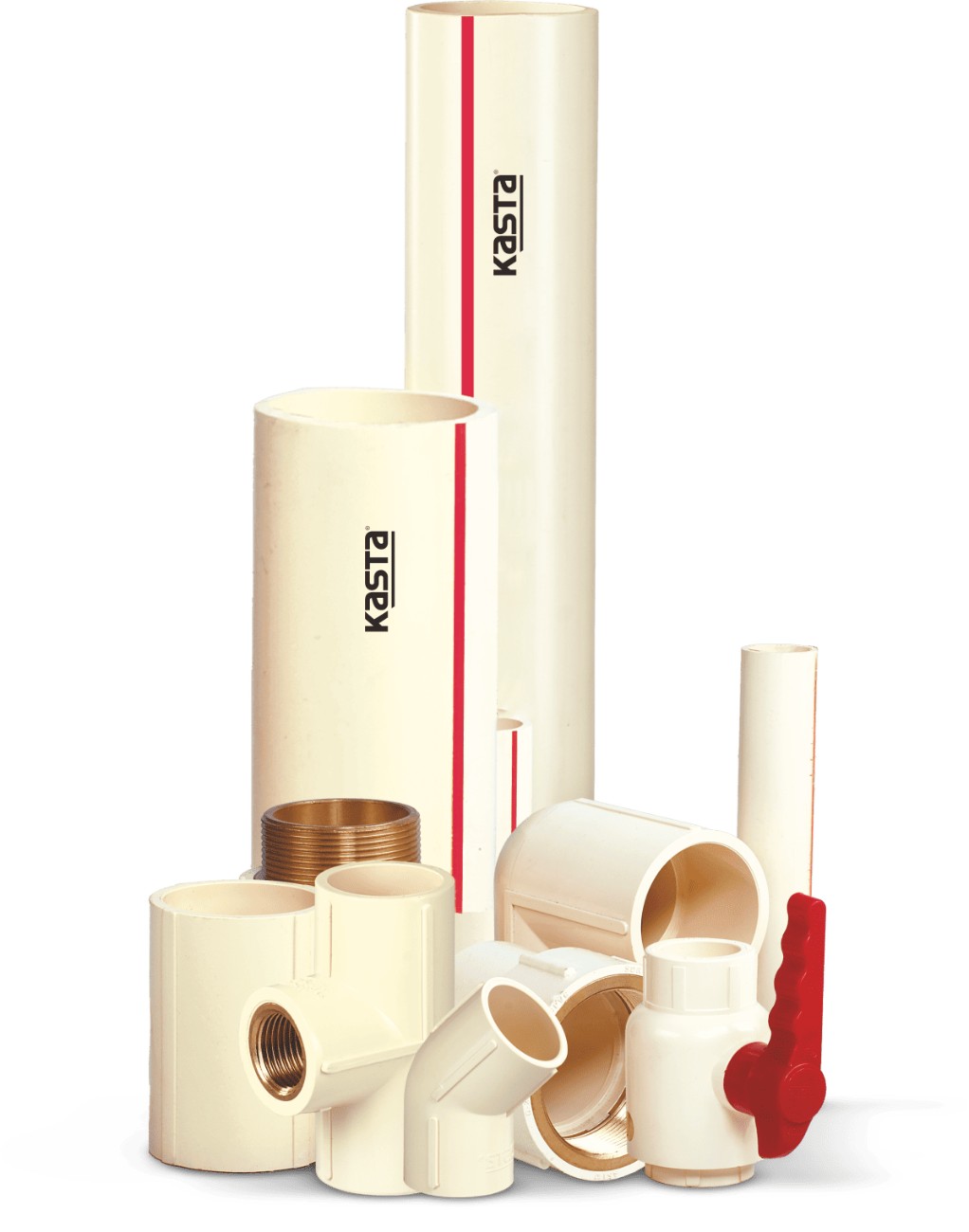
A CPVC hot water line is only as reliable as its fittings and the joints that hold them, since the pipe itself rarely fails before a poorly made joint does. Most hot water leaks reported in Indian homes trace back to a fitting that was either the wrong type for the job or a joint that was pressurised before it had properly cured, not to the pipe material failing on its own.
Kasta's CPVC fittings, part of the Building Products range and made to ASTM D 2846 alongside pipes certified to IS 15778:2007, cover couplers, elbows at 90 and 45 degrees, tees, reducers, unions, end caps, and both brass and plastic threaded adapters, along with ball valves, wall mixers and tank nipples. The full line is NSF certified and lead free, matching the pipe it connects to, which matters specifically because this is a hot water system feeding taps people drink and cook from.
Why fitting choice matters as much as pipe choice
It is easy to assume any fitting of the right size will do, but each one is built for a specific job in the line. A coupler simply extends a straight run, while an elbow changes direction, and using an elbow where a coupler would do adds an unnecessary joint, which is one more point where a leak can start. A union is the one fitting worth planning for deliberately, since it is the only joint in the system that can be opened later without cutting the pipe, which matters wherever a water heater, pump or fixture might need to be serviced or replaced down the line. Skipping a union at that point means any future repair involves cutting into a finished wall.
Solvent cement jointing, and why it works differently from threading
Every fitting in the range is designed for solvent cement jointing rather than threading, which is what gives CPVC its leak resistance at hot water temperatures. The solvent actually fuses the fitting and pipe wall together into a single piece of material, rather than relying on a mechanical seal that can loosen as the line heats and cools repeatedly through daily use. This is also why CPVC fittings cannot simply be threaded in like a metal pipe fitting when a brass or plastic adapter is needed: the threaded adapters in Kasta's range are purpose built for this transition, with the CPVC side solvent welded and only the opposite end threaded for a tap, valve or metal connection.
The step most installers skip
The one step that causes most early leaks is allowing the solvent cement joint its full cure time before pressure testing the line. A joint that looks dry on the outside within minutes still needs several hours to reach full strength, depending on pipe size and ambient temperature, and pressurising it early is a common cause of a joint failing months later rather than immediately, once the line has gone through repeated heating cycles. On a job where multiple joints are made in one sitting, it is worth marking which joints were made last, since those are the ones most likely to still be curing when the plumber is ready to test the line.
Common installation mistakes worth avoiding
Beyond cure time, a few other mistakes show up repeatedly on hot water lines. Using too little solvent cement, or applying it unevenly around the fitting socket, leaves gaps in the fused joint that behave like a slow leak under pressure rather than a visible one. Forcing a fitting onto a pipe without the quarter turn the solvent needs to spread evenly is another, since the cement needs that motion to coat the full contact surface rather than sitting in a line down one side. And mixing fitting brands at a joint, even when sizes nominally match, risks a slightly different wall thickness or socket depth that was never tested together, which is why using one matched set of pipe and fittings from a single range removes this variable entirely.
Maintenance checks worth doing periodically
Once installed, a CPVC fitting line needs very little attention, but it is worth checking visible joints occasionally for a white chalky residue or a damp patch, which usually signals an ageing solvent bond rather than the pipe itself failing. Catching this early means a simple re-joint rather than a wall needing to be opened up later.
Using the full matched set of pipe and fittings from one range, rather than mixing brands at the joint, remains the simplest way to avoid compatibility issues on a hot water line. Visit kritiindustries.com for the complete technical specifications on the CPVC range.