Creative Travel Advertising Ideas to Increase Bookings and Engagement
-

- February 23rd, 2026
- 1,637 views

FREE SEO Topical Map Generator: Find Your Next Content Ideas
Travel advertising is a high-opportunity area for brands and destination marketers seeking to convert inspiration into bookings. Effective campaigns combine storytelling, audience targeting, and measurable calls to action to reach travelers at different stages of the planning journey.
This article outlines creative travel advertising strategies, formats, and measurement best practices for attracting high-intent travelers. Topics include storytelling, immersive formats, personalization, performance metrics, legal considerations, and practical tips for testing and scale.
Travel advertising: creative strategies and formats
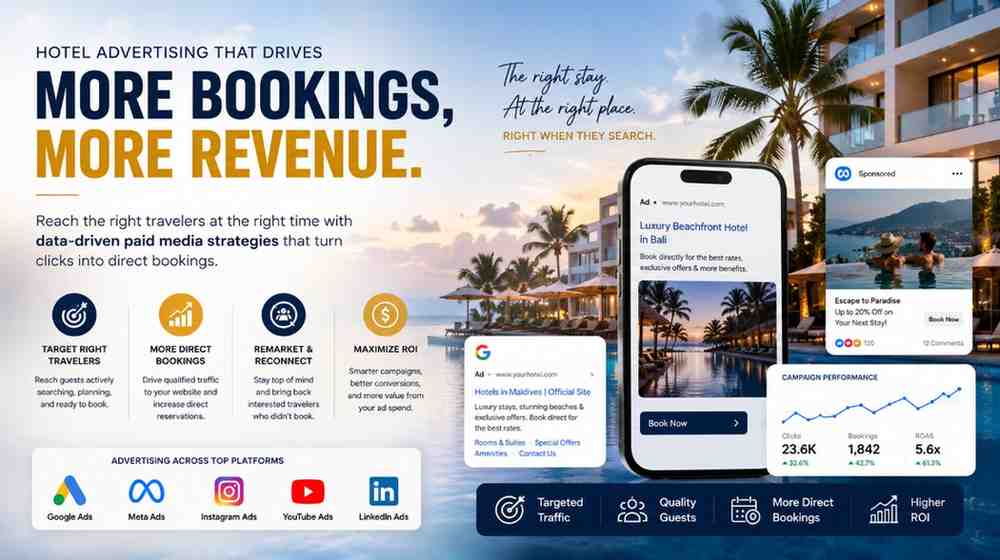
Creative travel advertising blends visual inspiration with practical cues that prompt action. Advertising formats range from short social clips and programmatic display to immersive video and interactive experiences. The best approaches link creative assets to audience data, seasonal demand signals, and clear conversion paths such as booking widgets or lead forms.
Storytelling and user-generated content
Compelling narratives and authentic user-generated content (UGC) help reduce friction between discovery and booking. Use micro-stories—short video moments, carousel sequences, or photo galleries—that highlight distinctive experiences (local food, outdoor adventure, cultural events). UGC tends to score higher on trust metrics, so combine permissioned traveler photos with captions that surface itinerary details and pricing.
Immersive and interactive formats
Augmented reality filters, 360-degree video tours, and playable ads allow potential travelers to sample a destination before committing. Interactive maps, quizzes that match traveler preferences to suggested itineraries, and shoppable ads with dynamic pricing can increase engagement and time spent with the brand, which often correlates with higher conversion rates.
Personalization, segmentation, and media mix
Segmentation by traveler intent, past booking behavior, and demographics improves relevance. Programmatic advertising and customer data platforms enable dynamic creative optimization (DCO) so headlines, images, and offers align with user signals: last-minute searches, family travel, or business itineraries. An effective media mix typically combines paid search (targeting booking intent), social feeds for awareness, and retargeting to recover interested visitors.
Design, messaging, and creative best practices
Visual hierarchy and mobile-first design
Mobile-first visuals should prioritize clear imagery, readable text overlays, and single, measurable calls to action. Use high-contrast typography and concise copy that communicates offer details (dates, price range, and inclusion) within the first seconds of a video or the top of an image ad.
Localization and accessibility
Ad creative should be localized for language, currency, and cultural cues. Ensure accessibility practices such as alt text for images and captions for videos to reach a broader audience and comply with accessibility guidance from regulators and platform policies.
Measurement, testing, and optimization
Key metrics to track
Track a combination of awareness, engagement, and conversion metrics: impressions, view-through rate, click-through rate (CTR), time on landing page, cost per click (CPC), cost per acquisition (CPA), and conversion rate (bookings or leads). Funnel analysis helps attribute which creative and channels contribute most to eventual bookings.
A/B testing and experimental design
Implement A/B or multivariate testing for headlines, imagery, and calls to action. Maintain statistical rigor by testing one variable at a time where possible, setting clear hypotheses, and using sufficient sample sizes to detect meaningful differences.
Attribution and cross-device measurement
Use multi-touch attribution models and time-decay approaches to understand how upper-funnel creative contributes to bookings. Cross-device tracking is essential because discovery often happens on mobile while booking completes on desktop or through apps.
Legal, ethical, and industry considerations
Travel advertisers must follow consumer protection rules about truthful claims, clear pricing, and cancellation policies. Privacy regulations such as the EU's General Data Protection Regulation (GDPR) and regional advertising standards influence data collection and targeting practices. Industry organizations and destination marketing bodies, including the UN World Tourism Organization, publish guidelines and research that can inform responsible promotion and sustainability practices. For official resources on tourism trends and policy guidance, consult the UN World Tourism Organization: unwto.org.
Sustainability and destination impact
Creative travel advertising increasingly includes sustainability messages and responsible tourism practices. Aligning campaigns with destination management plans and local regulations helps preserve community relations and long-term traveler interest.
Practical checklist for a campaign launch
- Define target audiences and booking windows (seasonal vs. last-minute).
- Create modular creative assets for DCO and multiple formats.
- Set measurable KPIs and baseline metrics for attribution.
- Implement privacy-compliant tracking and consent management.
- Run A/B tests, review results, and scale the winning variants.
What is travel advertising and how can it reach high-intent travelers?
Travel advertising uses paid media and creative content to inspire and convert travelers. Reaching high-intent travelers typically involves search ads targeted to booking keywords, dynamic remarketing, contextual placements on travel planning pages, and clear booking flows with price transparency.
How should creative be tested for travel campaigns?
Test headline variants, imagery types (lifestyle vs. product), and calls to action. Measure short-term engagement (CTR, video completion) and downstream booking metrics. Use randomized experiments and replicate tests across audiences to validate results.
Which metrics best indicate return on ad spend (ROAS) for travel advertising?
ROAS is measured by dividing revenue generated by ad spend, but effective measurement also includes cost per booking, lifetime value of customers acquired, and incremental lifts in direct and organic traffic attributable to campaigns. Attribution windows should reflect typical booking lead times for the product or destination.
Are there special accessibility or legal requirements for travel ads?
Yes. Ads must avoid misleading claims and disclose material conditions. Accessibility practices—captions, readable fonts, and accessible landing pages—help meet legal and platform requirements while enlarging the potential audience.