The Master Guide to Custom Flexible Packaging: Elevating Brand Identity and Product Integrity
-

- April 22nd, 2026
- 7,717 views
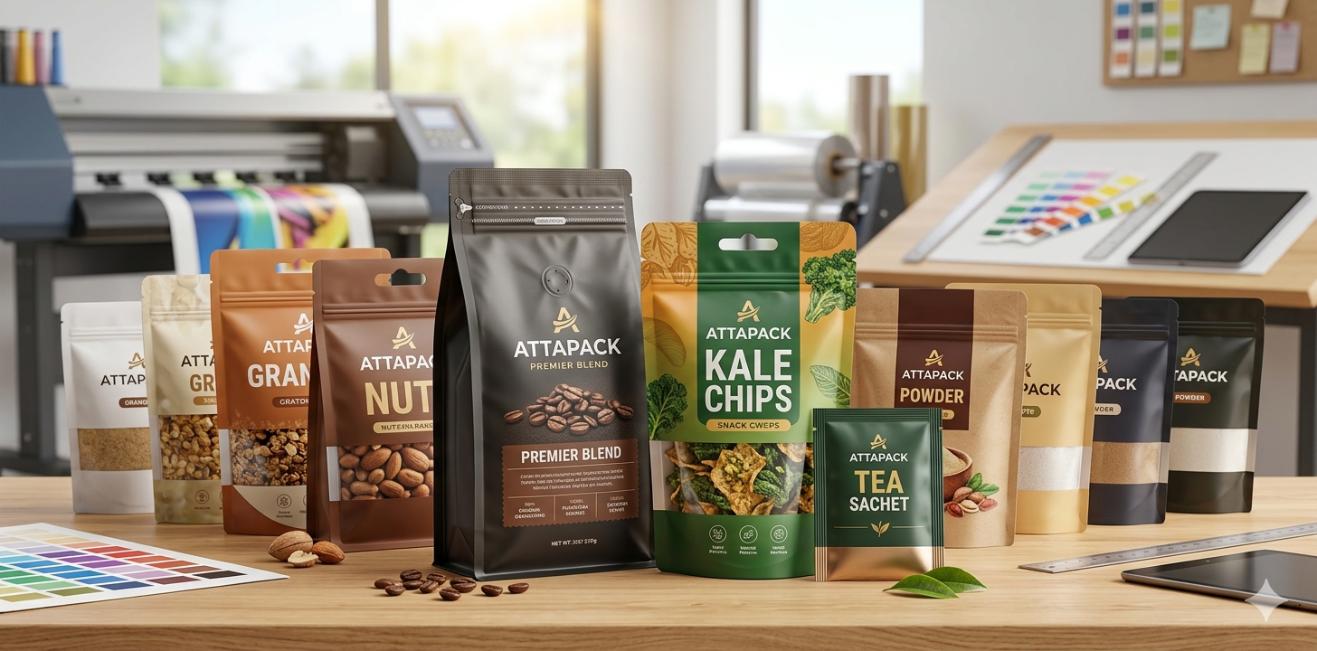
In the modern marketplace, the first physical interaction a consumer has with a brand isn't usually the product itself, but the container it arrives in. This crucial moment of truth has fueled the meteoric rise of custom flexible packaging, a versatile and high-performance solution that has fundamentally changed how we think about retail presentation and logistics. Unlike the rigid glass jars or heavy corrugated boxes of the past, flexible formats offer a sleek, lightweight, and incredibly durable alternative that aligns perfectly with the fast-paced lifestyle of today’s shoppers. From the snacks we eat to the vitamins we take, this innovative packaging style uses advanced material science to ensure that products remain fresh, safe, and visually captivating from the moment they leave the factory to the second they are opened by the end-user. As businesses look for ways to cut costs and improve their environmental footprint, custom flexible packaging has emerged as the clear winner in the race for efficiency and aesthetic excellence.
Introduction to the Flexible Packaging Revolution
Custom flexible packaging refers to any package whose shape can be readily changed, including pouches, bags, and liners made from films, foils, or paper. The "custom" aspect is where the true value lies, allowing brands to engineer specific barrier properties and visual designs that speak directly to their target audience. This isn't just about putting a logo on a bag; it's about a holistic design approach where the material thickness, the type of closure, and the tactile finish are all meticulously chosen to enhance the product inside. Because these materials are inherently thin and pliable, they require far less energy to manufacture and transport compared to traditional rigid formats, making them a cornerstone of the modern circular economy. By adopting these solutions, companies are not just buying a bag—they are investing in a sophisticated marketing tool that doubles as a high-tech protective shield.
The Shift from Rigid to Flexible Formats
The transition from rigid to custom flexible packaging didn't happen by accident. It was driven by a global demand for convenience and a radical rethink of shipping logistics. In an era dominated by e-commerce, the "breakability" of glass and the "empty space" in oversized boxes became significant liabilities. Flexible pouches, on the other hand, are nearly indestructible during transit and can be packed tightly into shipping containers, maximizing every square inch of space. This shift has allowed brands to significantly lower their carbon emissions while providing consumers with a product that is easier to carry, store, and dispose of. As retail shelves become increasingly crowded, the ability of a flexible pouch to stand upright or hang from a pegboard provides a versatile display advantage that rigid containers simply cannot match.
Exploring the Diverse Types of Flexible Formats
The versatility of custom flexible packaging is perhaps its greatest strength, as it offers a specific silhouette for virtually every product category imaginable. The stand-up pouch remains the most recognizable and popular choice, featuring a bottom gusset that allows it to maintain its posture on a flat surface. This format is the darling of the specialty food industry because it offers a large front and back surface area for high-resolution graphics. For smaller, single-serve applications like travel-sized lotions or powdered drink mixes, flat pouches or sachets are the industry standard. These formats emphasize portability and ease of use, often including specialized "easy-tear" notches that eliminate the need for scissors. Each type of package is designed with a specific consumer behavior in mind, ensuring that the packaging facilitates the use of the product rather than hindering it.
Specialized Bags for Complex Industrial Needs
Beyond the standard retail pouch, the world of custom flexible packaging extends into more complex structures like side-gusseted bags and flat-bottom pouches. Side-gusseted bags are frequently seen in the premium coffee and pet food sectors, as they expand to accommodate large volumes while maintaining a narrow, elegant profile on the shelf. The flat-bottom bag, sometimes called a box pouch, represents the pinnacle of flexible design, offering five printable surfaces and a level of stability that rivals traditional cardboard boxes. For liquids and gels, spouted pouches have become a revolutionary alternative to plastic bottles, providing a mess-free pouring experience and a significantly higher product evacuation rate, meaning less product is wasted by the consumer.
Key Elements of a High-Performance Package
When designing custom flexible packaging, the most critical consideration is the barrier layer. Most modern pouches are actually a "sandwich" of different films, each performing a specific duty. An outer layer of polyester might be used for its high-gloss finish and durability, while an inner layer of aluminum foil or ethylene-vinyl alcohol (EVOH) acts as a fortress against oxygen, moisture, and ultraviolet light. This layering is what allows organic products without preservatives to stay fresh for months. Choosing the right barrier is a delicate balance of science and cost; for instance, a bag of gourmet coffee requires a one-way degassing valve to allow carbon dioxide to escape without letting air in, whereas a pouch of dried fruit simply needs a strong moisture barrier to prevent the contents from becoming tough and unpalatable.
Functionality and Resealability Features
A package that looks great but fails to function properly will quickly alienate customers. This is why features like resealable zippers, sliders, and hook-and-loop closures are so essential to the custom flexible packaging experience. In the snack and pet food industries, the ability to keep the product fresh after the initial opening is a major selling point that drives brand loyalty. Furthermore, ergonomic considerations such as integrated handles for heavy bags or laser-perforated lines for a straight, clean tear add a layer of sophistication to the user experience. When a brand integrates these practical insights into their packaging, they are communicating to the customer that they value their time and convenience, which is a powerful psychological trigger in the buying process.
The Intricate Design and Engineering Process
The journey to creating world-class custom flexible packaging begins with a precise technical blueprint known as a dieline. This flat layout accounts for every fold, seal, and gusset, and it is the canvas upon which the brand’s visual identity is built. Designers must be acutely aware of how colors will appear on different substrates—white ink might be required as a base layer on clear films to ensure colors pop, while metallic films can be used to create a shimmering, high-end effect. It is also vital to consider the "eye mark," a small printed symbol that tells the packaging machinery exactly where to cut and seal the film during the high-speed filling process. Ignoring these technical details can lead to misaligned graphics or, worse, a package that doesn't seal properly.
Prototyping and Environmental Testing
Before a brand commits to a massive production run, it is standard practice to create prototypes or "mock-ups." These allow the marketing team to hold the physical product, check the sizing, and see how the colors translate from the computer screen to the film. More importantly, custom flexible packaging must undergo rigorous testing to ensure it can survive the "real world." This includes burst testing to see how much pressure the seals can take, drop testing to simulate shipping mishaps, and accelerated shelf-life testing to confirm that the barrier layers are performing as expected. These steps are essential for preventing costly recalls and ensuring that the product reaches the consumer in the exact condition the manufacturer intended.
Advanced Printing Technologies in the Flexible Sector
The visual quality of custom flexible packaging has reached an incredible peak thanks to advancements in rotogravure and digital printing. Rotogravure is the traditional workhorse of the industry, utilizing engraved cylinders to transfer ink with unmatched precision and speed. It is the ideal choice for high-volume orders where color consistency and low per-unit costs are the primary goals. However, the rise of digital printing has lowered the barrier to entry for smaller companies. Digital printing requires no plates, allowing for incredibly low minimum order quantities and the ability to run multiple SKU variations in a single batch. This flexibility is perfect for brands that want to test seasonal designs or localized marketing campaigns without the financial risk of a massive inventory.
Attapack
Custom Finishes and Tactile Experiences
In a world where consumers are constantly bombarded with visual stimuli, the tactile feel of custom flexible packaging can be a significant differentiator. Soft-touch matte finishes have become incredibly popular in the luxury and wellness sectors because they convey a sense of elegance and "natural" quality that glossy films cannot. Conversely, spot UV coatings can be used to highlight specific parts of the design, such as a logo or a product image, by giving them a high-gloss shine that contrasts with the rest of the matte bag. These finishes do more than just look good; they create a sensory experience that encourages the consumer to linger with the product, increasing the chances of a purchase.
Analyzing the Economics of Flexible Solutions
One of the most common misconceptions about custom flexible packaging is that it is purely an aesthetic choice. In reality, the move to flexible formats is often a calculated financial decision. Because flexible pouches are made from lightweight films, they weigh significantly less than their rigid counterparts, leading to a dramatic reduction in shipping costs. Furthermore, empty pouches are shipped flat, meaning a single pallet can hold tens of thousands of units, whereas empty rigid bottles would require an entire fleet of trucks to transport the same number. This efficiency extends to the warehouse, where the space required to store packaging materials is reduced by up to 90%, freeing up valuable square footage for other operations.
Understanding Minimum Order Quantities (MOQs)
For many businesses, the biggest hurdle in adopting custom flexible packaging is the Minimum Order Quantity. Traditional printing methods often require thousands of units to justify the setup time and cost of materials. However, as the industry evolves, manufacturers are offering more flexible solutions to accommodate startups and mid-sized enterprises. By understanding the trade-off between order volume and unit price, brands can strategically plan their growth. It is often beneficial to start with digital printing for a product launch and then transition to rotogravure as demand scales, allowing the brand to maintain a professional appearance while managing cash flow effectively.
Common Mistakes to Avoid in Development
Despite its many advantages, there are several pitfalls that brands must navigate when developing their custom flexible packaging. One frequent error is "over-engineering," where a company chooses a barrier film that is far more expensive and complex than what the product actually requires. This not only wastes money but also adds unnecessary plastic to the waste stream. Another common mistake is failing to account for the product's "fill level." If a pouch is designed too small, the heat-sealing process can accidentally melt the product or cause the bag to bulge unnaturally, ruining the shelf appeal. It is always advisable to work with a partner who understands the relationship between material thickness and machine compatibility to avoid these technical disasters.
Future Trends: Sustainability and Smart Tech
The future of custom flexible packaging is being shaped by two powerful forces: the push for a circular economy and the integration of digital technology. We are seeing a massive shift toward mono-material laminates—packaging made from a single type of plastic that can be easily processed by standard recycling facilities. This solves the long-standing criticism that multi-layer films are difficult to recycle. Additionally, the development of compostable and bio-based films is providing a path forward for brands that want to eliminate plastic altogether. On the tech side, "active packaging" is becoming a reality, with films that can actually absorb oxygen or release antimicrobial agents to further extend shelf life.
The Rise of Interactive Packaging
Beyond material science, custom flexible packaging is becoming a portal to the digital world. By incorporating QR codes, NFC chips, or augmented reality triggers into the design, brands can turn their physical package into an interactive marketing channel. A consumer can scan a bag of coffee to see a video of the farm where it was grown or access exclusive recipes and discount codes. This level of engagement was once impossible with traditional labels and boxes. As we move into 2026 and beyond, the package will no longer be seen as "trash" to be discarded, but as a vital part of the brand’s digital ecosystem that provides value long after the product inside has been consumed.
Conclusion: The Strategic Value of Flexibility
In summary, custom flexible packaging represents the perfect marriage of form and function. It provides the high-level protection required for modern food and medical standards while offering a lightweight, cost-effective, and visually stunning canvas for brand expression. As consumer preferences continue to lean toward convenience and environmental responsibility, the brands that embrace these flexible solutions will be the ones that thrive on the retail shelves of the future. By carefully selecting materials, focusing on user functionality, and leveraging the latest printing technologies, any business can transform their packaging from a mere container into a powerful competitive advantage.