Common CX Vision Mistakes to Avoid | CX Vision Strategy
-

- Published Updated
- 3,267 views
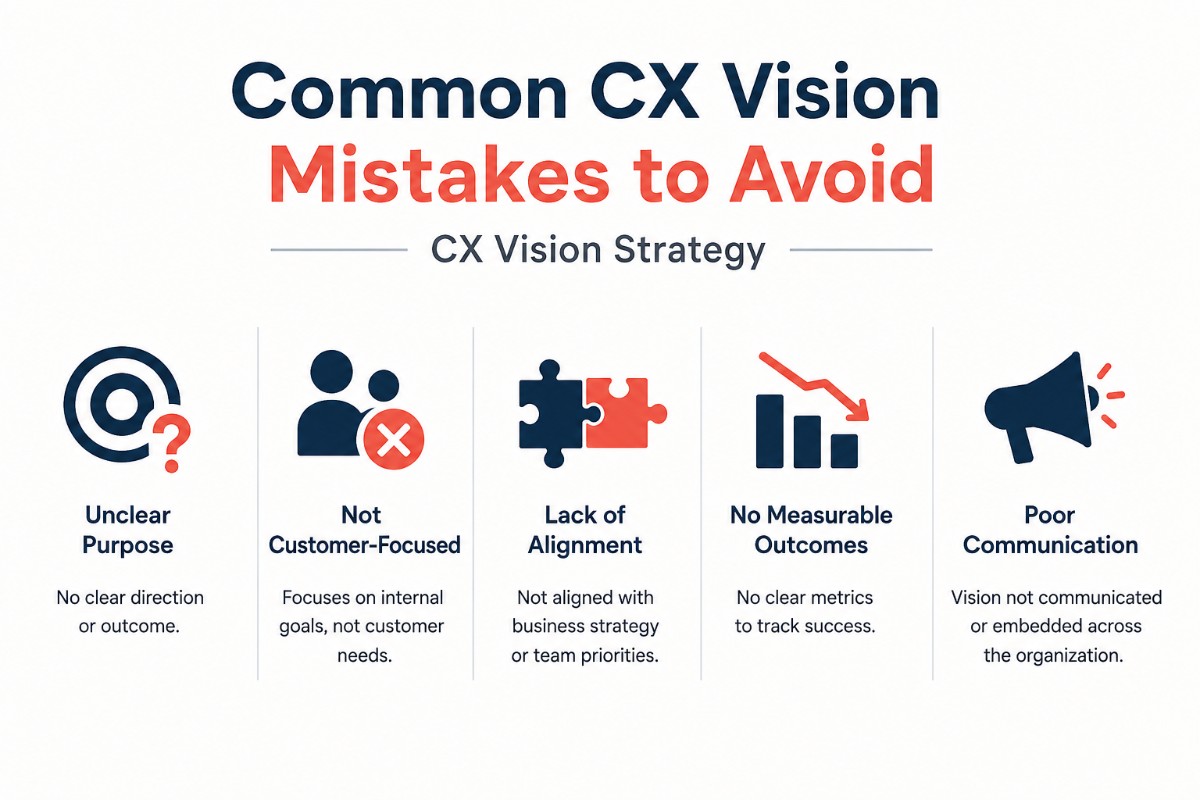
Great customer experiences do not happen by chance. Behind every smooth interaction is a clear direction that helps teams understand what customers need and expect. When that direction is missing, even strong CX efforts can feel disconnected, inconsistent, and difficult to measure.
In this article, we look at the most common CX vision mistakes businesses make and how a strong CX vision strategy can help avoid them.
Why a Clear CX Vision Matters Before You Start
A CX vision is more than a slogan on a wall. It gives the whole business a clear direction for how customers should feel and what they should experience at every touchpoint.
When the vision is unclear, teams may end up making decisions based on assumptions instead of customer needs. This can create gaps that customers notice quickly.
A clear CX vision helps businesses:
Keep customer service consistent across different teams and channels.
Make better decisions based on a shared direction.
Reduce wasted time and budget on CX efforts that do not support customer needs.
Give employees a better understanding of what they are working toward.
A clear CX vision should start with a strong understanding of customer needs. The GOV.UK Service Standard also highlights understanding users, creating joined-up experiences, and measuring success as key principles.
CX Vision Planning Mistakes
Many CX vision planning mistakes happen at the very beginning, before the actual work even starts.
Setting a vision without leadership buy-in
If leadership does not support the vision, it may not get the budget, time, or priority it needs. CX efforts can quickly lose focus without strong support from senior leaders.
Copying competitors instead of defining your own vision
Competitors can give useful ideas, but copying their vision does not mean it will work for your business. Your CX vision should reflect your own customers, brand, and goals.
Treating it as a one-off exercise
A CX vision should not be written once and forgotten. Customer expectations and business needs change, so the vision may also need updates over time.
These mistakes may seem simple, but they can affect the direction of the entire CX strategy.
CX Vision Development Mistakes
Once the planning is done, businesses move into development. This stage can also bring common mistakes that affect the final CX vision.
Ignoring customer feedback during development
Many businesses build their CX vision around internal opinions and overlook what customers are actually saying. Feedback can show real gaps and help shape a more useful vision. This is one of the common customer experience challenges businesses can avoid. This related read on whether customer feedback is enough on its own offers more insight.
Building the vision around assumptions, not data
Assuming what customers want can easily lead businesses in the wrong direction. Customer needs change, so decisions should be supported by recent feedback and useful data.
Making the vision too broad or too vague
A statement like “we want happy customers” sounds positive but does not give teams clear direction. A strong vision should be clear enough to guide everyday decisions.
CX Vision Execution Mistakes
Even a strong vision can fall short when execution is weak. This is where many CX vision execution mistakes start to appear.
No clear ownership across departments
CX is not the responsibility of one team alone. Sales, support, product, and marketing all affect the customer journey, so everyone should understand their role in the vision.
Treating CX implementation as a one-time project
Some businesses launch a CX programme and move on to the next priority. In reality, CX implementation needs regular review, improvement, and attention as customer needs change.
Measuring the wrong things
Teams may focus too much on internal numbers, such as call handling time, instead of looking at how customers actually feel. This can make performance look better on paper than it is in reality.
Common Customer Experience Challenges That Undermine CX Vision
Some common challenges can weaken even a well-built CX vision:
Departments working in silos, without a shared view of the customer
Leadership changes that shift priorities along the way
Customer data spread across systems that do not work together
Frontline staff not fully trained on what the vision means for their daily work
These challenges are common in many businesses. The key is to identify them early and plan for them, rather than waiting until they start affecting the customer experience.
How to Avoid These CX Vision Mistakes
A few practical steps can help businesses keep their CX vision clear and useful:
Involve leadership from day one, rather than after the vision is written.
Base the vision on real customer feedback and data, not assumptions.
Keep the vision specific enough to guide daily decisions.
Assign clear ownership across every department involved.
Review and update the vision regularly, at least once a year.
Track customer experience metrics, not just operational numbers.
Set a simple yearly CX review with key teams. Look at customer feedback, experience metrics, and major changes in customer needs. This makes it easier to see what is still working and what needs to change.
None of this is complicated. It just needs discipline and consistency across the business.
Final Thoughts
CX vision mistakes can start small, but they often create bigger problems during development and execution. Fixing them later can also take more time, effort, and budget.
A strong CX vision should stay connected to customer needs and business goals. When teams understand the vision and use it in their daily work, it becomes more than just a document. It gives them a clear direction for improving the customer experience.