Big Data Centers Are Pushing Power Grids to the Limit as AI Demand Accelerates
-

- Published Updated
- 5,070 views
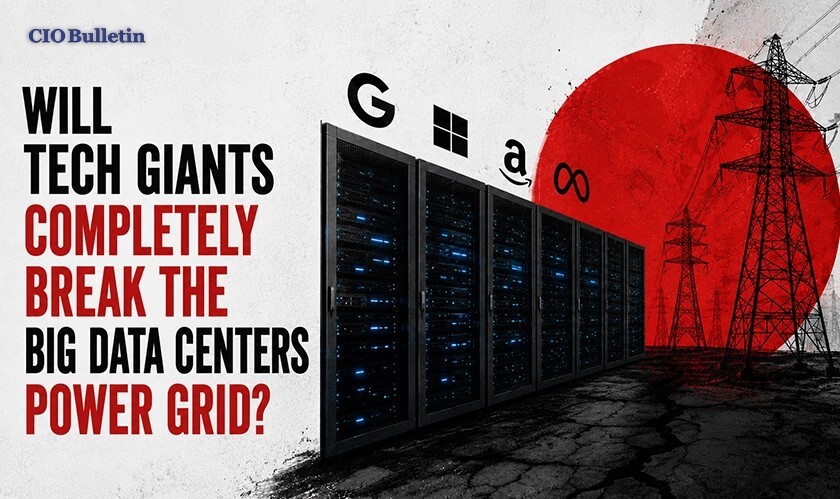
The explosive growth of artificial intelligence, cloud computing, and high-performance data processing is creating an unprecedented challenge for electricity infrastructure worldwide. As demand for computing power reaches record levels, large-scale data centers are consuming more energy than ever before, placing increasing pressure on aging power grids. As featured by CIO Bulletin, the rapid expansion of big data centers has sparked a global debate about energy sustainability, grid modernization, and the future of digital infrastructure.
Technology companies continue investing billions of dollars in hyperscale data centers to support AI models, cloud services, and enterprise workloads. While these facilities drive innovation and economic growth, they also require enormous amounts of electricity, prompting governments and utility providers to rethink how power systems can support the next generation of digital transformation.
AI Is Fueling an Unprecedented Surge in Electricity Demand
Artificial intelligence has become one of the fastest-growing consumers of computing resources.
Training and operating advanced AI models require thousands of high-performance processors working continuously, significantly increasing electricity consumption compared to traditional computing workloads.
Modern data centers now support:
- Artificial intelligence
- Machine learning
- Cloud computing
- Big data analytics
- Video streaming
- Enterprise applications
Industry analysts estimate that electricity demand from AI-focused facilities will continue rising throughout the decade as organizations accelerate digital transformation initiatives.
Data Centers Have Become Critical Infrastructure
Data centers are no longer simply locations where servers are stored.
They now serve as the foundation for:
- Financial services
- Healthcare systems
- Government operations
- Telecommunications
- E-commerce
- Manufacturing
- Digital entertainment
Nearly every digital service consumers use daily depends on reliable data center infrastructure operating around the clock.
As businesses become increasingly connected, uninterrupted access to computing resources has become essential for economic activity.
Aging Power Grids Face New Challenges
Many electricity grids were designed decades before today's AI-driven economy.
Utilities are now confronting new challenges including:
- Higher electricity demand
- Continuous 24/7 power consumption
- Local transmission congestion
- Infrastructure limitations
- Rising peak loads
- Grid reliability concerns
Unlike traditional industrial facilities, hyperscale data centers often operate continuously, requiring stable electricity supplies every hour of the year.
In some regions, new data center construction has outpaced available electrical infrastructure, leading to delays in connecting new facilities.
Hyperscale Expansion Continues Worldwide
Major technology companies continue announcing investments in increasingly larger data centers.
Hyperscale facilities support services such as:
- AI model training
- Cloud storage
- Business applications
- Search engines
- Digital collaboration
- Streaming platforms
Each new facility may contain tens of thousands of servers requiring substantial electrical capacity, cooling systems, and networking infrastructure.
As competition in artificial intelligence intensifies, companies continue expanding computing capacity to support future innovation.
Cooling Systems Add to Energy Consumption
Computing equipment generates enormous amounts of heat during operation.
To maintain optimal performance, data centers depend on advanced cooling technologies including:
- Liquid cooling
- Air cooling
- Immersion cooling
- Water-based systems
- Intelligent thermal management
Cooling infrastructure itself represents a significant portion of total electricity usage.
Many organizations are investing in more energy-efficient cooling technologies to reduce operational costs while improving environmental performance.
Renewable Energy Becomes a Strategic Priority
Technology companies increasingly recognize the importance of powering digital infrastructure with cleaner energy sources.
Many organizations are investing in:
- Solar energy
- Wind power
- Battery storage
- Hydroelectric generation
- Nuclear energy partnerships
- Long-term renewable power agreements
These investments aim to reduce carbon emissions while ensuring reliable electricity supplies for expanding AI operations.
Several hyperscale providers have committed to operating on carbon-free energy over the coming decades.
Utilities Race to Modernize Infrastructure
Electric utility companies are responding by accelerating investments in grid modernization.
Key priorities include:
- Transmission expansion
- Smart grid deployment
- Grid automation
- Energy storage
- Demand forecasting
- Renewable integration
Modern electrical infrastructure must become more flexible to accommodate rapidly changing consumption patterns created by digital industries.
Many governments have introduced funding programs designed to strengthen national energy infrastructure while supporting economic growth.
Balancing Innovation and Sustainability
The technology industry faces growing pressure to balance innovation with environmental responsibility.
Organizations are pursuing strategies such as:
- Energy-efficient processors
- AI workload optimization
- Sustainable building design
- Heat reuse technologies
- Water conservation
- Carbon reduction initiatives
Improving efficiency allows companies to continue expanding digital services while minimizing environmental impact.
Sustainability has become a competitive advantage as customers increasingly evaluate environmental performance alongside technological capabilities.
Governments Introduce New Policies
Public policymakers are also responding to rising electricity demand from digital infrastructure.
Governments are evaluating:
- Grid investment incentives
- Energy efficiency standards
- Renewable energy expansion
- Data center permitting
- Carbon reduction targets
- Infrastructure planning
Balancing economic development with environmental sustainability has become a central objective for policymakers worldwide.
Cooperation between governments, utilities, and technology companies will be essential for long-term success.
The Future of Digital Infrastructure
The relationship between artificial intelligence and energy infrastructure will continue evolving.
Future developments may include:
- AI-optimized electricity grids
- Advanced battery technologies
- Small modular nuclear reactors
- More efficient semiconductor designs
- Intelligent energy management
- Decentralized computing networks
Innovation across both technology and energy sectors will determine how effectively society meets growing computing demands while maintaining reliable electricity systems.
Experts believe future data centers will become significantly more energy-efficient through advances in hardware, software optimization, and renewable integration.
Economic Opportunities Accompany Infrastructure Growth
Despite the challenges, expanding data center infrastructure also creates substantial economic benefits.
Investment in digital infrastructure supports:
- High-skilled employment
- Construction projects
- Semiconductor manufacturing
- Renewable energy development
- Telecommunications expansion
- Regional economic growth
Communities attracting hyperscale data centers often experience increased business investment and improved digital connectivity.
However, careful planning remains necessary to ensure local infrastructure can support continued expansion.
Conclusion
The rapid growth of big data centers illustrates both the extraordinary opportunities and the significant infrastructure challenges created by the artificial intelligence revolution. As AI applications continue expanding across industries, electricity demand from hyperscale computing facilities will become an increasingly important issue for governments, utilities, and technology companies alike.
Meeting this challenge will require coordinated investments in grid modernization, renewable energy, efficient computing technologies, and sustainable infrastructure planning. While the digital economy continues driving innovation, ensuring reliable and resilient power systems will be equally essential to supporting future technological progress. The ability to balance computing growth with energy sustainability will ultimately define the next era of global digital transformation.
👉 Read the complete published article here: https://ciobulletin.com/big-data/big-data-centers-power-grid-broken
👉 Follow CIO Bulletin for the latest updates on artificial intelligence, big data, cloud computing, energy innovation, enterprise technology, and digital transformation.