What Are DISC Personality Styles and Why Do They Matter?
-

- Published Updated
- 5,724 views

Success in both personal and professional life often depends on understanding how people think, communicate, and interact with one another. Every individual has unique behavioral tendencies that influence how they make decisions, solve problems, and build relationships. This is one of the reasons why DISC Personality Styles have become such a popular framework for understanding human behavior. By identifying different personality traits and communication preferences, DISC helps individuals and organizations improve teamwork, leadership, and overall workplace effectiveness.
The DISC model is widely used in businesses, educational institutions, coaching programs, and leadership development initiatives because it provides practical insights into how people work and communicate. Understanding DISC Personality Styles can help reduce conflict, improve collaboration, and create stronger relationships in both professional and personal settings.
What Are DISC Personality Styles?
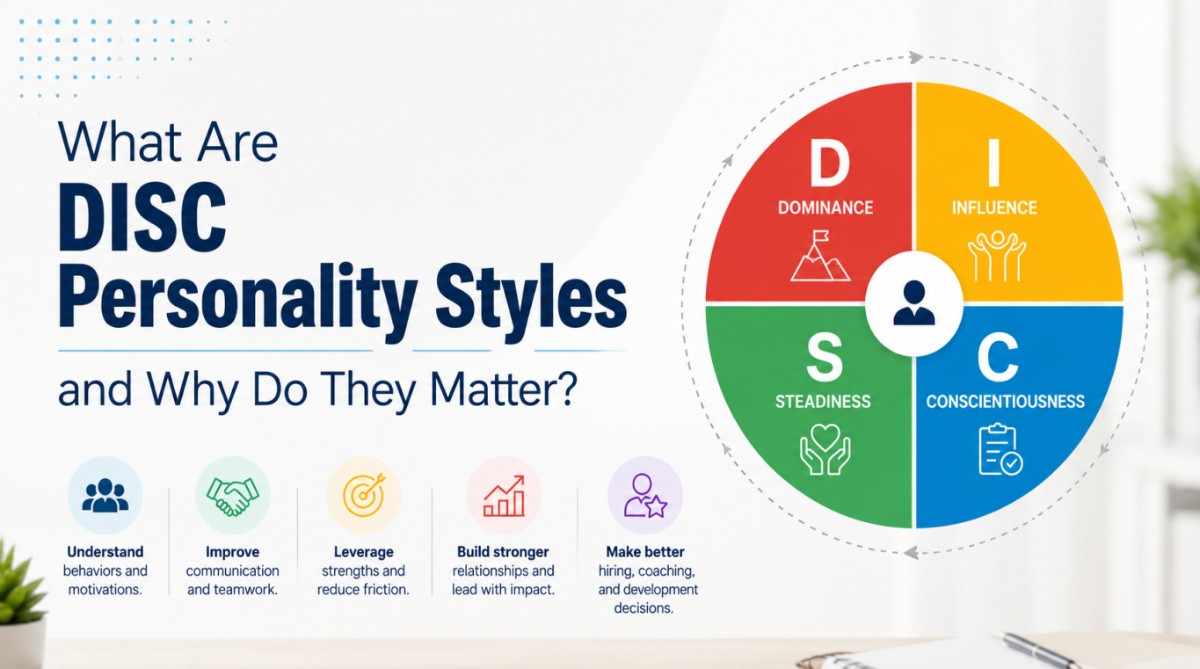
DISC Personality Styles are based on a behavioral assessment model that categorizes human behavior into four primary personality dimensions:
● Dominance (D)
● Influence (I)
● Steadiness (S)
● Conscientiousness (C)
The model was inspired by the work of psychologist William Moulton Marston, who studied how people respond to challenges, influence others, and interact within their environments.
Rather than measuring intelligence, skills, or emotional capacity, DISC focuses on observable behaviors and communication preferences. The goal is to help individuals understand themselves and others more effectively.
Most people exhibit a combination of all four DISC styles, although certain traits are typically more dominant than others. This unique combination creates an individual's behavioral profile and influences how they approach work, relationships, and decision-making.
Understanding the Four DISC Personality Styles
To appreciate the value of DISC, it's important to understand each of the four personality styles.
1. Dominance (D)
People with a strong Dominance style are often characterized by:
● Confidence
● Decisiveness
● Competitiveness
● Goal orientation
● Strong leadership tendencies
They are focused on results and enjoy tackling challenges. Individuals with high D traits often thrive in leadership roles because they are comfortable making decisions and taking responsibility.
However, their direct communication style can sometimes be perceived as overly assertive or impatient by others.
2. Influence (I)
Individuals with a high Influence style tend to be:
● Outgoing
● Energetic
● Enthusiastic
● Persuasive
● Relationship-focused
They enjoy social interactions and are often skilled at inspiring and motivating others. Their optimism and communication abilities make them valuable contributors to team environments.
On the downside, they may occasionally struggle with organization, attention to detail, or following structured processes.
3. Steadiness (S)
People who score highly in Steadiness are generally:
● Patient
● Reliable
● Loyal
● Supportive
● Cooperative
They value stability and enjoy helping others succeed. These individuals often excel at creating harmonious work environments and maintaining strong team relationships.
While their calm and dependable nature is a strength, they may sometimes resist change or avoid conflict to preserve peace.
4. Conscientiousness (C)
Those with a dominant Conscientiousness style are typically:
● Analytical
● Detail-oriented
● Logical
● Organized
● Quality-focused
They thrive in environments that require accuracy, precision, and careful planning. Their ability to analyze information and identify potential risks makes them valuable problem-solvers.
However, they may become overly critical, perfectionistic, or hesitant when making decisions without sufficient data.
Why Do DISC Personality Styles Matter?
Understanding DISC Personality Styles matters because people are at the center of every organization, relationship, and team. Behavioral differences can significantly impact communication, productivity, and collaboration.
When individuals understand these differences, they can adapt their interactions and build stronger connections with others.
Improving Self-Awareness
One of the greatest benefits of DISC is increased self-awareness.
Many people are unaware of how their behavior affects those around them. DISC helps individuals identify their natural tendencies, strengths, communication habits, and potential blind spots.
For example, a Dominance-oriented individual may realize they need to be more patient when communicating with colleagues, while a Steadiness-focused employee may recognize the importance of becoming more comfortable with change.
This self-awareness creates opportunities for personal growth and professional development.
Enhancing Workplace Communication
Communication challenges are among the most common causes of workplace misunderstandings and conflict.
Different personality styles often prefer different communication methods. A high D personality may prefer direct and concise conversations, while a strong I personality may appreciate a more enthusiastic and relationship-focused approach.
DISC Personality Styles help employees understand these preferences and adjust their communication strategies accordingly.
As a result, conversations become more productive, misunderstandings decrease, and workplace relationships improve.
Strengthening Team Collaboration
Every successful team consists of individuals with diverse strengths and perspectives.
DISC helps team members recognize and appreciate these differences rather than viewing them as obstacles. For example:
● Dominance styles drive results and decision-making.
● Influence styles boost morale and engagement.
● Steadiness styles promote teamwork and consistency.
● Conscientiousness styles ensure quality and accuracy.
When these strengths are combined effectively, teams become more balanced and productive.
Understanding DISC Personality Styles enables team members to work together more efficiently by leveraging each person's unique contributions.
Supporting Effective Leadership
Leadership is not simply about managing tasks; it is about understanding people.
Leaders who understand DISC Personality Styles are better equipped to motivate employees, resolve conflicts, and create positive work environments. They can tailor their leadership approach based on individual needs and communication preferences.
For instance, a leader may provide more autonomy to a Dominance-oriented employee while offering additional support and reassurance to someone with a strong Steadiness style.
This flexibility helps leaders build stronger relationships and improve employee engagement.
Reducing Workplace Conflict
Conflict often arises when people misinterpret each other's intentions or communication styles.
A direct communicator may unintentionally appear aggressive, while a more reserved colleague may seem disengaged despite being highly committed to their work.
DISC provides a framework for understanding these behavioral differences. When employees recognize why others behave the way they do, they are more likely to approach disagreements with empathy and respect.
This understanding can significantly reduce workplace tension and promote healthier professional relationships.
Improving Employee Development
Organizations increasingly use DISC assessments as part of employee development programs.
The insights gained from DISC can help individuals:
● Identify strengths and weaknesses
● Improve communication skills
● Develop leadership abilities
● Increase emotional intelligence
● Enhance teamwork capabilities
Managers can also use DISC insights to create personalized development plans that align with employees' behavioral preferences and career goals.
This targeted approach often leads to higher employee satisfaction and stronger performance outcomes.
Creating a Positive Workplace Culture
A positive workplace culture depends on trust, collaboration, and mutual respect.
When employees understand DISC Personality Styles, they become more aware of how their actions impact others. This awareness encourages empathy, inclusivity, and open communication.
Teams that embrace behavioral diversity are often more innovative, adaptable, and resilient because they value different perspectives and approaches.
As a result, organizations can build stronger workplace cultures that support long-term success.
Applying DISC Beyond the Workplace
Although DISC is commonly used in professional environments, its benefits extend beyond the workplace.
Individuals can use DISC insights to improve:
● Family relationships
● Friendships
● Community involvement
● Personal communication skills
● Conflict resolution abilities
Understanding personality differences can enhance nearly every aspect of life by promoting greater empathy and stronger interpersonal connections.
Conclusion
DISC Personality Styles provide a practical and effective framework for understanding human behavior. By categorizing behavioral tendencies into Dominance, Influence, Steadiness, and Conscientiousness, DISC helps individuals gain valuable insights into how they communicate, collaborate, and interact with others.
Whether used for leadership development, team building, communication improvement, or personal growth, understanding DISC Personality Styles can lead to stronger relationships, improved workplace performance, and greater self-awareness. In a world where effective communication and collaboration are essential, DISC remains one of the most valuable tools for understanding people and unlocking their full potential.