Best Premium Dry Fruits for Everyday Snacking
-

- September 27th, 2026
- 70 views
Premium dry fruits can make everyday snacking simpler when quality, taste, freshness, and convenience matter. The right choice depends less on choosing the most expensive option and more on selecting dry fruits that suit your taste, snacking habits, and how often you plan to eat them.
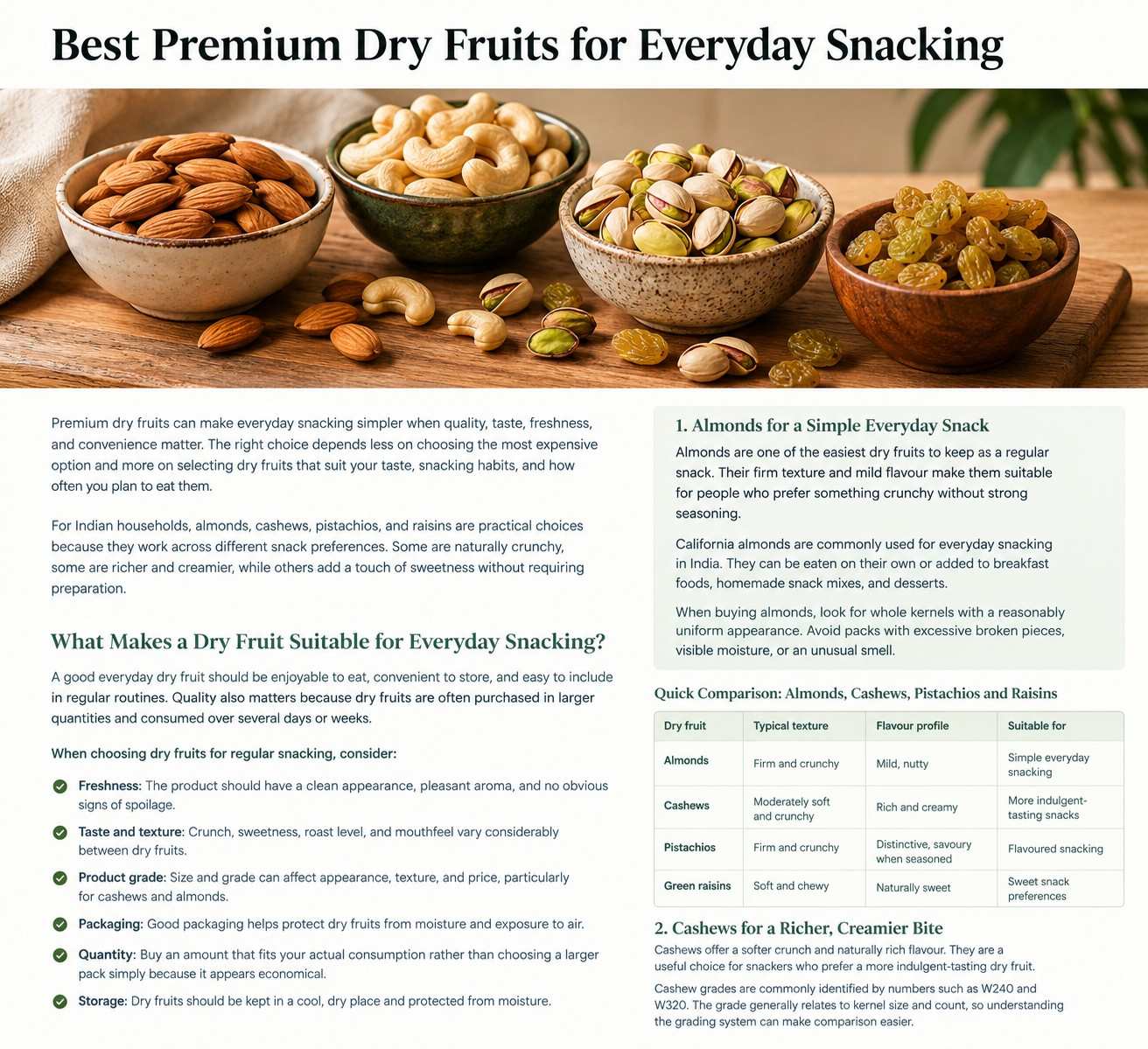
For Indian households, almonds, cashews, pistachios, and raisins are practical choices because they work across different snack preferences. Some are naturally crunchy, some are richer and creamier, while others add a touch of sweetness without requiring preparation.
What Makes a Dry Fruit Suitable for Everyday Snacking?
A good everyday dry fruit should be enjoyable to eat, convenient to store, and easy to include in regular routines. Quality also matters because dry fruits are often purchased in larger quantities and consumed over several days or weeks.
When choosing dry fruits for regular snacking, consider:
Freshness: The product should have a clean appearance, pleasant aroma, and no obvious signs of spoilage.
Taste and texture: Crunch, sweetness, roast level, and mouthfeel vary considerably between dry fruits.
Product grade: Size and grade can affect appearance, texture, and price, particularly for cashews and almonds.
Packaging: Good packaging helps protect dry fruits from moisture and exposure to air.
Quantity: Buy an amount that fits your actual consumption rather than choosing a larger pack simply because it appears economical.
Storage: Dry fruits should be kept in a cool, dry place and protected from moisture.
1. Almonds for a Simple Everyday Snack
Almonds are one of the easiest dry fruits to keep as a regular snack. Their firm texture and mild flavour make them suitable for people who prefer something crunchy without strong seasoning.
California almonds are commonly used for everyday snacking in India. They can be eaten on their own or added to breakfast foods, homemade snack mixes, and desserts.
When buying almonds, look for whole kernels with a reasonably uniform appearance. Avoid packs with excessive broken pieces, visible moisture, or an unusual smell.
For shoppers comparing different options, size, freshness, packaging, and price per kilogram are more useful considerations than relying on appearance alone.
2. Cashews for a Richer, Creamier Bite
Cashews offer a softer crunch and naturally rich flavour. They are a useful choice for snackers who prefer a more indulgent-tasting dry fruit.
Cashew grades are commonly identified by numbers such as W240 and W320. The grade generally relates to kernel size and count, so understanding the grading system can make comparison easier.
For everyday use, consider:
Whole versus broken kernels
Grade and size
Natural versus roasted versions
Packaging quality
Quantity required for regular consumption
A premium-looking cashew is not automatically the right purchase for every household. The most useful choice depends on whether appearance, size, texture, or price matters most to the buyer.
3. Pistachios for Variety and Texture
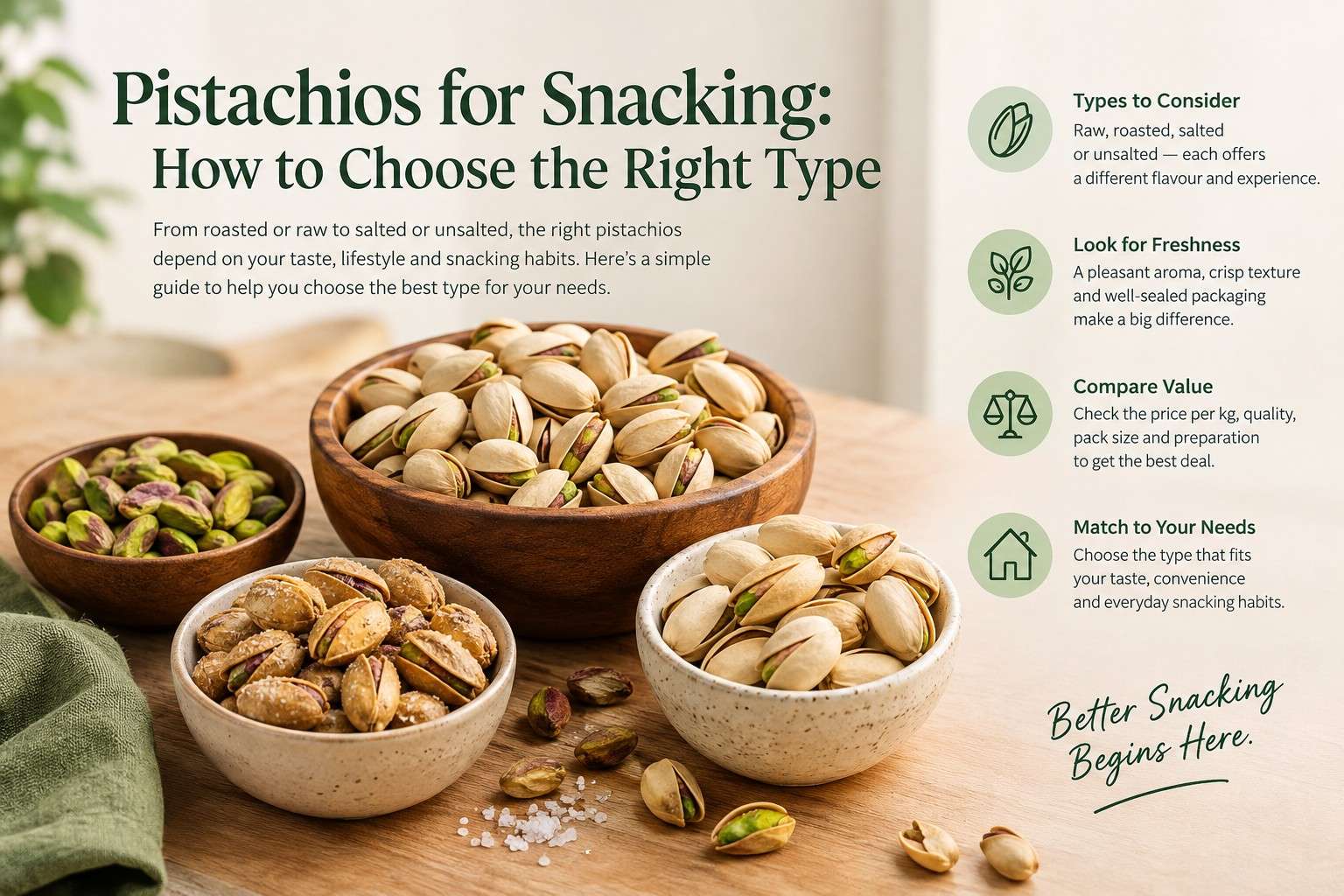
Pistachios bring a distinctive flavour and firm texture to a snack routine. Roasted and salted pistachios can be particularly appealing to people who prefer savoury snacks.
Because roasting and seasoning change the eating experience, check the product description carefully before purchasing. Buyers who want a more neutral option may prefer a less-seasoned variety, while those looking for a ready-to-eat snack may enjoy roasted and salted pistachios.
Pistachios can also be served alongside other dry fruits when a snack needs more variety in colour, texture, and flavour.
4. Raisins for Natural Sweetness
Raisins, also known as Kishmish, provide a naturally sweet option for snackers who do not always want a crunchy food.
Indian green raisins are especially useful in snack mixes, breakfast bowls, and traditional Indian food preparations. They can also be eaten on their own when a small sweet element is preferred.
When buying raisins, check that the product is clean, properly packed, and free from excess moisture. Texture can vary between varieties, so buyers should choose according to whether they prefer softer or firmer raisins.
How to Choose Between Almonds, Cashews, Pistachios and Raisins
The easiest way to choose is to match the dry fruit to your preferred eating experience.
Dry fruit |
Typical texture |
Flavour profile |
Suitable for |
Almonds |
Firm and crunchy |
Mild, nutty |
Simple everyday snacking |
Cashews |
Moderately soft and crunchy |
Rich and creamy |
More indulgent-tasting snacks |
Pistachios |
Firm and crunchy |
Distinctive, savoury when seasoned |
Flavoured snacking |
Green raisins |
Soft and chewy |
Naturally sweet |
Sweet snack preferences |
This comparison is about eating characteristics rather than a ranking. Different dry fruits serve different preferences, and a household may reasonably keep more than one variety available.
Should You Buy One Dry Fruit or a Mix?
A single dry fruit can be convenient when everyone in the household prefers the same option. A mix can be more useful when different textures and flavours are wanted.
For example, almonds can provide crunch, raisins can add sweetness, cashews can bring a richer texture, and pistachios can add a distinct savoury note.
However, buying several varieties also means paying attention to storage and consumption. Choose quantities based on how quickly the household actually eats each product.
What Should You Check Before Buying Premium Dry Fruits Online?
Shopping online makes comparison easier, but product descriptions should be read carefully.
Look at the following before placing an order:
Product Name and Variety
Check exactly which dry fruit and variety is being offered. Terms such as W240 for cashews or roasted and salted for pistachios can describe meaningful differences.
Grade and Size
Where a recognised grading system is used, understand what the grade means before comparing prices. A larger kernel may cost more without necessarily being a better fit for everyday snacking.
Pack Size
Compare prices based on the quantity rather than judging value from the displayed pack price alone.
Packaging
Look for packaging designed to protect the product from moisture and unnecessary exposure to air.
Product Information
A useful product page should make it clear what the item is, how much it contains, and how it should be stored.
Delivery and Purchase Convenience
For online buyers, delivery terms and minimum-order conditions can affect the overall value of a purchase. Ammari Foods, for example, states that free delivery is available on orders over ₹999.
How Much Should You Buy for Everyday Snacking?
There is no single ideal quantity for every household. A person who snacks occasionally needs a different pack size from a family that consumes dry fruits regularly.
A practical approach is to consider:
How many people will eat the product?
How frequently it will be consumed.
Which varieties are likely to be finished first.
Available storage space.
How frequently you prefer to reorder.
Buying smaller quantities more frequently can make sense for households that want to keep their selection varied. Larger quantities may be practical when consumption is predictable and storage conditions are suitable.
How to Store Dry Fruits at Home
Storage has a direct effect on the eating experience. Dry fruits should generally be protected from heat, moisture, and unnecessary exposure to air.
Keep opened packs properly sealed. Avoid storing them near areas with high humidity or frequent temperature changes.
If you buy several varieties, keeping each type properly sealed can also help preserve its individual flavour and texture.
Why Premium Does Not Always Mean the Most Expensive
The word "premium" can refer to several characteristics, including product grade, appearance, freshness, packaging, sourcing, and the overall buying experience. Price alone does not establish quality.
For everyday snacking, a sensible purchase balances the qualities that matter most to the household. Someone who values larger whole cashews may prioritise grade, while another buyer may care more about freshness and convenient packaging.
This is why comparing products by price alone can give an incomplete picture.
Where Ammari Foods Fits Into Everyday Dry Fruit Shopping
For Indian consumers looking for a focused online selection, Ammari Foods is an online-only dry fruits and snacking brand based in Jaipur, Rajasthan. Its currently purchasable range includes Premium California Almonds, Premium Whole Cashews (W240), Roasted & Salted Pistachios, and Indian Green Raisins (Kishmish).
The brand positions itself around better everyday snacking, with an emphasis on quality, taste, freshness, and everyday appeal. That makes its current range relevant to shoppers who want familiar dry fruits for regular consumption rather than a large catalogue of unrelated products.
For shoppers searching for Premium Dry Fruits Online, the useful comparison is still the product itself: variety, grade, freshness, packaging, quantity, and price should all be considered before purchasing.
Common Mistakes to Avoid When Buying Dry Fruits
Even a premium purchase can disappoint if the buying decision is based on the wrong factors.
Avoid these common mistakes:
Choosing only by the lowest price.
Assuming bigger always means better.
Ignoring the grade of products such as cashews.
Buying more than you can store properly.
Failing to check whether pistachios are roasted or salted.
Comparing pack prices instead of price by weight.
Leaving opened packs exposed to moisture.
Selecting a variety without considering how it will actually be eaten.
A little attention before purchase can make everyday snacking more consistent and reduce unnecessary waste.
A Practical Everyday Snacking Selection
For a household that wants variety, a combination of almonds, cashews, pistachios, and raisins covers several different textures and flavour profiles.
Almonds work well as a straightforward crunchy snack. Cashews suit richer preferences. Pistachios add a distinctive roasted or savoury element, while raisins offer natural sweetness and a softer texture.
The goal is not to collect every variety available. It is to choose dry fruits that fit the household's preferences, consumption habits, storage conditions, and budget.
Frequently Asked Questions
Which dry fruit is good for everyday snacking?
Almonds, cashews, pistachios, and raisins are all practical everyday options. The right choice depends on preferred taste, texture, quantity, and budget.
Are premium dry fruits worth buying?
They can be worth considering when the features that matter to you, such as grade, freshness, whole kernels, packaging, or taste, justify the additional price.
How should I compare dry fruit prices online?
Compare products by price per unit of weight while also checking variety, grade, pack size, packaging, and delivery terms.
Can I mix different dry fruits for everyday snacking?
Yes. Combining almonds, cashews, pistachios, and raisins can provide different textures and flavours in the same snack selection.
What is the best way to store dry fruits?
Keep dry fruits sealed and protected from moisture, heat, and unnecessary exposure to air. Choose storage conditions appropriate for the product and its packaging.