Dubai Free Zone Visa: Types, Costs, and How to Get One in 2025
-
- April 27th, 2026
- 7,664 views
Setting up in a Dubai free zone is one of the fastest routes to UAE residency for entrepreneurs, investors, and professionals. But the process has more moving parts than most guides let on — and the mistakes people make are almost always the same ones.
This is a complete, practical breakdown of how free zone visas work, what they cost, and what to watch out for.
What Is a Free Zone Visa?
A free zone visa is a UAE residence permit issued through one of Dubai's free zone authorities — DMCC, DIFC, Dubai Internet City, Dubai Media City, and around 30 others. The free zone acts as your visa sponsor and manages your immigration file on your behalf, submitting applications directly to the General Directorate of Residency and Foreigners Affairs (GDRFA) in Dubai and the Federal Authority for Identity, Citizenship, Customs and Port Security (ICP).
The legal framework is Federal Decree-Law No. 29 of 2021 on entry and residence of foreigners, and Cabinet Resolution No. 65 of 2022. Free zones operate within this federal framework — they manage the administrative process, but final visa decisions rest with the GDRFA and ICP.
The Four Types of Free Zone Visas
Employment visa — The most common type. Issued to employees of free zone companies. The employer sponsors the visa, covers all visa costs under UAE labour law, and the visa ties the holder to that specific employer within that specific zone. Standard validity is two years, renewable.
Investor or partner visa — For company shareholders and owners. Requires a minimum stake in the company as set by the free zone authority. At DMCC, that's at least 50 shares representing AED 50,000 in share capital. Validity is typically two to three years depending on the zone.
Freelancer visa — For independent professionals not employed by any company. Available through Dubai Media City, Dubai Internet City, Dubai Design District (d3), and Dubai Knowledge Park, among others. Important: costs are higher than employment visas because you're also paying for a separate annual freelancer permit on top of the residence visa. Permit costs range from AED 7,000 to AED 15,000 per year.
Dependent visa — Allows free zone visa holders to sponsor a spouse, children, and in some cases parents. Requirements include a minimum monthly salary of AED 4,000 (AED 3,000 if accommodation is employer-provided), an Ejari-registered tenancy contract or property title deed, and valid health insurance for all sponsored family members.
How Free Zone Visas Differ from Mainland Visas
The key differences affect cost, processing time, and what you're actually allowed to do.
Work permit authority. Mainland employment visas require a work permit from the Ministry of Human Resources and Emiratisation (MOHRE) before the GDRFA processes the residence visa — two separate government streams. Free zone visas bypass MOHRE entirely. The free zone issues the work permit and manages the entire process as a single coordinated application.
Employment scope. A mainland visa allows you to work anywhere in the UAE for your sponsoring employer. A free zone visa restricts you to employment within the issuing free zone only. Working outside your zone without additional approvals is a visa violation — this is one of the most common and most consequential misunderstandings about free zone visas.
Cost. Free zone packages typically bundle the work permit, residence visa processing, and Emirates ID registration into a single payment. Total cost for a standard employment visa runs AED 3,500–7,500. The mainland equivalent tends to run AED 5,000–10,000 because fees are split across more separate government stages. The free zone bundled approach is generally 30–40% cheaper.
Visa quota. Free zone companies receive a visa quota based on the office solution selected at registration. A flexi-desk typically allows up to three visas, while physical office space provides roughly one visa per nine square metres. Mainland quotas are assessed separately by MOHRE based on Ejari-registered space and business activity.
Eligibility Requirements
Requirements vary slightly between free zones, but the following apply across most Dubai free zones.
For employment visa applicants:
- Valid employment contract with a licensed free zone company
- Passport with at least six months' remaining validity
- Clean UAE immigration record
- Attested educational certificates for professional or managerial roles
- Minimum age of 18 (maximum age of 60 in some zones, with exceptions for shareholders and managers listed on the trade licence)
For investor and partner visa applicants:
- Valid free zone trade licence
- Share certificate confirming minimum required capital
- Passport with at least six months' remaining validity
For all categories:
- Mandatory medical fitness clearance
- Valid UAE health insurance (must be active before visa issuance)
- Emirates ID registration
Required Documents
Company-side documents submitted by the sponsoring entity:
- Valid free zone trade licence
- Establishment card or immigration file details
- Visa quota approval confirmation
- Authorised signatory documents and company stamp
Applicant documents:
- Original passport with at least six months' validity
- Coloured passport-size photographs with white background
- Attested educational certificates (for professional and managerial roles)
- Signed employment contract or offer letter
- For investors: share certificate and Memorandum of Association
Post-entry documents:
- Medical fitness test result
- Emirates ID biometric registration confirmation
- Valid UAE health insurance policy
Educational certificates issued outside the UAE must go through attestation by the issuing country's Ministry of Foreign Affairs, the UAE Embassy in that country, and then the Ministry of Foreign Affairs and International Cooperation (MOFA) in the UAE.
Step-by-Step Application Process
Each stage must be completed before the next can begin. The sequence is fixed.
Step 1 — Entry permit. The free zone submits an entry permit application to the GDRFA or ICP. If the applicant is outside the UAE, this permit allows entry to complete the residency process — it's valid for 60 days. Applicants already inside the UAE on a valid visa can apply for an in-country visa status change instead of exiting and re-entering. Entry permit fees: AED 800–1,200.
Step 2 — Medical fitness test. After entry or status change, the applicant undergoes a medical exam at an authorised screening centre. Smart Salem centres in Dubai provide same-day electronic results transmitted directly to the GDRFA. The test covers a blood test and chest X-ray. Cost: AED 300–700.
Step 3 — Emirates ID biometrics. Fingerprinting, facial scan, and document verification at an authorised Emirates ID centre. The Emirates ID is the primary identification document in the UAE, digitally linked to the residence visa and used for banking, healthcare, and government services. Cost: AED 370–500 for a standard two-year visa.
Step 4 — Health insurance. Must be active before the visa can be finalised. Dubai mandates health insurance for all residents under Law No. 11 of 2013. Many free zone packages include basic coverage — confirm it meets Dubai Health Authority minimum requirements.
Step 5 — Visa issuance. Once medical results, Emirates ID, and health insurance are confirmed, the residence visa is issued. Most Dubai free zones now use digital stamping — visa activation is electronic. Cost: AED 500–800.
Total processing time: two to four weeks from entry permit application to visa issuance.
Complete Cost Breakdown
For a standard employment visa in a Dubai free zone, the total comes to roughly AED 3,500–7,500, broken down as follows:
- Entry permit: AED 800–1,200
- Medical fitness test: AED 300–700
- Emirates ID registration: AED 370–500
- Health insurance: varies, often bundled with the free zone package
- Visa stamping or issuance: AED 500–800
Freelancer visas sit significantly higher because of the annual permit fee (AED 7,000–15,000). Investor visa fees vary based on share capital structure and zone-specific charges.
For in-country status change applications, a separate amendment fee of AED 500 applies, plus AED 10 knowledge fee and AED 10 innovation fee.
Visa Quota: Plan Before You Register
Every free zone company gets a visa quota set by the free zone authority based on the selected office solution. At DMCC, a flexi-desk allows up to three visas, a serviced office allows four or five, and physical office space provides roughly one visa per nine square metres.
Companies needing more visas than their initial quota allows can apply for an increase — but approval is not automatic and requires justification. Some zones allow an office package upgrade to unlock a higher allocation.
If you're planning to hire a team, factor the visa quota into your initial company setup decision. Upgrading office space after incorporation carries additional costs and takes time.
Renewal and Cancellation
Free zone residence visas must be renewed within 30 days of expiry. Renewal requires a current trade licence, a valid employment contract or share certificate, a new medical fitness test, and updated health insurance. Emirates ID renewal runs at the same time.
Late renewal incurs a fine of AED 20 per day after the 30-day grace period, up to a maximum of AED 1,000.
When a visa holder leaves employment, the sponsoring company must cancel the visa. A 30-day grace period follows, during which the former employee can find new employment, change visa status, or exit the UAE. Overstaying beyond the grace period costs AED 50 per day.
Under Federal Decree-Law No. 29 of 2021, standard free zone visa holders who remain outside the UAE for more than 180 consecutive days risk automatic visa cancellation. Golden Visa, Green Visa, and Blue Visa holders are exempt from this rule.
Common Misconceptions
"A free zone visa lets me work anywhere in the UAE." It does not. A free zone visa authorises employment within the issuing free zone only. Working outside the zone without the right approvals is a visa violation.
"I can transfer my free zone visa directly to another free zone." Direct transfers aren't possible. The existing visa must be cancelled and a new one processed through the new zone — including a new medical test and Emirates ID registration.
"Free zone companies can't sponsor family visas." They can, as long as the salary and accommodation requirements are met. The process mirrors mainland family sponsorship.
"The free zone handles everything." The free zone manages the administrative pipeline, but the GDRFA and ICP retain authority over final visa decisions. Applications can be rejected or delayed for reasons outside the free zone's control.
How EGSH Supports Free Zone Visa Applicants
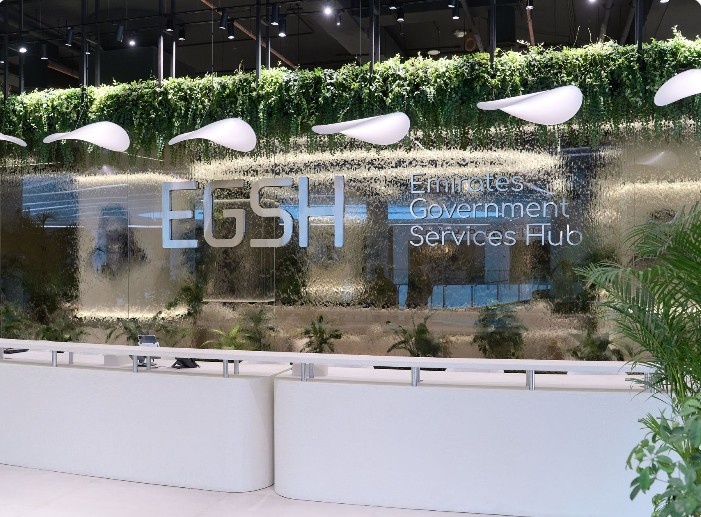
EGSH is an authorised Amer Centre and government services hub in Dubai, processing visa and immigration procedures directly through GDRFA and ICP channels.
EGSH handles employment visa applications, in-country visa status changes, medical fitness examinations, and Emirates ID services at a single location. For applicants transitioning from a free zone visa to a mainland visa — or converting a visit visa to free zone residency — EGSH manages the status amendment, medical testing, and Emirates ID registration end-to-end.
EGSH also assists with free zone company setup, meaning investors can complete both business registration and the initial visa process through one centre.
Location: Art of Living Mall, Al Barsha 2, Dubai. Open Monday to Saturday, 9:00 am to 5:00 pm.