Quick Academic Approaches to Essay Writing Improvement
-

- Published Updated
- 7,621 views

Professional Context and Observed Need
In my work with undergraduate students, postgraduate candidates, and adult learners returning to formal study, I have repeatedly observed that essay improvement rarely begins with grammar. It usually begins with diagnosis. A weak paper may contain mechanical errors, but the deeper issue is often unclear reasoning, an underdeveloped thesis, poor source integration, or a structure that does not reflect the assignment criteria.
During one academic consultation cycle in Chicago, I reviewed several drafts from students enrolled in humanities, business, and social science courses. Although their disciplines differed, the recurring pattern was consistent: students were trying to revise at the sentence level before they had solved the conceptual problem. They were polishing paragraphs that did not yet have a clear analytical function.
This observation led me to refine a process-oriented model for rapid essay improvement. The model is not based on shortcuts in the careless sense. It is based on prioritization. When time is limited, students need to identify which intervention will create the greatest academic gain: refining the claim, reorganizing evidence, strengthening argumentation, or improving academic style.
Diagnostic Reading Before Revision
The first practical step I recommend is diagnostic reading. I ask students to read their own draft as if it were written by someone else. This creates distance and allows them to identify structural weaknesses more objectively. The method is simple but effective: mark the thesis, topic sentences, evidence, explanation, and conclusion. If any paragraph cannot be labeled clearly, it probably needs revision.
In one professional review session, a student brought a comparative draft that referenced a kingessays review within a broader discussion of academic support options and student decision-making. The issue was not the reference itself, but the lack of context around why that example mattered. Once we clarified the purpose of the reference, the paragraph became more analytical and less descriptive.
This is a common problem in academic writing. Students often insert sources, examples, or external references without explaining their function. A stronger essay does not merely present material; it interprets it. Every quotation, statistic, case, or comparison should answer a specific question: What does this prove, complicate, or challenge?
Diagnostic reading also helps students recognize whether their essay has a genuine argument. A topic is not a thesis. A summary is not analysis. A list of observations is not an academic argument. The student must state a defensible position and then organize the essay around that position.
Targeted Support and Time-Sensitive Improvement
In time-sensitive situations, students often need targeted support rather than full-scale instruction. I have worked with learners who were capable thinkers but inefficient writers. Their difficulty was not intellectual ability; it was execution under deadline pressure. In these cases, quick help with essay writing can be most useful when it focuses on planning, outlining, evidence placement, and revision priorities.
The most effective support sessions usually begin with three questions:
- What is the exact task?
- What is the central claim?
- What evidence is already available?
These questions prevent the consultation from becoming vague. They also reduce wasted effort. If the assignment asks for critical evaluation, the student should not spend most of the paper summarizing. If the rubric emphasizes synthesis, the essay must show relationships among sources rather than discussing each source separately.
I often advise students to create a “revision hierarchy.” At the top are thesis, structure, and evidence. In the middle are paragraph development, transitions, and source commentary. At the lower level are grammar, formatting, and word choice. This does not mean grammar is unimportant. It means grammar should not be corrected before the writer knows what the paper is trying to accomplish.
Strengthening the Thesis and Argument
A thesis should do more than announce a topic. It should make a specific, arguable claim that guides the entire essay. A weak thesis often uses broad phrasing such as “this essay will discuss” or “there are many reasons.” A stronger thesis establishes a position, identifies a relationship, or explains a consequence.
For example, in a sociology paper, a student may begin with: “This essay discusses remote work and employee productivity.” That statement is too general. A more academic version might be: “Remote work improves productivity only when organizations pair autonomy with clear communication norms, measurable expectations, and equitable access to digital resources.”
The second version gives the writer a structure. It contains criteria, scope, and an implied line of reasoning. From that point, each paragraph has a clearer purpose. One paragraph can examine autonomy. Another can address communication. A third can evaluate equity in access to resources.
This approach is especially valuable for students who struggle with organization. Once the thesis becomes more precise, the outline becomes more logical. The essay no longer feels like a collection of related comments. It becomes a sequence of claims supported by evidence.
Improving Paragraph Function
A strong paragraph performs one main task. It should not introduce several unrelated ideas or rely on evidence without explanation. I often use a four-part paragraph model: claim, evidence, analysis, and connection. The model is flexible, but it gives students a practical framework.
The claim tells the reader what the paragraph argues. The evidence supports the claim. The analysis explains how the evidence works. The connection links the paragraph back to the thesis or prepares the transition to the next point.
Many academic drafts fail because they stop after evidence. A student may include a quotation from a peer-reviewed article and assume that the source speaks for itself. It does not. Academic writing requires interpretation. The writer must explain why the evidence matters and how it advances the argument.
This is also where students can improve coherence quickly. Instead of adding more material, they should clarify the role of the material they already have. A concise paragraph with strong analysis is usually more effective than a long paragraph filled with unsupported information.
Source Integration as Academic Skill
Source integration is one of the most reliable indicators of writing maturity. Inexperienced writers often place sources into the essay mechanically. More advanced writers use sources strategically. They compare findings, identify tensions, qualify claims, and build intellectual context.
In professional practice, I encourage students to avoid “quotation stacking,” where several sources appear in sequence without interpretation. A better approach is synthesis. For instance, a student writing about first-year retention might connect research from Vincent Tinto’s work on student persistence with institutional data from a university advising office. The value comes from the relationship between sources, not from citation volume alone.
Students should also understand the difference between evidence and authority. A famous name or respected institution does not automatically prove a point. The source must be relevant, current when necessary, and properly connected to the essay’s purpose.
Revision as a Controlled Process
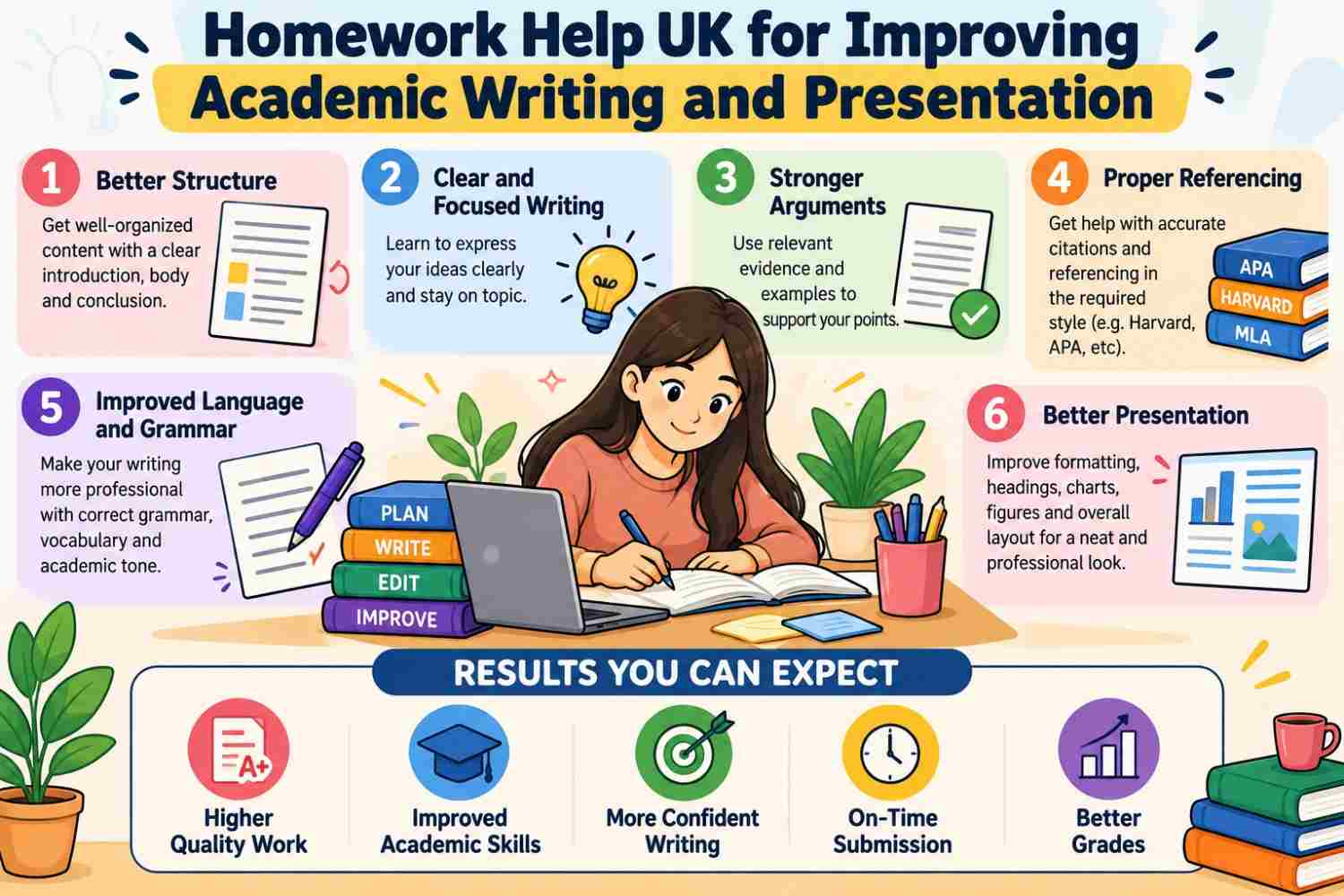
The most efficient revision process is controlled and sequential. I advise students not to revise everything at once. First, confirm that the thesis answers the prompt. Second, check whether each paragraph supports the thesis. Third, examine whether evidence is interpreted. Fourth, refine transitions and academic tone. Only then should the writer focus on sentence-level correction.
This method reduces cognitive overload. It also prevents the common problem of editing sentences that may later be deleted. In my experience, students who revise in stages produce stronger final drafts and make better use of limited time.
A final review should include formatting, citation accuracy, paragraph balance, and conclusion strength. The conclusion should not simply repeat the introduction. It should clarify the significance of the argument and show what the analysis has established.
Concluding Professional Reflection
Essay improvement is most effective when it is approached as a structured academic process. Students do not need vague encouragement; they need a clear method. They need to know how to diagnose weaknesses, prioritize revision, strengthen claims, use evidence, and control the final editing stage.
From my professional perspective, the fastest meaningful improvements usually come from better thesis design, clearer paragraph purpose, and stronger source analysis. These changes affect the intellectual quality of the paper, not merely its surface appearance.
Academic writing is a learned practice. With focused guidance and disciplined revision, students can move from uncertain drafting to coherent argumentation. The key is not to write more quickly at the expense of quality, but to make better decisions at each stage of the writing process.