Complete Guide to Business Document Embassy Attestation: Steps, Checklist, and Tips
-

- March 07th, 2026
- 168 views

Get a free topical map and start building content authority today.
Business Document Embassy Attestation: What It Is and Who Needs It
Business document embassy attestation is the formal verification that a commercial or corporate document is genuine and suitable for use in a foreign country. Detected intent: Informational. This guide explains why businesses need embassy attestation, how the process works, and practical steps to complete it efficiently.
- Embassy attestation verifies corporate documents for use abroad; it differs from an apostille and from simple notarization.
- Commonly attested documents: commercial invoices, certificates of origin, power of attorney, board resolutions, and certificates of incorporation.
- Use the 5-step Embassy Attestation Checklist to prepare documents, get local notarization, ministry/legalization, and final consular endorsement.
- Allow 1–6 weeks depending on country and whether a third-party service is used.
When and Why Businesses Need Embassy Attestation
Embassy attestation is required when a foreign authority (customs, a government agency, or a business counterparty) needs assurance that a document issued in one country is authentic in another. Examples include export/import documentation, establishing a branch office, corporate compliance filings, and foreign contracting or procurement.
How Embassy Attestation Works: Key Steps and Terms
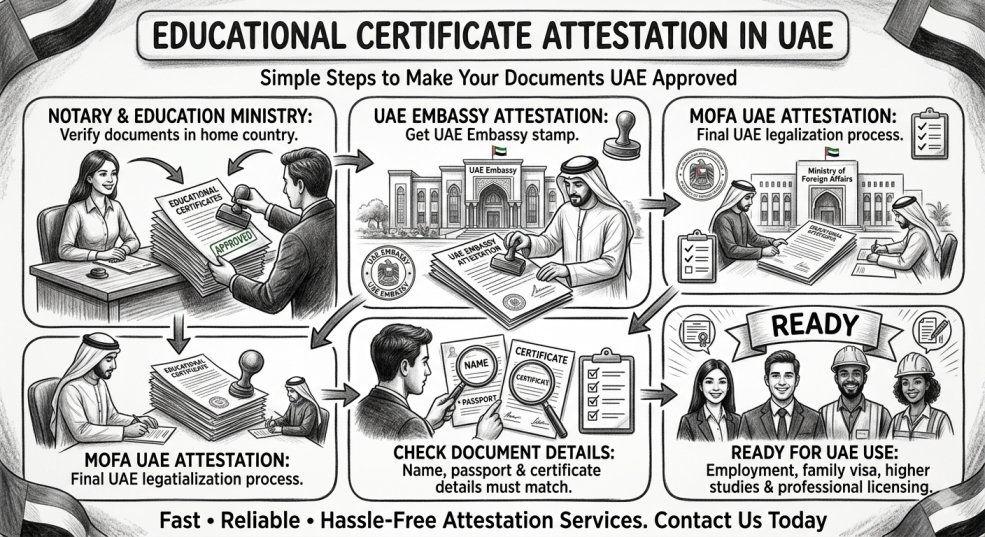
Understanding the document legalization process is essential. Steps typically include notarization, ministry or department-level authentication (often the Ministry of Foreign Affairs), and final consular legalization at the destination country’s embassy or consulate. This layered process ensures traceability from the original issuer to the foreign authority.
Apostille vs Attestation
An apostille is a simplified international certification under the Hague Convention. If the destination country is a Hague member, an apostille often replaces embassy attestation. For countries not in the Hague system, embassy attestation remains necessary.
How to Get Embassy Attestation — Step-by-Step
The following procedural checklist covers typical actions. Timelines and exact offices vary by country.
5-step Embassy Attestation Checklist (named framework)
Use the "5-step Embassy Attestation Checklist" framework to prepare and track progress:
- Document Preparation: Obtain original business documents and certified copies; ensure corporate seals and signatures are present.
- Local Notarization: Get documents notarized by a licensed notary public where the company is registered.
- State or Regional Authentication: If required, secure authentication from the relevant state or regional authority (secretary of state or equivalent).
- Ministry Legalization: Submit documents to the national Ministry of Foreign Affairs or equivalent for authentication.
- Embassy/Consulate Legalization: Present the authenticated documents to the destination country’s embassy/consulate for final attestation.
Document checklist and common paperwork
Typical business documents requiring attestation include: certificate of incorporation, board resolutions, power of attorney, invoices, packing lists, bills of lading, and certificates of origin. Originals and multiple copies are commonly required.
Real-world Example
Scenario: A manufacturing company in Germany needs to sell machinery to a client in the United Arab Emirates. The UAE importer requires an attested commercial invoice, certificate of origin, and power of attorney for customs clearance. The German company follows the 5-step Embassy Attestation Checklist: obtain notarized copies, get state-level endorsement, secure federal-level legalization from the Ministry of Foreign Affairs, and then get the UAE Embassy in Berlin to consularize the documents. The attested documents clear UAE customs and permit payment processing under the buyer’s customs registration.
Practical Tips for Faster Attestation
Actionable tips to reduce delays and cost:
- Start early: Embassy windows and ministry offices have processing schedules and holidays that add days or weeks.
- Confirm exact requirements: Contact the destination embassy or consult its website for document lists, fees, and required copies.
- Use certified translators where necessary: Some embassies require translations by approved translators; attach originals and translations together.
- Prepare spare copies: Consulates often keep a copy and return originals; having extras prevents repeat trips.
- Consider an accredited legalization service for bulk or frequent attestations to save internal time.
Costs, Timelines, and Trade-offs
Costs vary by country and document count—typical charges include notarization fees, state MFA fees, and consular fees. Timelines can be a few days to several weeks. Trade-offs involve speed versus control: handling attestation internally keeps direct oversight but consumes staff time; third-party services are faster but add fees and require trusting a vendor.
Common mistakes to avoid
- Assuming an apostille is acceptable for a non-Hague country—verify the destination country's status.
- Submitting unsigned or unsealed documents—never skip notarization and corporate seal if required.
- Miscalculating translation needs—missing certified translations cause rejections and delays.
- Ignoring embassy-specific formats for power of attorney or corporate resolutions—follow samples if provided.
Core cluster questions
- How long does embassy attestation take for commercial documents?
- Which business documents usually need embassy or consular legalization?
- How does an apostille differ from embassy attestation?
- What are the translation and notarization requirements for cross-border corporate filings?
- When is it worth using a legalization or attestation service for exports?
Legal and authoritative references
For official authentication guidance used by many organizations, see the U.S. Department of State's document authentication overview: travel.state.gov — Authenticate Your Documents. This resource explains apostilles, authentication, and the general legalization process used as a model by many foreign affairs ministries.
FAQ
What is business document embassy attestation?
Business document embassy attestation is the consular legalization of corporate or commercial documents so they are recognized as authentic by a foreign government. The process usually follows notarization and ministry-level authentication.
How long does the document legalization process typically take?
Expect 1–6 weeks depending on jurisdiction, whether the destination country is a Hague Convention member, and whether a third-party service handles submissions. Some consulates offer expedited lanes for additional fees.
Do all countries accept an apostille instead of embassy attestation?
No. Apostilles are valid only between countries that are parties to the Hague Apostille Convention. For non-Hague countries, embassy or consulate legalization is usually required.
Can a notarized document be used directly overseas without further authentication?
Rarely. Most foreign authorities require additional authentication by state or federal bodies and consular legalization to accept a notarized business document.
Are there reliable ways to speed up embassy attestation for urgent contracts?
Use courier and consular appointment services, confirm exact submission requirements in advance, and consider accredited legalization providers who specialize in rush processing. Be aware that expedited consular review may still be limited by ministry processing times.
How much does embassy attestation typically cost?
Costs vary widely: notarization fees are modest, ministry fees moderate, and consular fees can range from low to significant per document. Third-party legalization services add handling fees. Always request a fee schedule from the embassy or a trusted service before submission.
Which common mistakes cause rejection of attestation applications?
Typical reasons for rejection include missing notarization, incorrect translations, wrong number of copies, unsigned documents, and failure to follow embassy-specific templates for powers of attorney or certificates.
Is it better to use an attestation service or handle it in-house?
For infrequent or low-volume needs, in-house handling can be cost-effective. For high-volume, complex, or time-sensitive cases, an accredited legalization service reduces administrative burden and lowers risk of procedural errors, at a predictable cost.