From Research to Practice: Building Evidence-Informed HR Capability
-

- Published Updated
- 8,510 views
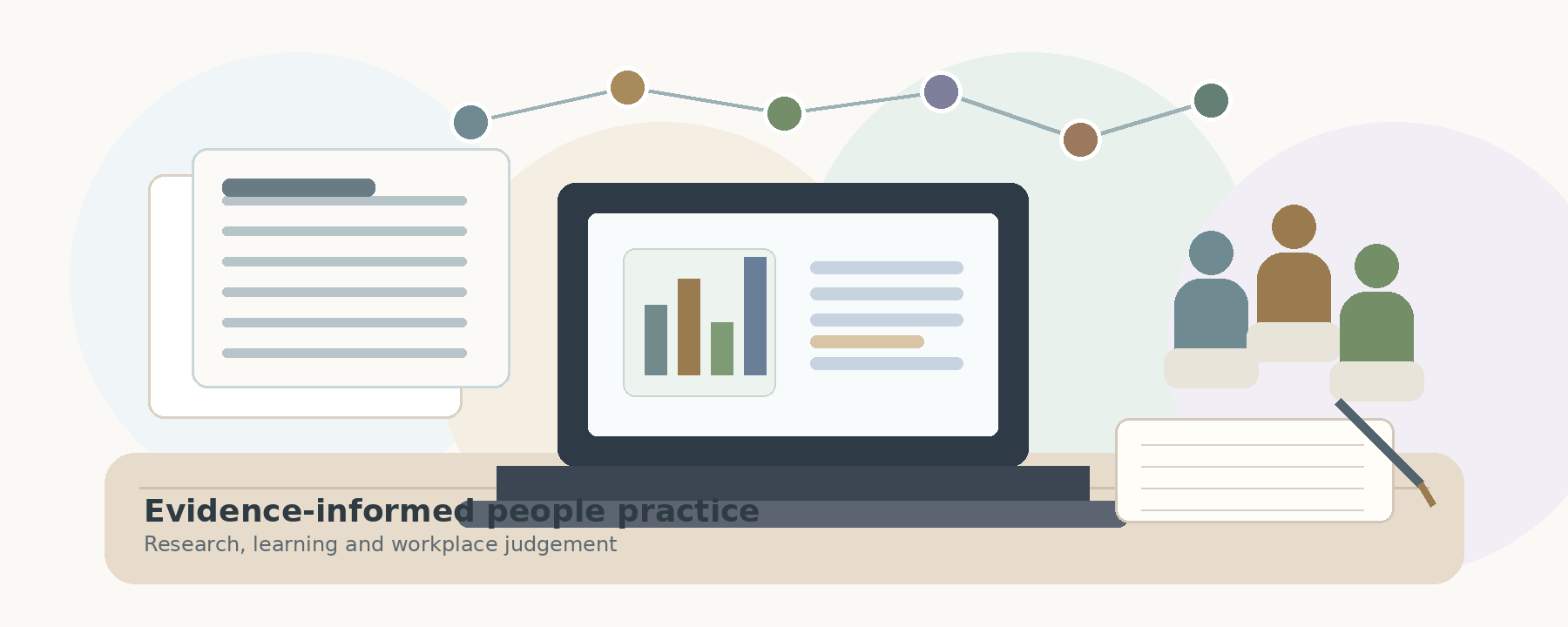
Human resources has always drawn on more than instinct. Good people decisions rely on a mix of academic research, employment law, organisational context, ethical judgement and careful listening. For students, researchers and practitioners using research platforms, HR is a useful example of how scholarly insight becomes practical workplace action.
The challenge is not a shortage of research. It is knowing how to translate research into decisions that help managers, employees and organisations make fairer, more consistent choices. That is where evidence-informed HR capability becomes valuable.
Why HR needs evidence as well as experience
Experience matters in HR, but experience alone can be narrow. A manager may have seen one approach work in one team, yet that does not mean it will work across a different workforce, culture or legal setting. Evidence helps people professionals test assumptions before turning them into policy.
Research can challenge familiar habits. It can also bring structure to sensitive decisions around recruitment, performance, absence, wellbeing, employee relations and learning. Instead of asking, “What do we usually do?”, evidence-informed HR asks, “What do we know, what is the quality of that evidence, and how does it apply here?”
Turning research into workplace judgement
The best HR professionals do not simply quote research papers or copy another employer’s policy. They interpret evidence in context. A study on motivation, for example, may be useful when reviewing reward or job design, but it still needs to be tested against the organisation’s size, roles, budget and workforce expectations.
 A practical approach starts with a clear question. Is the organisation trying to reduce early turnover, improve line manager confidence, support hybrid teams or build a fairer promotion process? Once the question is specific, HR can compare academic evidence, internal people data, employee feedback and legal guidance before recommending action.
This is where research literacy becomes a workplace skill. It helps HR teams distinguish between strong evidence, fashionable opinion and anecdote. It also supports better conversations with senior leaders, because recommendations can be explained through evidence, not personal preference alone.
Building a structured learning pathway
What evidence-informed HR looks like in daily work
Evidence-informed HR is not limited to major strategy projects. It shows up in everyday choices. A recruiter may review selection methods to reduce bias. A learning specialist may use performance data before designing training. An HR adviser may look for patterns in absence data before assuming a conduct issue. A people manager may use feedback and research to improve one-to-one meetings.
The common thread is discipline. HR teams gather information, consider its reliability, test it against the workplace context, then monitor the result. This approach makes people decisions easier to defend and easier to improve.
Skills that make research useful in HR
Several skills help turn research into better practice. Critical reading is one of them. HR professionals need to ask who produced the evidence, how recent it is, what method was used and whether the findings apply to their own setting. Data confidence also matters, as many people decisions now involve survey results, retention figures, absence patterns and performance indicators.
Communication is just as important. Evidence has little effect if it cannot be explained clearly to managers and employees. Strong HR practice involves translating complex information into practical choices, without losing the nuance that makes the evidence useful.
A stronger bridge between scholarship and practice
The link between academic research and HR practice is becoming more important as workplaces face complex questions about skills, fairness, productivity and organisational change. Research can help people professionals avoid shallow assumptions, but only when they know how to apply it with care.
For learners and practitioners, the goal should not be to memorise theory in isolation. It should be to build habits of enquiry, reflection and evidence-based decision-making. That is how HR becomes more than an administrative function. It becomes a profession capable of improving work through informed, ethical and practical judgement.