Is Extreme Sweating a Kind of Disorder in Men? Causes, Symptoms, and Treatment Options
-

- September 06th, 2026
- 5,207 views
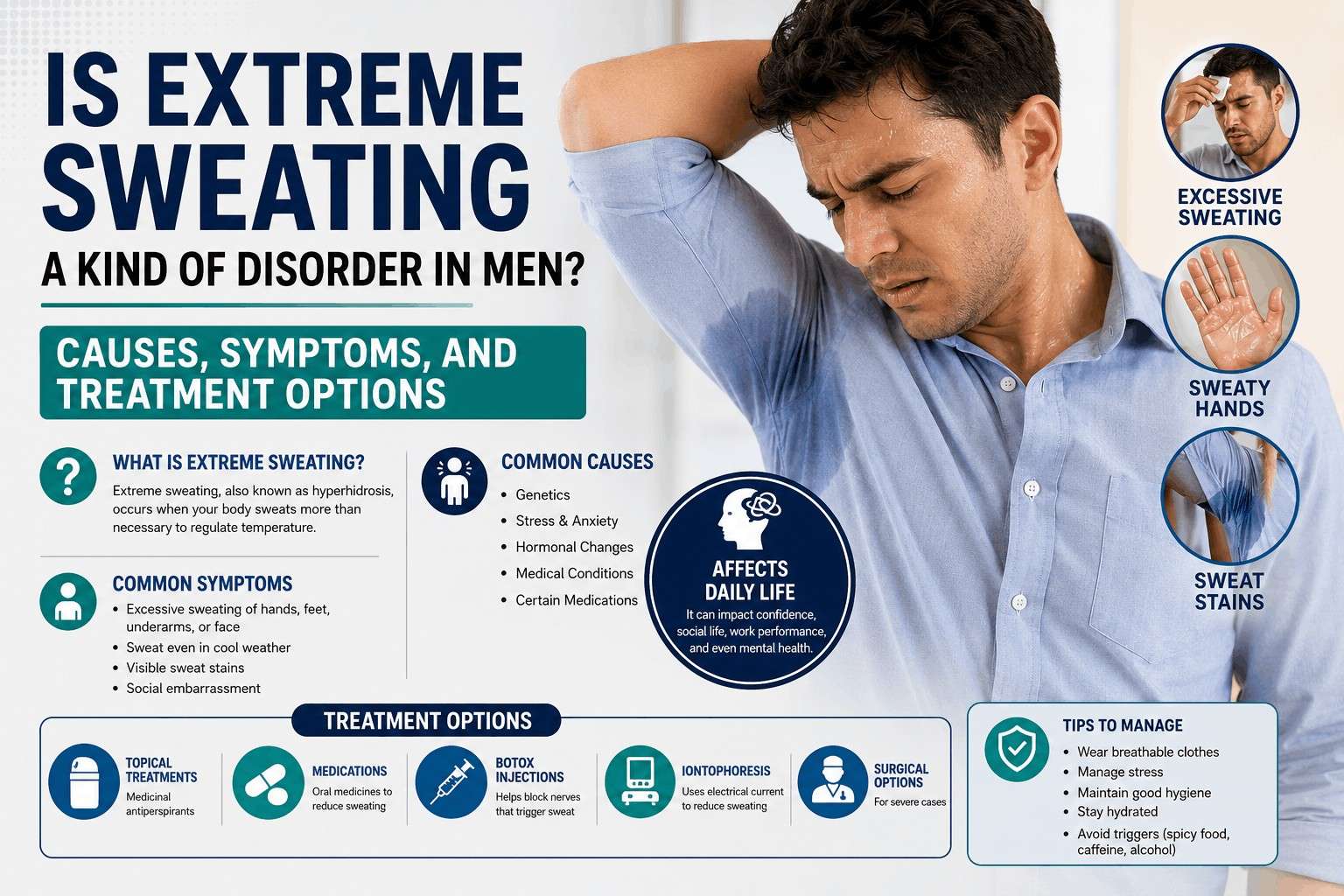
Sweating is a natural body function that helps regulate temperature and prevent overheating. However, some men experience excessive sweating that goes beyond normal physical activity or hot weather. When sweating becomes excessive and interferes with daily life, it may indicate an underlying medical condition known as hyperhidrosis.
Many men wonder whether extreme sweating is a disorder or simply a normal bodily response. Understanding the causes, symptoms, and available treatment options can help determine when excessive sweating requires medical attention.
What Is Extreme Sweating?
Extreme sweating refers to perspiration that occurs more frequently or more heavily than necessary for temperature regulation. It can affect various parts of the body, including:
- Underarms
- Palms of the hands
- Soles of the feet
- Face and scalp
- Chest and back
When sweating becomes excessive and persistent, it may be classified as a sweating disorder.
Is Extreme Sweating a Disorder in Men?
Yes, extreme sweating can be a medical disorder known as hyperhidrosis. This condition causes the sweat glands to become overactive, leading to excessive perspiration even when the body does not need cooling.
Hyperhidrosis affects millions of people worldwide and can significantly impact confidence, work performance, social interactions, and overall quality of life.
Can Excessive Sweating Be Related to Erectile Dysfunction (ED)?
In some cases, excessive sweating and erectile dysfunction (ED) may be linked through underlying health conditions. Disorders such as diabetes, obesity, hormonal imbalances, anxiety, and cardiovascular disease can contribute to both excessive sweating and difficulties achieving or maintaining an erection. Stress and anxiety, in particular, can trigger sweating episodes while also negatively affecting sexual performance.
Looking for a trusted ED treatment? Vidalista 20mg pillhelp improve erectile function and sexual confidence. Always use as directed by your healthcare provider and purchase from a reputable pharmacy.
Types of Hyperhidrosis
Primary Focal Hyperhidrosis
This is the most common type of excessive sweating disorder. It usually affects specific body areas such as the hands, feet, underarms, or face.
Characteristics include:
- Begins during childhood or adolescence
- Often runs in families
- Occurs without an underlying medical condition
Secondary Generalized Hyperhidrosis
This type occurs as a result of another medical condition or medication.
Possible causes include:
- Diabetes
- Thyroid disorders
- Obesity
- Heart disease
- Anxiety disorders
- Infections
- Certain medications
Common Causes of Extreme Sweating in Men
Several factors may contribute to excessive sweating:
Hormonal Changes
Hormonal imbalances can stimulate sweat gland activity and increase perspiration.
Stress and Anxiety
Emotional stress can activate the body's "fight-or-flight" response, leading to increased sweating.
Obesity
Excess body weight may increase heat production and sweating.
Diabetes
Blood sugar fluctuations can sometimes cause abnormal sweating patterns.
Overactive Thyroid
Hyperthyroidism can speed up metabolism and increase sweat production.
Certain Medications
Some antidepressants, pain medications, and blood pressure drugs may trigger excessive sweating as a side effect.
Symptoms of Excessive Sweating
Men with hyperhidrosis may experience:
- Visible sweat stains on clothing
- Constant damp hands or feet
- Excessive facial sweating
- Frequent need to change clothes
- Sweating during cool temperatures
- Social embarrassment or anxiety
Symptoms may occur daily and continue for months or years.
How Extreme Sweating Affects Daily Life
Excessive sweating can impact many aspects of a man's personal and professional life. Frequent sweating may make handshakes uncomfortable, affect workplace confidence, and create challenges during social interactions. Many men become self-conscious about visible sweat stains or body odor, which can lead to embarrassment and avoidance of social situations.
Persistent moisture can also cause physical discomfort, including skin irritation, fungal infections, and chafing. Beyond the physical effects, chronic sweating may contribute to stress, anxiety, and reduced self-esteem. In some cases, the emotional burden associated with excessive sweating can affect intimate relationships and sexual confidence. Men who feel embarrassed or anxious about their condition may experience performance anxiety, which can contribute to erectile dysfunction (ED).
For men experiencing ED alongside confidence issues caused by excessive sweating, medications such as Cenforce 100mg may be recommended by a healthcare professional. Cenforce 100 contains Sildenafil Citrate, which helps increase blood flow to the penis, supporting stronger and longer-lasting erections during sexual activity. While Cenforce 100mg does not treat excessive sweating directly, it may help improve sexual performance and restore confidence in men affected by erectile dysfunction. Addressing excessive sweating and its underlying causes, along with appropriate ED treatment, may help improve both overall well-being and sexual health.
When Should You See a Doctor?
Consult a healthcare professional if:
- Sweating suddenly increases
- Night sweats occur regularly
- Sweating interferes with daily activities
- Symptoms are accompanied by weight loss, chest pain, or fever
- Over-the-counter treatments are ineffective
Early diagnosis can help identify underlying causes and improve treatment outcomes.
Treatment Options for Excessive Sweating
Prescription Antiperspirants
Strong antiperspirants may help reduce sweat production.
Oral Medications
Doctors may prescribe medications that block signals responsible for activating sweat glands.
Botox Injections
Botulinum toxin injections can temporarily reduce sweating in targeted areas.
Iontophoresis
This treatment uses mild electrical currents to reduce sweating in the hands and feet.
Lifestyle Changes
Helpful strategies include:
- Wearing breathable clothing
- Maintaining a healthy weight
- Managing stress levels
- Avoiding spicy foods and excessive caffeine
Surgical Options
In severe cases, surgical procedures may be considered when other treatments fail.
Can Excessive Sweating Be Prevented?
While not all cases can be prevented, certain habits may help reduce symptoms:
- Stay hydrated
- Practice stress management techniques
- Maintain good hygiene
- Use clinical-strength antiperspirants
- Avoid known sweating triggers
Frequently Asked Questions
Is sweating a sign of good health?
Normal sweating is a healthy bodily function. However, excessive sweating may indicate an underlying medical issue.
Can anxiety cause excessive sweating?
Yes. Anxiety and stress are common triggers for increased sweat production.
Is hyperhidrosis dangerous?
Hyperhidrosis itself is usually not dangerous, but it can affect quality of life and may sometimes indicate an underlying health condition.
Does excessive sweating mean high testosterone?
Not necessarily. While hormones can influence sweating, excessive sweating alone does not indicate high testosterone levels.
Conclusion
Extreme sweating in men can indeed be a disorder known as hyperhidrosis. While sweating is a normal body function, excessive perspiration that disrupts daily life may require medical evaluation. Understanding the causes, symptoms, and available treatment options can help men manage excessive sweating effectively and improve their confidence and quality of life. If sweating becomes persistent or severe, consulting a healthcare professional is the best step toward proper diagnosis and treatment.