How Exhibition Stand Designers and Booth Builders Work in Europe: A Complete Guide
-
- Published Updated
- 79 views
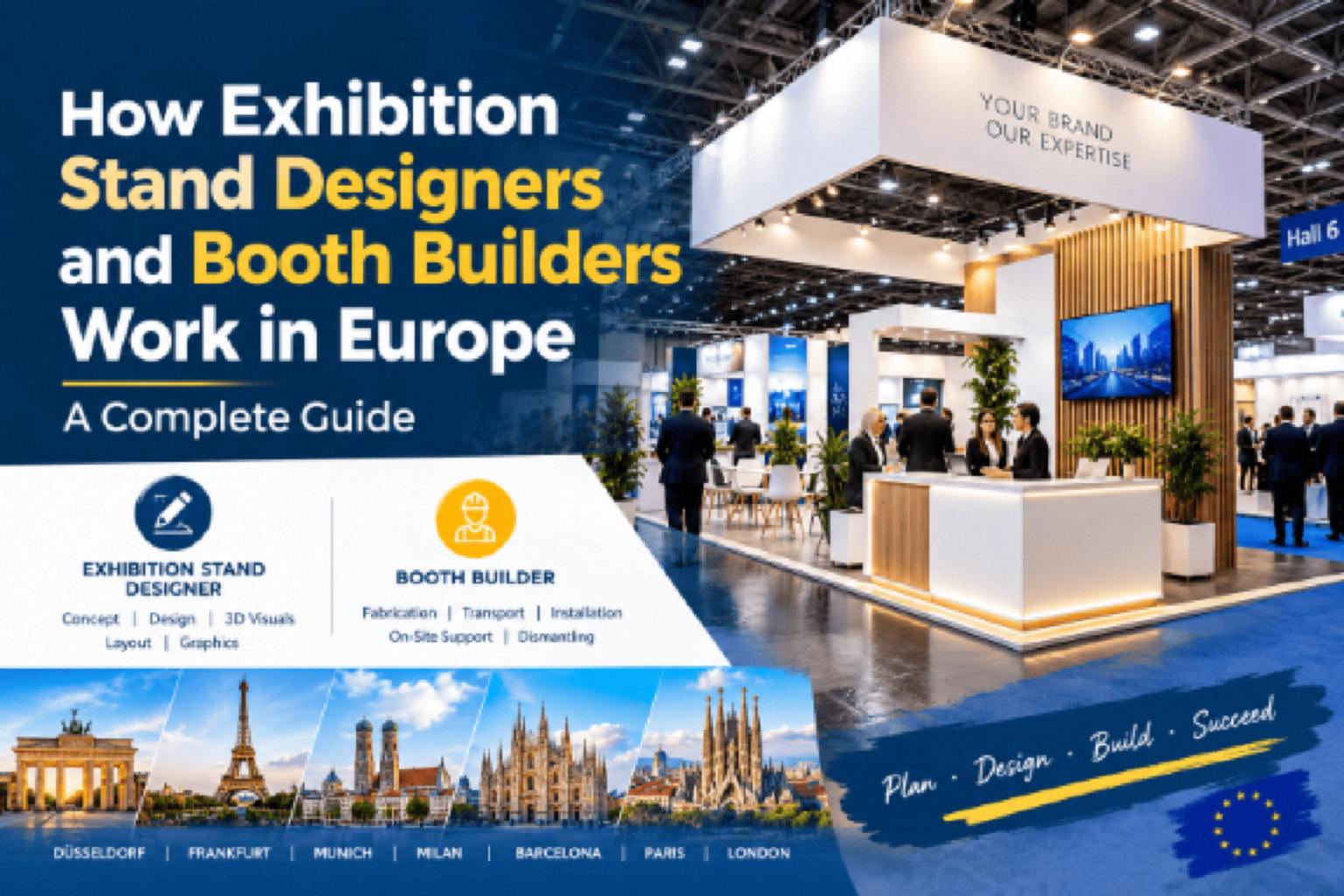
Europe hosts some of the biggest trade fairs in the world, from Düsseldorf, Frankfurt and Munich to Milan, Barcelona, Paris and London. For an exhibitor, your stand is the single most visible expression of your brand at these shows. Behind every great stand are two groups of professionals: the exhibition stand designer who imagines it and the booth builder who makes it real. This guide explains how both work, how they collaborate, and what you should know before hiring them for a European show.
Exhibition Stand Designer vs. Booth Builder: What Is the Difference?
The two terms are often used as if they mean the same thing, but they describe different roles. In practice, many companies offer both under one roof, which is often called a "design and build" service.
| Role | Main Focus | Typical Output |
|---|---|---|
| Exhibition stand designer | Concept, brand expression, visitor flow, space planning | Mood boards, 3D renders, floor plans, material and lighting proposals, technical drawings |
| Booth builder (stand contractor) | Production, logistics, installation, compliance, dismantling | Fabricated walls, flooring, structures, electrics, graphics, on-site assembly and teardown |
A designer answers the question "What should the stand look and feel like, and how will visitors move through it?" A builder answers "How do we produce it safely, on time and within the venue's rules?" The best results come when both talk to each other from day one.
How an Exhibition Stand Designer Works
1. Understanding the Brief
Every project starts with questions. What are your goals at the show: lead generation, product launch, brand awareness or meeting existing clients? Who is your target audience? What is your stand size and position (row, corner, peninsula or island)? What is your budget? A good designer will also ask what you want visitors to do, see and remember after leaving.
2. Researching the Show and Venue
Each European fair has its own organizer rules, hall layouts and technical guidelines. A designer who knows the venue will plan around maximum stand heights, rigging points, floor load limits and sightlines from the aisles. Experience at a specific venue, such as Messe Düsseldorf or Fira Barcelona, saves time and avoids costly redesigns.
3. Concept Development
Next comes the creative stage. The designer translates your brand identity into three-dimensional space using colour, form, materials, lighting and graphics. Usually you receive one to three concept directions with sketches or 3D visuals so you can see the stand before a single panel is cut.
4. Space Planning and Visitor Flow
A beautiful stand that confuses visitors does not sell. Designers plan zones for product display, demonstrations, meeting rooms, hospitality, storage and reception. They think about how people approach from the aisle, where they naturally pause, and how staff can engage them without blocking the way.
5. Technical Drawings and Specifications
Once the concept is approved, the designer prepares detailed drawings: elevations, floor plans, electrical layouts, lighting plans and graphic specifications. These documents are what the booth builder uses to produce the stand and what the organizer often requires for approval.
How a Booth Builder Works
1. Costing and Production Planning
The builder reviews the design and prepares a precise quote covering materials, fabrication, graphics, furniture, AV equipment, transport, installation, show services and dismantling. At this stage, builders often suggest practical changes that keep the look while reducing cost or build time.
2. Fabrication in the Workshop
Most of the work happens before the show opens. Carpenters, metal workers, painters and graphic printers produce wall panels, counters, truss structures, signage and custom features. Pre-building and test-fitting in the workshop reduces risk during the tight build-up period at the venue.
3. Logistics and Transport
Stands are shipped as flat-packed or pre-assembled components. For pan-European events, builders plan trucking routes, customs paperwork where needed (for example, for shipments from the UK or other non-EU countries), delivery windows and unloading slots at the exhibition hall. Late arrivals can mean lost build time, so scheduling is critical.
4. On-Site Installation
Build-up days are usually short, often only two to four days depending on stand size and show rules. The builder's site team lays flooring, erects structures, runs electrics, installs lighting and graphics, places furniture and finishes the stand. A site supervisor coordinates with the organizer, venue technicians and other contractors.
5. Show-Day Support
Good builders do not disappear once the doors open. A technician on site can fix a flickering light, replace a damaged panel or handle cleaning and last-minute requests so your team can focus on visitors.
6. Dismantling and Storage
After the show, the stand is taken down, packed and either stored for reuse, shipped to your next event or recycled. Planning teardown in advance is also an important part of controlling total cost.
Why Europe Is a Special Market for Stand Design
Exhibiting in Europe comes with details that exhibitors from other regions sometimes underestimate.
- Strict venue and organizer regulations. German, Italian, Spanish and French venues each publish technical guidelines covering stand height, double-deck structures, fire safety, electrical installation and approved contractors. Plans often need to be submitted and approved in advance.
- Fire safety and materials. Many venues require flame-retardant materials and certified products. Builders familiar with local standards avoid last-minute material changes.
- Sustainability expectations. European visitors, organizers and corporate buyers increasingly care about environmental impact. Reusable modular systems, recyclable materials, LED lighting and reduced waste are now a competitive advantage, not just a nice extra.
- Multilingual, multicultural audiences. Stand graphics and messaging often need to work for visitors from many countries. Clear visuals, simple headlines and English as a common language usually work best, with local language touches where relevant.
- Official contractors and mandatory services. Some shows require the use of the organizer's official services for electricity, water, rigging or cleaning. Experienced builders know how to order these on time.
- Different show cultures. A technical industrial fair in Germany, a design-led event in Milan and a consumer show in London each reward different stand styles. Local knowledge helps a design land well with the right audience.
Custom Stands vs. Modular Stands
One of the first decisions is the stand type.
Custom-Built Stands
Fully bespoke designs offer maximum brand impact, unique shapes and freedom with materials. They suit larger spaces, product launches and companies with a strong visual identity. The trade-off is higher cost and a longer lead time.
Modular and Reusable Stands
Modular systems use standard components that can be reconfigured for different stand sizes and shows. They reduce cost over multiple events, ease transport and lower environmental impact. Many exhibitors who attend several European shows each year choose a modular base with custom graphics and a few bespoke features.
Typical Timeline for a European Trade Show Stand
| Time Before Show | What Happens |
|---|---|
| 6 to 9 months | Brief, shortlist of design and build partners, early budget discussion |
| 4 to 6 months | Concept design and 3D visuals, decision on approach |
| 3 to 4 months | Technical drawings, organizer approval, final quote |
| 2 to 3 months | Production starts, graphics and furniture ordered |
| 2 to 4 weeks | Pre-assembly checks, transport booking, show services confirmed |
| Build-up days | On-site installation and final finishing |
| Show days | Technical support and daily maintenance |
| After the show | Dismantling, storage, recycling or shipping to the next event |
Timelines vary by show and stand size, but starting earlier almost always gives better design, more options and better pricing.
How to Choose the Right Stand Designer or Booth Builder in Europe
- Check experience at your target venue. Ask which fairs and halls they have worked in recently.
- Review their portfolio. Look for projects of similar size and industry, not just the most spectacular photos.
- Ask about design and build integration. A single team handling both reduces miscommunication and finger-pointing if something goes wrong.
- Request a clear, itemised quote. Make sure it covers transport, show services, graphics, storage and dismantling so there are no surprises.
- Ask about sustainability. Reusable structures, recycled materials and waste management policies show a forward-looking partner.
- Confirm on-site support. Find out who will be at the venue during build-up and while the show is open.
- Talk to references. Past clients can tell you how the company handled deadlines and problems.
Common Mistakes Exhibitors Make
- Starting the stand project too close to the show date.
- Choosing a design without checking organizer regulations first.
- Overcrowding the stand with products and text instead of one clear message.
- Ignoring lighting, which has a huge effect on atmosphere and product visibility.
- Forgetting storage, meeting space and charging points for staff.
- Treating the stand as a one-off cost instead of a reusable asset.
Final Thoughts
An exhibition stand designer shapes the idea, and a booth builder turns it into a safe, functional and impressive reality. When the two work as one team, you get a stand that attracts the right visitors, supports your sales conversations and respects the technical rules of the European venue. Whether you choose a bespoke build or a reusable modular system, the key is to start early, share a clear brief and work with partners who understand both your brand and the European trade show landscape.
Planning to exhibit in Europe? Share your show name, stand size and goals with a specialist stand design and build partner to get a tailored concept and a transparent quote well before build-up begins.