Practical Bathroom Renovation Guide for Bellambi & Berkeley: Checklist, Tips, and Local Rules
-

- February 28th, 2026
- 299 views

Get a free topical map and start building content authority today.
Planning a bathroom renovation in Bellambi or Berkeley requires practical decisions about layout, waterproofing, approvals and trades. This guide covers what to expect, how to avoid common mistakes, and a usable checklist for a smooth bathroom renovation Bellambi homeowners and Berkeley neighbors can rely on.
- Start with a realistic budget and the "BATH" checklist (Budget, Access & Layout, Tiles & Waterproofing, Heating & Ventilation).
- Confirm waterproofing meets AS 3740 guidance and check local council approval requirements.
- Hire licensed trades for plumbing and waterproofing; document warranties and permits.
Detected intent: Informational
Why local details matter for bathroom renovation Bellambi and Berkeley
Coastal suburbs like Bellambi and Berkeley introduce specific risks and opportunities: salt air can accelerate corrosion of metal fixtures, older homes may hide outdated plumbing or non-compliant waterproofing, and council rules can vary for plumbing and drainage changes. Include local conditions in planning so materials, ventilation and drainage are selected for longevity and compliance.
BATH checklist: a named framework to plan a bathroom renovation
Use the BATH checklist as a project framework. It is concise, easy to apply at planning and quote stages, and covers the most frequent renovation failures.
- Budget — target total cost, contingency (15%–25%), and priority features.
- Access & Layout — consider door swing, plumbing stack location, and access for maintenance.
- Tiles & Waterproofing — specify tile type, slip rating, and waterproofing strategy per AS 3740 guidance.
- Heating & Ventilation — ensure adequate extraction, consider underfloor heating or heated towel rails for condensation control.
Key technical considerations and standards
Waterproofing and Australian guidance
Waterproofing wet areas is the single most important technical requirement. Australian guidance such as AS 3740 (Waterproofing of domestic wet areas) describes best practices for membranes and fall to drains. For practical homeowner guidance and permit requirements consult local state resources and consumer protection pages for renovating homes in NSW — see this official NSW Fair Trading renovation guide for approvals and licensed trades (NSW Fair Trading).
Plumbing, drainage and council approvals
Changing sanitary locations or altering the stormwater/drainage may trigger council approval or require a licensed plumber to submit compliance documentation. Check the local council website for Bellambi (Shellharbour area) or Shellharbour/Canterbury-Bankstown (for Berkeley specifics) about development controls and allowable works.
Practical project steps and timeframe
Typical residential bathroom renovation sequence:
- Define scope and budget; choose fixtures and finishes.
- Engage licensed plumber/electrician; order long-lead items (vanity, shower screens).
- Demolition and rough-in plumbing; install waterproofing membrane to standard.
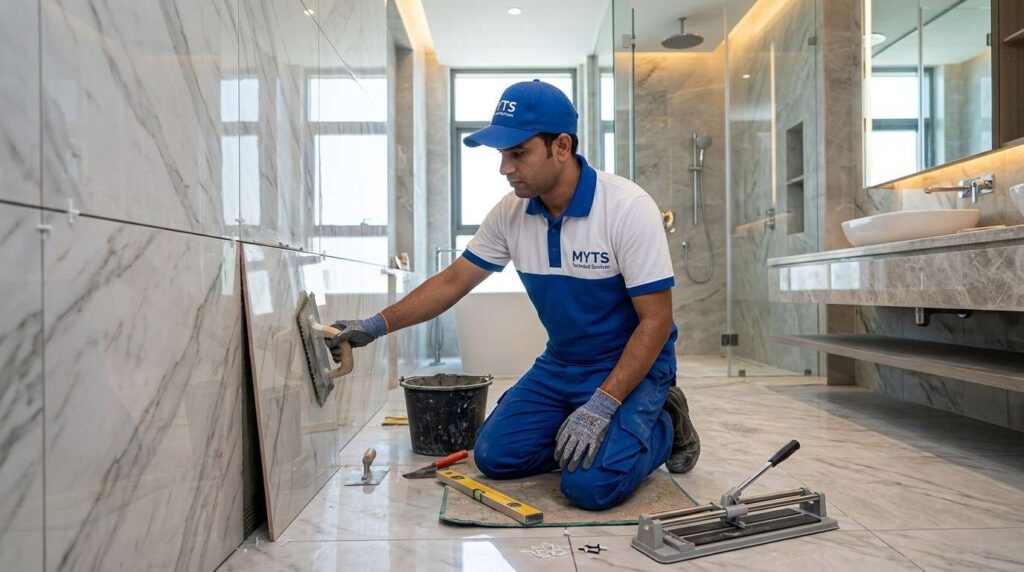
- Tiling, fixtures fit-out, glazing, final plumbing, and commissioning.
Allow 4–8 weeks for a full gut-and-replace bathroom, longer if approvals are required or custom items are ordered.
Common mistakes and trade-offs
Common mistakes
- Skipping waterproofing documentation — voids guarantees and risks leaks.
- Using low-quality grout or incorrect tile adhesive near external walls exposed to salt air.
- Underestimating ventilation needs — leads to mould and fast material degradation.
- Not planning storage and clearances — results in a cramped, low-functioning space.
Trade-offs to consider
Budget vs longevity: choosing cheaper fittings saves initially but can increase maintenance in corrosive coastal environments. Floor-level showers improve accessibility but cost more to waterproof correctly. Custom joinery looks premium but has longer lead times and higher replacement cost.
Practical tips for Bellambi and Berkeley renovations
- Prioritise corrosion-resistant fixtures (stainless finishes) and sealants designed for coastal exposure.
- Document waterproofing and plumbing certificates; keep copies for resale and insurance.
- Choose anti-slip tiles with suitable R-rating for wet areas and match grout to local conditions.
- Plan ventilation to provide at least the minimum extraction rate required by the Building Code of Australia (BCA/NCC) for bathrooms.
Short real-world example
Scenario: A mid-century fibro cottage in Bellambi needed a compact but modern bathroom. The homeowner retained the existing plumbing stack to reduce cost, prioritised a tiled walk-in shower and mechanical extraction. Waterproofing was completed by a licensed contractor with certification kept on file. Choosing a smaller integrated vanity and wall-hung toilet created storage space without moving plumbing. The result: improved function within budget and with documented compliance.
Core cluster questions (for related articles and internal linking)
- How much does a basic bathroom renovation typically cost in coastal NSW?
- What are the waterproofing requirements for wet areas under AS 3740?
- When is council approval required for bathroom relocations or drainage changes?
- How to choose ventilation and heating to prevent mould in coastal bathrooms?
- Which trades must be licensed for bathroom plumbing and waterproofing work?
Practical checklist before handing over the project
- Obtain final plumbing and waterproofing certificates.
- Receive warranties in writing for fixtures and waterproofing membrane.
- Test extraction, hot water delivery, and drainage during handover.
- Keep a photo record of hidden work (membrane and rough-in plumbing).
Budget and procurement tips
Set aside a contingency of at least 15% for unknowns in older homes. Source tiles and long-lead fixtures early, and consider buying spare tiles for future repairs. Compare written quotes that separate labour, materials and allowances for variations.
FAQ: What is the expected timeline for a bathroom renovation in Bellambi?
Typical full renovations take 4–8 weeks; timing depends on approvals, the condition of the subfloor and availability of trades.
FAQ: Do bathroom renovation Bellambi projects need council approval?
Minor repairs usually do not, but relocation of sanitary fixtures, structural changes or drainage alterations can require approval. Check local council rules and keep documentation of any permits.
FAQ: How important is AS 3740 for domestic wet areas?
AS 3740 provides practical guidance for waterproofing domestic wet areas and is widely referenced by building practitioners; applying its principles reduces the risk of leaks and claim disputes.
FAQ: What common mistakes should be avoided in coastal bathroom renovations?
Avoid poor-quality materials that corrode near the sea, insufficient ventilation, lack of waterproofing certification and failure to plan for maintenance access.
FAQ: How to find licensed trades and verify qualifications?
Use state licensing registers and request evidence of trade licences and recent insurance. For plumbing and waterproofing, ask for current licences and references, and retain copies of compliance certificates after work is complete.